Mohs Hardness Test Kit: What to Buy or Build at Home
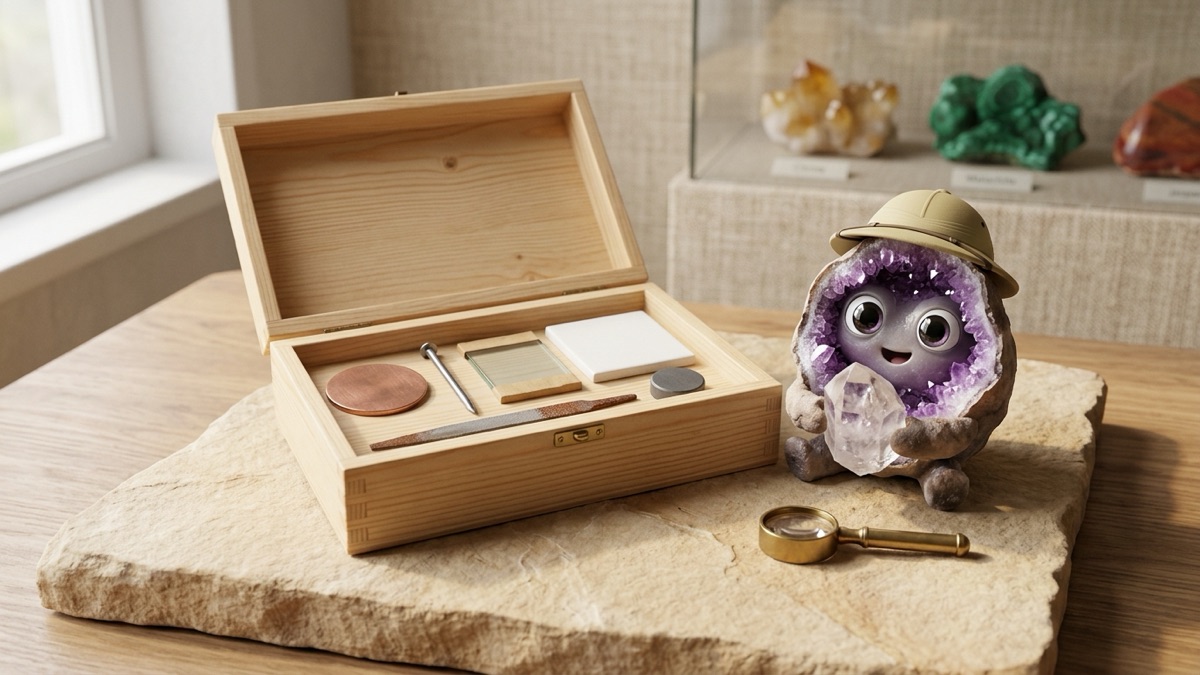
You have a pile of rocks on the kitchen table and a sudden urge to scratch things. Good news: you can build a working hardness kit from a junk drawer in about ten minutes. A store-bought kit only earns its place once you need the finer steps at the hard end of the scale.
Quick answer
A Mohs hardness test kit is a set of things of known hardness. Store kits hold reference minerals from 1 to 9 or pointed hardness picks, often plus a streak plate and magnet. A home kit uses a fingernail (about 2.5), a pre-1983 penny (3), a steel nail (5 to 5.5), glass (5.5) and a steel file (6.5).
Key takeaways
- Store kits come in two styles: boxed reference minerals, such as talc (1) to corundum (9), and hardness pick sets with points from about 2 to 9.
- A typical boxed mineral set stops at corundum and leaves diamond out. You will rarely miss it.
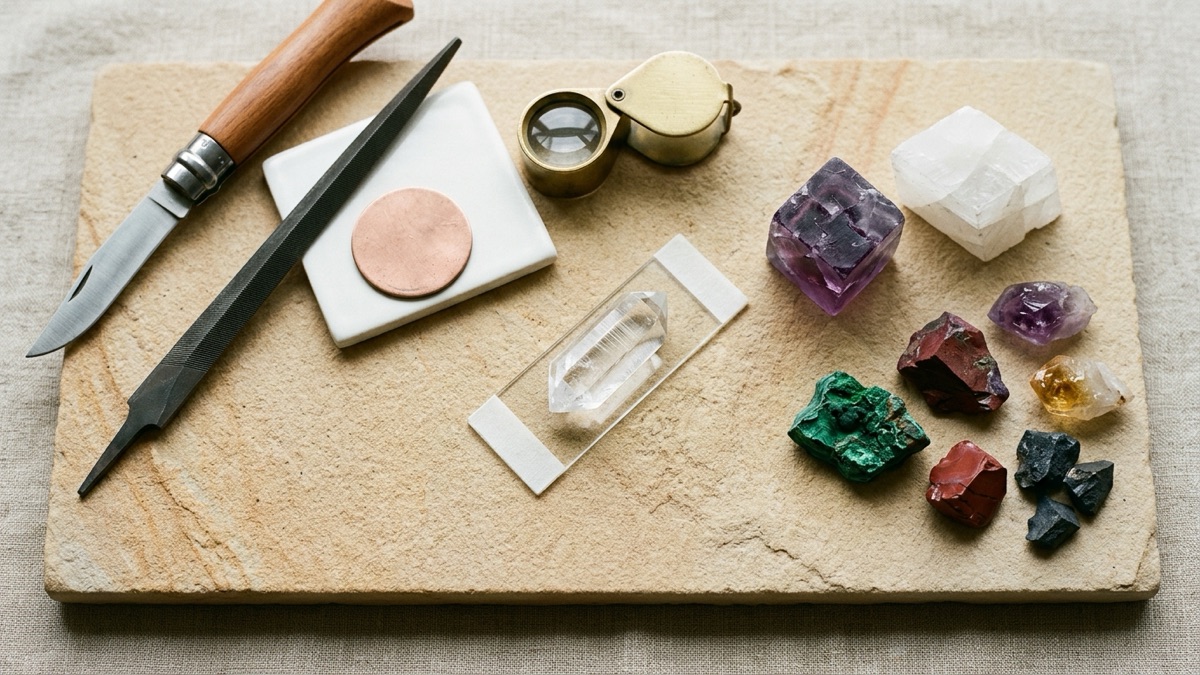
- A household kit covers the big dividing lines: fingernail, copper, steel, glass, file and porcelain.
- Add a magnet, a 10x hand lens, a streak plate and some labels, and you have a proper field kit.
- A bought kit pays off when you need to separate close neighbors near the top, like quartz (7) from topaz (8), or when your specimens are tiny.
What comes in a Mohs hardness test kit?
Most kits you will see fall into two families. Both rely on the same rule from the Mohs hardness test: the harder material scratches the softer one, and you test both ways.
Reference mineral sets
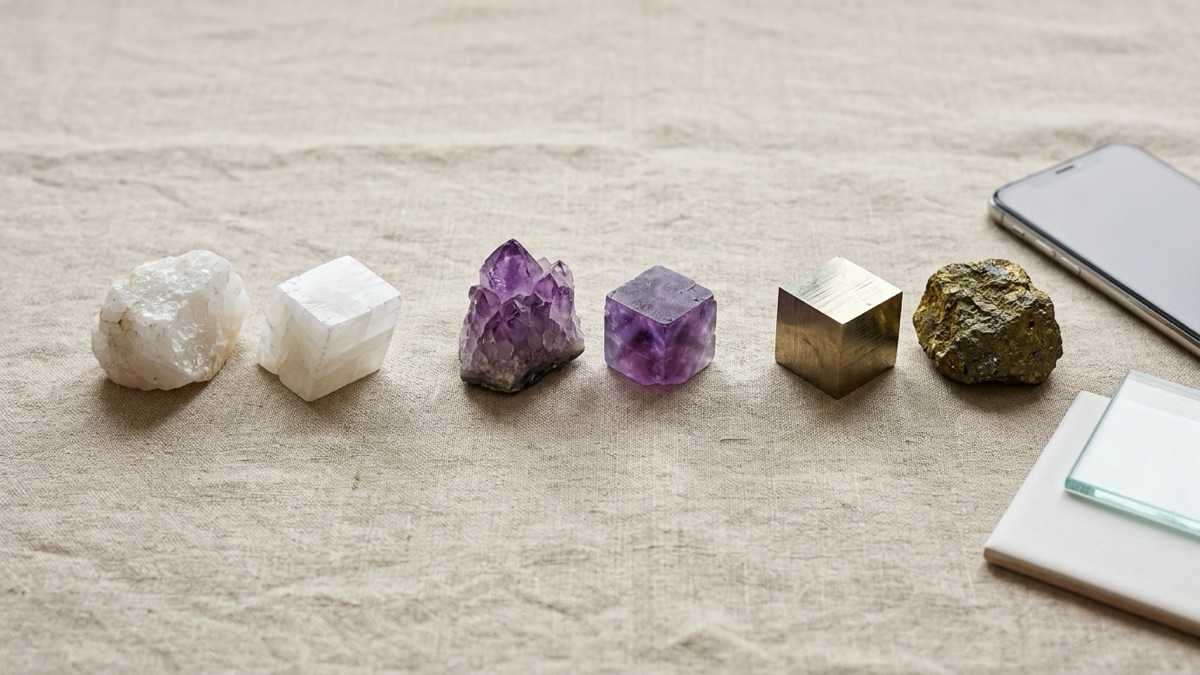
These are small chunks of the real scale minerals. One typical boxed set, sold by the Geology.com store, holds nine specimens: talc (1), gypsum (2), calcite (3), fluorite (4), apatite (5), feldspar (6), quartz (7), topaz (8) and corundum (9). Diamond is not included.
You scratch your mystery rock with each mineral in turn, then try the reverse. They are great for learning, because you handle the actual scale. The catch is that you need a clean, sharp edge on each piece, and the soft ones (talc and gypsum) wear down quickly.
Hardness pick sets
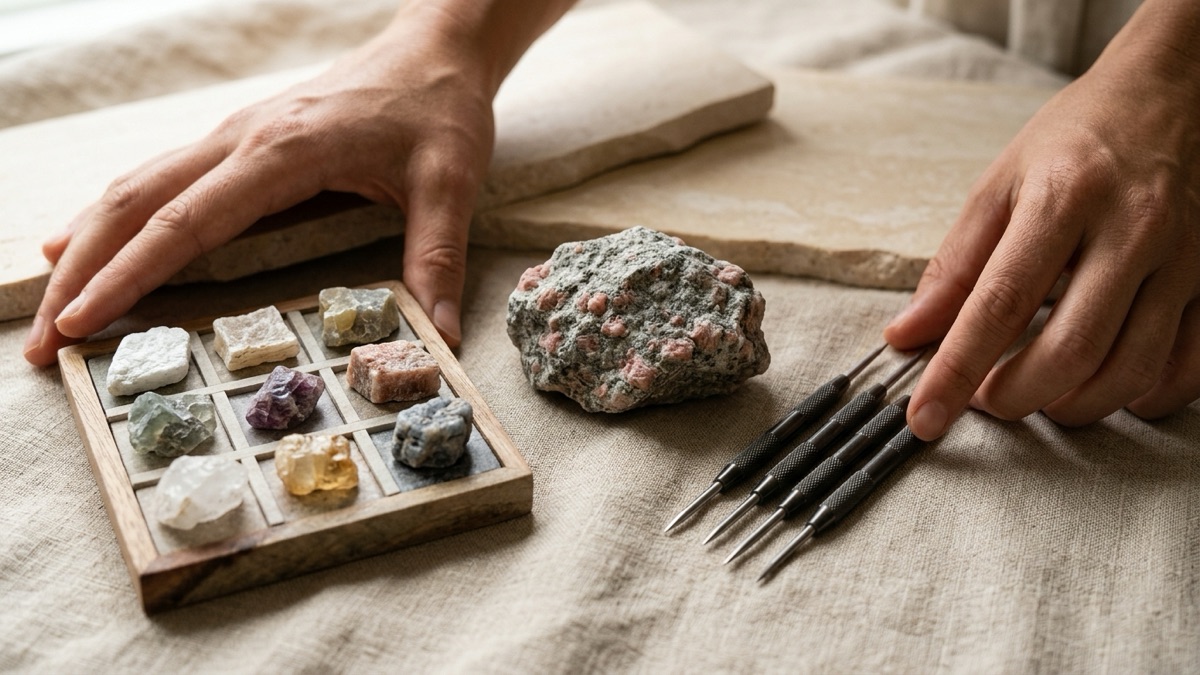
Hardness picks are pointed testers with tips of known hardness. The same store describes its pick set as four double-ended picks with eight points for Mohs 2 through 9: the 2 is plastic, the 3 is copper, and the others are alloys chosen to match the reference minerals. Its set also includes a grinding plate for sharpening the tips, a streak plate, a glass plate, small metal plates at 2.5 and 3.5, and a magnet.
The big advantage is precision. A fine point lets you scratch one small grain in a rock, or a tiny crystal, where a chunk of topaz would be clumsy.
| Kit type | What is inside | Best for | Watch out for |
|---|---|---|---|
| Reference minerals | Nine minerals, talc to corundum | Learning the scale, classrooms | Soft pieces wear; edges need to be sharp |
| Hardness picks | Points for about 2 to 9, often with plates and a magnet | Small grains, precise work | Tips dull and need resharpening |
| Household kit | Fingernail, copper, steel, glass, file, porcelain | First tests, field bags | Tops out around 6.5 to 7 |
How do you build a DIY hardness kit at home?
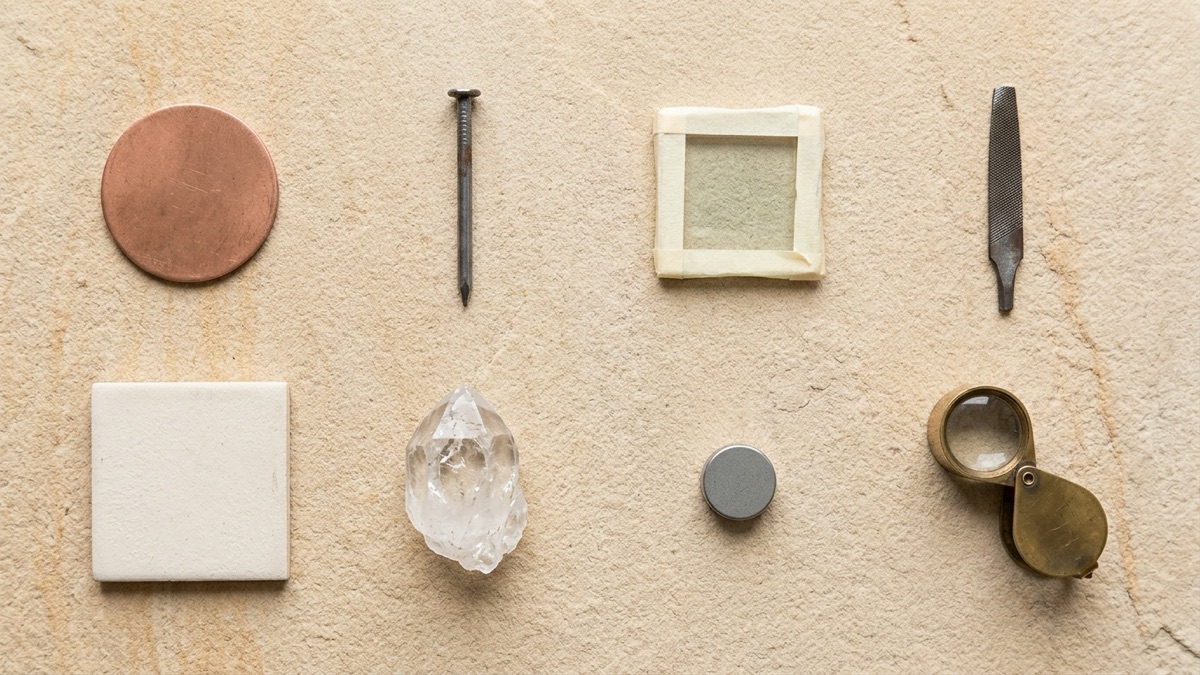
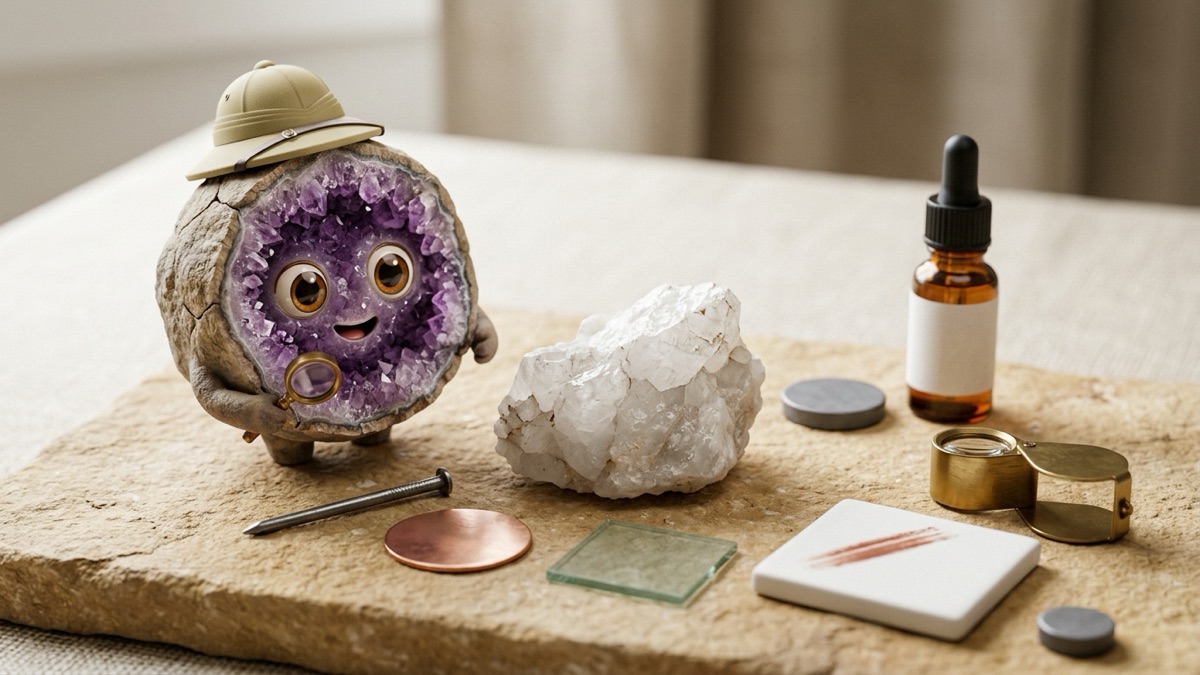
The Mineralogical Society of America's Mineral Identification Key has a do-it-yourself kit list, and much of it lives in an ordinary house. Here is a household version, with hardness values from the MSA key and the University of Auckland.
| Item | Mohs, about | Where to find it | Tip |
|---|---|---|---|
| Fingernail | 2 to 2.5 | Your hand | Scratches talc and gypsum, not calcite |
| US cent from before 1983, or copper wire | 3 | Coin jar, hardware store | Newer cents are mostly zinc |
| Steel nail or plain pocket knife | 5 to 5.5 | Toolbox | Skip the Swiss Army knife: its steel is harder |
| Small glass square | 5.5 | Old picture frame (check it is glass, not plastic) | Tape the edges |
| Steel file | 6.5 | Toolbox | The MSA suggests a short tip of a chain saw file |
| Unglazed white tile | 6.5 to 7 | The plain back of a spare tile | Doubles as a streak plate |
| Quartz piece | 7 | A clear crystal or chunk | Lets you test the line at 7 |
The MSA list goes further, and the extras are worth copying. A fairly strong fridge magnet checks for magnetite. A 10x hand lens lets you tell a groove from a smear. Labels and a pen stop your finds from turning into mystery rocks all over again. Keep it all together in a small box or pouch so you always know where it is.
For a quick fizz check on calcite, a dropper bottle of white vinegar is the gentle home version of the dilute acid geologists use; our vinegar fizz test guide explains it. And the tile does double duty: turn it over to run a streak test.
Tip
Calibrate your steel before you trust it. A good test knife or nail should scratch calcite easily and fail on quartz. If a blade seems to mark quartz, rub the line: it is almost certainly steel left behind, not a scratch. Our guide to glass and steel hardness explains why blades vary.
How do you use a hardness kit?
Start in the middle of the scale, not at the bottom. Try the steel nail first:
- The nail scratches it. Move down: try copper, then your fingernail, until something fails.
- The nail does not scratch it. Move up: see whether your rock scratches glass, then whether the file or a quartz piece scratches it.
- Stop when you find the pair that brackets it, such as "scratched by the file but scratches glass," which puts it around 6.
Always test both ways and rub every mark with a wet finger. A line that wipes away is powder from the softer material, not a scratch. The MSA key warns that some samples take several tries before the result is clear, so repeat on a second spot.
Try it
Before you scratch anything, use the scratch simulator in the free Mohs hardness scale tool. Pick a tester and a mineral and it tells you which one should win, so you know what result to expect.
When is a store-bought kit worth it?
A household kit tells quartz from calcite and feldspar from fluorite, which covers a lot of backyard and river finds. A bought kit starts to make sense when:
- You keep landing near the top. Household testers stop around the file and the tile. To tell quartz (7) from beryl (7.5 to 8) or topaz (8), you need quartz, topaz and corundum pieces. The MSA kit list includes exactly those, plus fluorite.
- Your specimens are small. Crystals in a vug (a small cavity in a rock) or single grains need the fine point of a pick.
- You teach. A set of the real reference minerals makes the scale click for kids and classes.
- Your testers are a mystery. Picks and mineral sets come with known values, so you are not guessing about a blade.
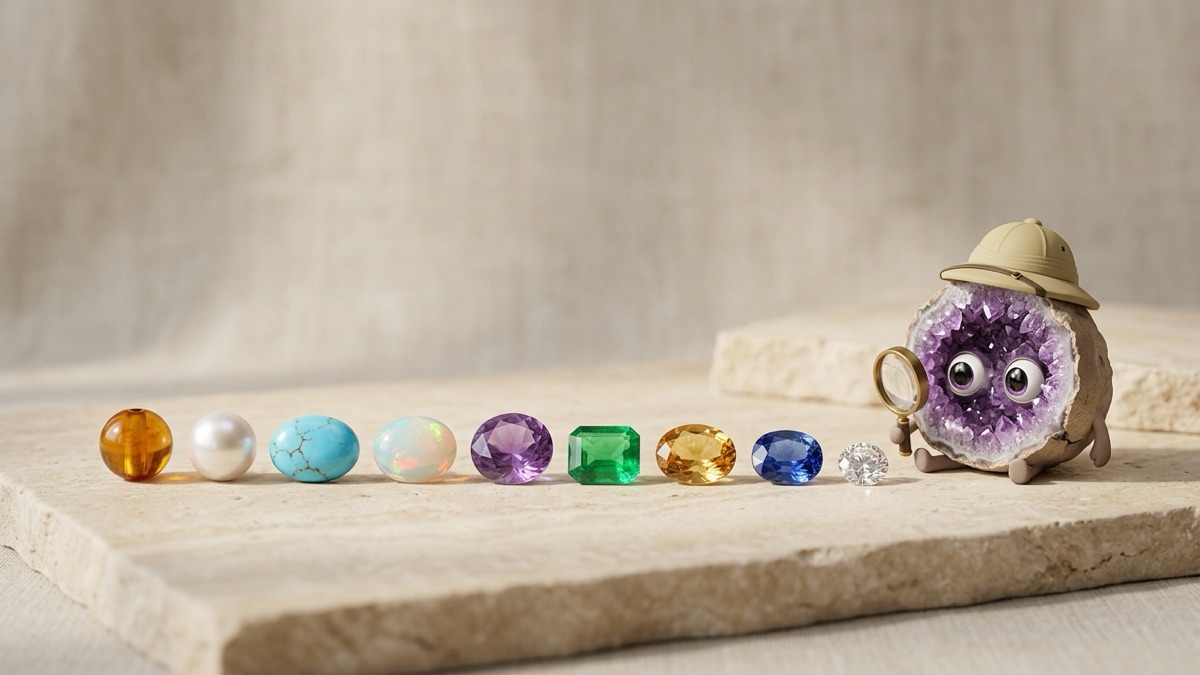
If you only want the hard end, you do not need a full set. Following the MSA list, a piece each of fluorite, quartz, beryl or topaz, and corundum fills every gap a kitchen drawer leaves. For the gems at that end of the scale, see our gemstone hardness chart.
Heads up
Wear safety glasses when scratching or chipping, carry glass in a case, and scratch away from your fingers. Never scratch test jewelry or a cut gem. Collect only where it is allowed: national parks prohibit removing or disturbing minerals, BLM public land allows reasonable amounts for personal, noncommercial use outside closed areas, and private land needs the owner's permission.
The RockhoundID app, coming soon, will suggest likely matches from a photo and tell you which scratch test would confirm them, so you know which tester to reach for.
The takeaway
You do not need to buy anything to start testing hardness. A fingernail, an old penny, a steel nail, a piece of glass, a file and the back of a tile cover the scale up to about 7. Add a magnet, a hand lens and labels, keep it all in one box, and calibrate your steel. When your finds keep landing near the top of the scale, or your specimens get tiny, that is the moment to add a few reference minerals or a set of hardness picks.
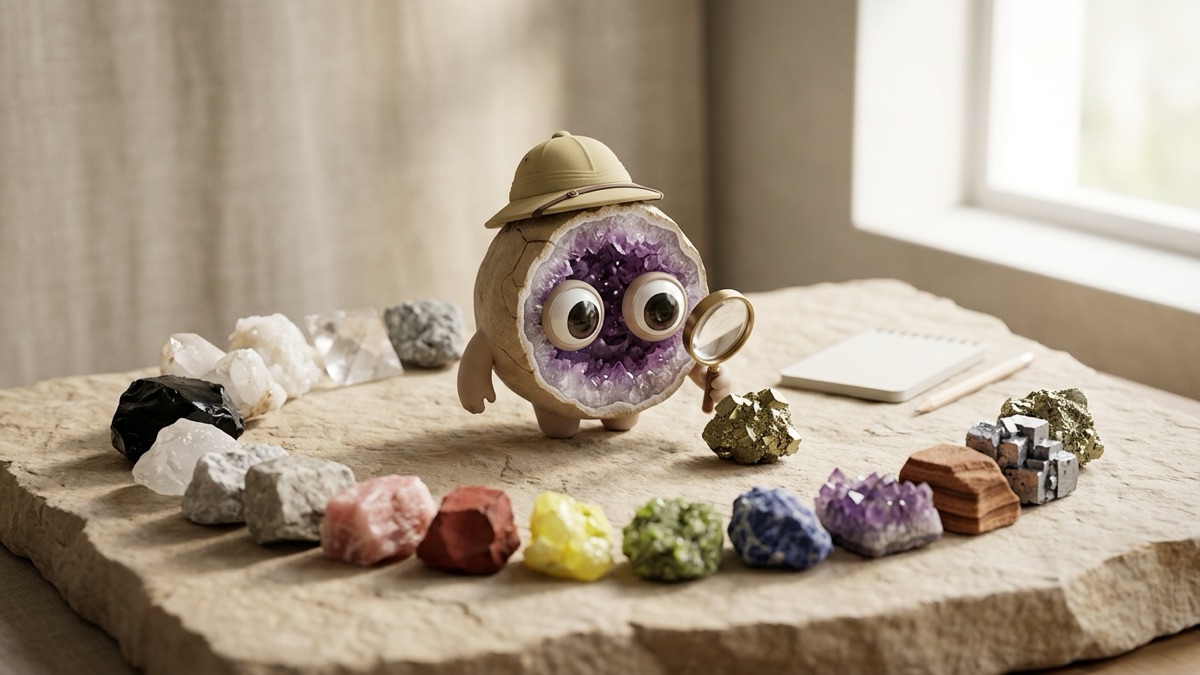
The pictures in this guide are AI-generated illustrations of what to look for; real specimens vary, so trust the tests over any picture. RockhoundID guides help you narrow down what you found. They suggest likely candidates, not certain identifications or appraisals. For anything valuable, rare or possibly from space, ask a museum, a university geology department or your state geological survey, and check the collecting rules for the land before you take anything home.
Questions rockhounds ask
What is in a Mohs hardness test kit?
Either a set of reference minerals, such as talc (1) through corundum (9), or a set of hardness picks with points from about 2 to 9. Pick sets often add a streak plate, a glass plate and a magnet.
Do Mohs hardness kits include a diamond?
A typical boxed mineral set does not. It holds nine minerals, talc to corundum, and leaves diamond out. You rarely need it, because very few finds are harder than corundum.
Can I make my own hardness test kit?
Yes. A fingernail (about 2 to 2.5), a pre-1983 US cent or copper wire (about 3), a steel nail (about 5 to 5.5), a piece of glass (about 5.5), a steel file (about 6.5) and an unglazed tile (about 6.5 to 7) cover most everyday finds.
What are Mohs hardness picks?
They are pointed testers of known hardness, one for each step of the scale. The fine points let you scratch a single small grain, which reference mineral chunks cannot do easily.
Is a hardness kit worth it for a beginner?
Start with a household kit. Buy reference minerals or picks once you keep landing between 6 and 8, or once you test small crystals and grains that a nail or glass cannot reach.
Where these facts come from
- Mineralogical Society of America, Mineral Identification Key: identification kit: www.minsocam.org/MSA/collectors_corner/id/mineral_id_keyi2.htm
- Mineralogical Society of America, Mineral Identification Key: hardness: www.minsocam.org/MSA/collectors_corner/id/mineral_id_keyi4.htm
- Mineralogical Society of America, Mineral Identification Key: streak: www.minsocam.org/MSA/collectors_corner/id/mineral_id_keyi5.htm
- University of Auckland: hardness: rocksminerals.flexiblelearning.auckland.ac.nz/minerals/hardness.html
- Geology.com store: Mohs hardness kit and hardness pick set contents: geology.com/store/collections/hardness-kit.shtml
- eCFR: 36 CFR 2.1, preservation of natural resources in national parks: www.ecfr.gov/current/title-36/chapter-I/part-2/section-2.1
- eCFR: 43 CFR 8365.1-5, rockhounding on BLM public lands: www.ecfr.gov/current/title-43/subtitle-B/chapter-II/subchapter-H/part-8360/subpa
Read next
identification
Rock Identification Apps: What a Photo Can Really Tell
identification
How to Identify Rocks: A Simple 7-Test Method