
Blog value
Rocks Worth Money: How to Tell If Yours Is Valuable
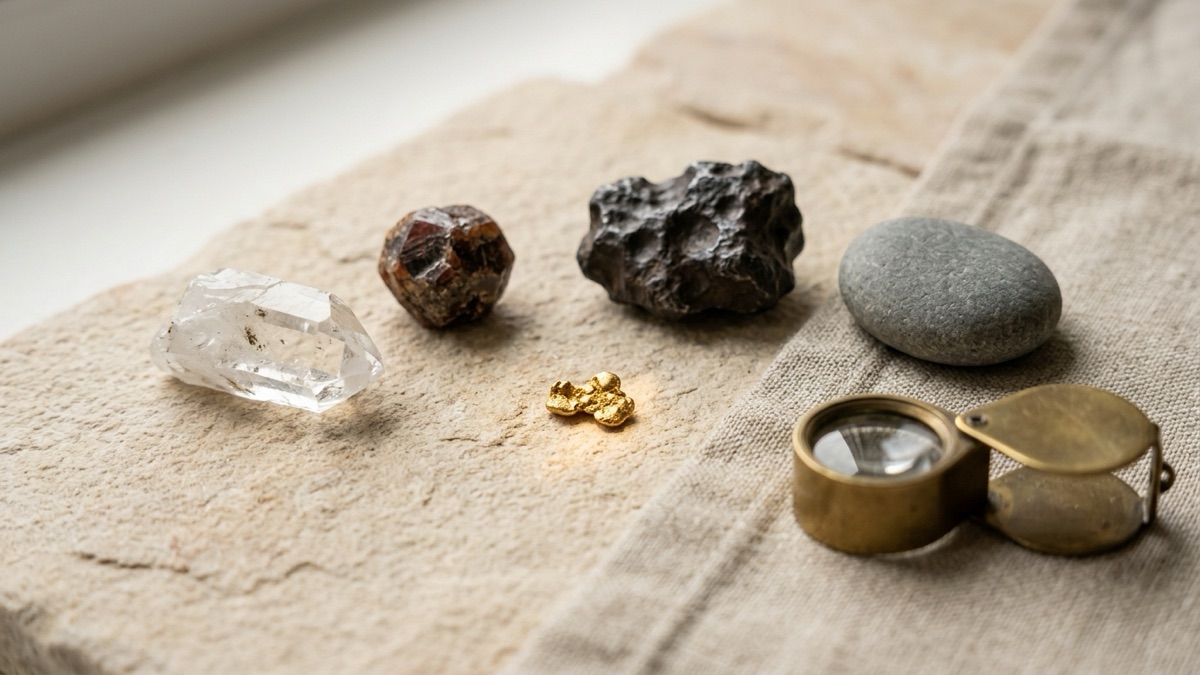
You found a rock that sparkles, or feels oddly heavy, or just looks different from everything around it. Then the question arrives: could this be worth something? Here is the honest way to find out, without getting your hopes up or getting fooled.
Quick answer
Most rocks are worth little in money, because the minerals in them are common. The ones that can be valuable are rare materials in top condition: sharp, undamaged gem crystals, gold, classified meteorites and fine mineral specimens with a known locality. Identify it first, then ask a dealer or appraiser who knows that kind of material.
Key takeaways
- Identification comes first. Nobody can put a value on a rock until someone knows what it is, and that usually takes an in-person look.
- Common material stays cheap: quartz pebbles, ordinary agate, granite, basalt, and look-alikes such as slag, pyrite and iron-oxide lumps.
- Value comes from several things at once: rarity, quality, size, color, condition, a recorded locality and demand.
- The finds worth checking are gem crystals, gold, meteorites, fine mineral specimens, and some petrified wood and fossils.
- Surveys, museums, universities and clubs can identify a rock for free. A price comes from a dealer or a qualified appraiser.
Why are most rocks worth so little?
Because they are made of the most common stuff on the planet. A rock is a bound mix of minerals, and a small cast of minerals shows up again and again. The University of Auckland calls basalt the most widespread igneous rock, and granite is mostly feldspar and quartz. When something is everywhere, nobody pays much for it.
Quartz is the classic example. Randy Korotev of Washington University in St. Louis (WUSTL) calls it the hardest common mineral on Earth, and it turns up as beach pebbles, milky veins, sand and gravel. A clear, sharp quartz crystal can please a collector; a rounded quartz pebble from the driveway, not so much.
Meteorite hopes run into the same wall. Korotev says he is sent photos of dozens of meteor-wrongs (Earth rocks or industrial junk mistaken for space rocks) every week. By July 2022, he had seen lab results for 672 samples analyzed by one commercial lab and more than 140 from other labs, and only 9 of those rocks were meteorites.
None of this means your rock is boring. A fossil, a geode or a crystal can be a wonderful find and still sell for pocket change. Interesting and valuable are two different questions, and it pays to keep them apart.
What makes a rock or mineral valuable?
No single feature makes a rock valuable. Buyers weigh several at once, and a weak score on one (a big chip, say) can sink the rest.
| Factor | What buyers look for | What the experts say |
|---|---|---|
| Rarity | A mineral or meteorite type few people can get | WUSTL: lunar, martian and some other rare meteorite types cost more per gram than ordinary chondrites and most irons |
| Quality | Sharp, glassy crystals; for cut diamonds, color, clarity, cut and carat weight | GIA calls its 4Cs the industry standard for diamond quality |
| Size and supply | Larger clean crystals, or a scarce meteorite | WUSTL: small, hard-to-get meteorites sell for more per gram than pieces of large ones |
| Condition | No chips, cracks, coatings or harsh cleaning | MSA: coating a mineral usually lowers its value; WUSTL: acid or wire-brush "preparation" lowers meteorite value |
| Locality | A label that says exactly where it was found | MSA: a missing locality can destroy a specimen's scientific and commercial value |
| Demand | Beauty, a famous locality, a good story | WUSTL: attractive meteorites and falls with a story (through a roof) sell for more |
Why does the locality label matter so much?
The Mineralogical Society of America (MSA) puts it bluntly: locality is usually the one thing you cannot figure out about a specimen later, and without it the specimen can lose both its scientific and its commercial value. Two identical-looking crystals can be worth very different amounts if one comes from a classic, documented mine and the other is "somewhere out west."
So write it down the moment you pick something up: the place, the date and what the spot looked like. For meteorites, WUSTL adds that specimens without a card or bill of sale, like many found in a late relative's collection, are not worth much to collectors.
Why does damage matter?
Collectors pay for perfection. A crystal point with a chipped tip, a cracked geode or a stone coated in lacquer to make it shine all lose appeal fast, and the MSA advises against coating minerals because it usually lowers their value. Harsh cleaning does the same thing to meteorites: WUSTL says that preparation involving acid or a wire brush can diminish their value to collectors.
Which rocks do people hope are valuable, but usually are not?
These are the classic hopefuls. Each one has a quick check you can do at home.
| Hopeful find | What it usually is | Quick check |
|---|---|---|
| Clear or milky "crystal" chunk | Common quartz | Scratches glass; white streak; hardness 7 |
| Banded pebble | Common agate or chert | Pretty, but plentiful; pattern, color and size decide value |
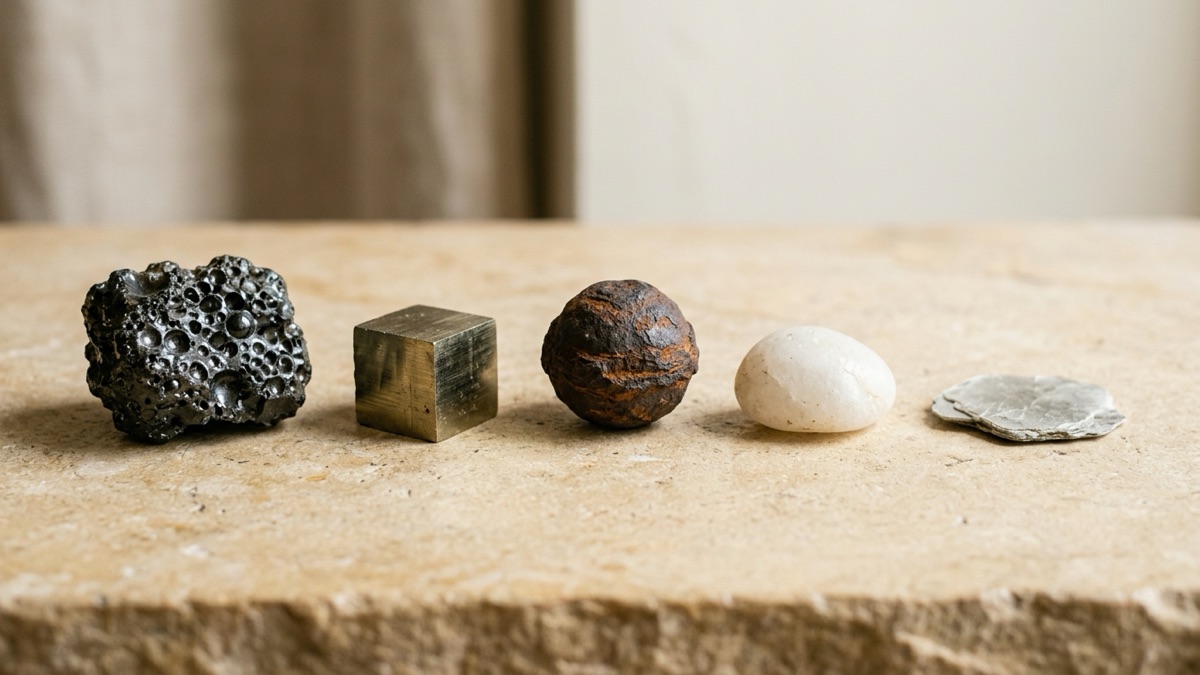
| Glassy, bubbly "meteorite" | Slag from smelting or furnaces | Gas bubbles and glass mean slag, even if a magnet sticks |
| Brassy gold cubes or flakes | Pyrite (fool's gold) | Greenish-black streak; hard (6 to 6.5) and brittle |
| Heavy, dark "space rock" | Iron-oxide concretion | Red-brown or dark streak; WUSTL's most common meteor-wrong |
| Glittering flakes | Mica | Peels into thin, flexible sheets with a fingernail |
| Green "jade" or bright "gem" | Glass or dyed stone | Glass is only about Mohs 5.5, so quartz scratches it |
Glass deserves a special mention. The MSA notes that glass and ceramics have sometimes been sold as jade, and glass imitates plenty of other gems too. A scratch test against a piece of quartz, or a check on the free Mohs hardness scale, catches a lot of it. For the garden-and-driveway version of this list, see valuable rocks in your backyard.
Which rocks and minerals can be worth money?
Here is where the real candidates live. Even in these groups, most pieces are ordinary; the valuable ones are the best of their kind.
Gem crystals
Finding a gem mineral is not the same as finding a gem. Garnet, beryl, topaz, tourmaline and corundum all occur as rough crystals (USGS lists their hardness from 6.5 to 9), and what matters is whether a crystal is clear, richly colored and free of cracks. That is exactly what a cutter or gemologist checks. For cut diamonds, GIA describes quality with its 4Cs: color, clarity, cut and carat weight.
Gold
Gold is scarce but real, and the USGS explains why prospectors find it where they do. It is soft (about the hardness of a penny), the most malleable of metals and very heavy: pure gold has a specific gravity of 19.3, impure natural gold about 16 to 18, against about 2.5 for the waste rock around it. That weight is why it settles in stream gravels with "black sands," mostly magnetite. In the United States, gold has historically come from the southern Appalachians, California, Nevada, Colorado, Alaska and South Dakota, among other places. A gold flake's value mostly follows the market price of the metal, which changes daily.
Meteorites
Real meteorites do sell, but usually for less than finders hope. WUSTL lists what moves the price: the type (rare types cost more), supply, where it was found, whether it was a witnessed fall, the story, how attractive it is, how well it was prepared, whether it has an official name and whether it has paperwork. As of September 2026, Korotev's caveat emptor page (describing ads he found in 2025) mentions a legitimate dealer offering a 33-gram piece of NWA 869, a common chondrite with thousands of pieces known, for $66. Getting a new find classified will likely cost several hundred dollars, according to WUSTL. Our guide to how much a meteorite is worth covers the details.
Fine mineral specimens
Well-formed crystals on their host rock, with good color and luster, no damage and a recorded locality, are what mineral collectors chase. Our list of the most valuable minerals collectors prize shows what that looks like in practice.
Petrified wood and agate
Both can be lovely and some pieces sell well, but both are common in the right places, so quality decides everything: color, pattern, size, and whether the piece is solid and crack-free. Read how much petrified wood is worth and what makes one agate worth more before you price either.
Heads up
Where you collected a rock can decide whether you may sell it. On BLM land, hobby collecting of reasonable amounts is for noncommercial use, and collecting for sale or barter needs a contract or permit (43 CFR 8365.1-5). Petrified wood collected free on public land may not be sold or bartered to commercial dealers. National parks prohibit collecting entirely, and private land needs the owner's permission first.
How do you tell if your rock is valuable?
Work through these steps in order. They cost almost nothing, and each one either narrows the options or saves you a wasted trip.
- Write down where you found it. Place, date and setting. It is free now and impossible later.
- Clean it gently. Water and a soft brush only. No acid, no wire brush, no polish or lacquer, for the reasons above.
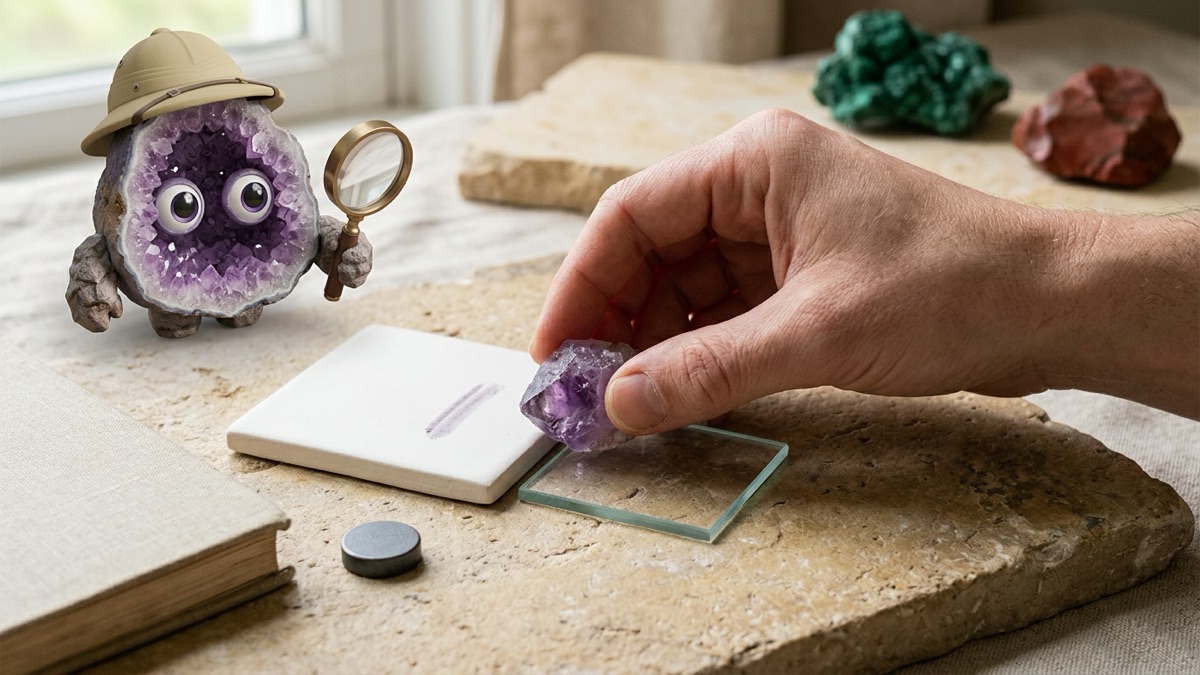
- Run the basic tests. Scratch it against glass and a steel nail, drag it across an unglazed tile for a streak, try a cheap fridge magnet and heft it in your hand. Wear safety glasses when you scratch or tap rocks.
- Check the look-alikes. Bubbles and glass point to slag, a greenish-black streak to pyrite, and a red-brown streak to iron oxide.
- Narrow the candidates. Put your results into a free key, then read the guide for your best match. Our step-by-step how to identify rocks guide explains each test.
- Get an in-person identification. Then, and only then, ask about value.
Try it
Answer a few questions in the free rock identifier to see likely candidates among 66 common rocks, minerals and look-alikes. If you suspect a space rock, run the meteorite checker first. Both run in your browser and neither uploads a photo.
Where can you get a real opinion on value?
Two different people usually answer two different questions: what is it, and what is it worth. The USGS says rocks and minerals must be examined in person for an accurate identification and are extremely hard to identify from photos. Its list of places to ask: your state geological survey, a natural science museum, a college or university geology department, a rock shop, a local gem and mineral club, or vendors at a gem and mineral show.
| Who to ask | What they can tell you | What to expect |
|---|---|---|
| State geological survey, museum or university | What it is, often for free | Many will not value specimens; the University of Minnesota's department says it does not authenticate or estimate value |
| Gem and mineral club or show | What it is and whether collectors want it | MSA notes shows often have an identification booth run by club members |
| Specialist dealer | What similar pieces sell for | A dealer who offers to buy has an interest, so get a second opinion |
| Qualified appraiser | A written value for insurance, an estate or a donation | Charges a fee; the American Society of Appraisers lists members in Gems and Jewelry and Personal Property |
| Meteorite specialist lab | Whether it is a meteorite, and its classification | WUSTL says classification will likely cost several hundred dollars |
A few tips make these conversations go better. Bring the rock, not just a photo. Bring your locality notes. Ask an appraiser what experience they have with minerals, gems or meteorites specifically, because appraisal is a specialized field. And be ready for "it's quartz": that answer is free, fast and much better than paying for an analysis of a driveway pebble.
Tip
If a dealer's first offer sounds wonderful, ask a second dealer or a club member before you agree. If it sounds insultingly low, ask anyway. Either way, you learn what the market thinks, not what you hoped.
The takeaway
Most rocks are worth more as stories than as cash, and that is fine. The ones with real value are rare materials in excellent condition, with a clear identification and a known locality. So write down where you found it, keep it clean and uncoated, run the cheap tests, get it identified in person, and only then ask a dealer or appraiser for a price. The RockhoundID app, coming soon, will suggest likely matches from a photo and tell you which test confirms them.
RockhoundID guides help you narrow down what you found. They suggest likely candidates, not certain identifications or appraisals. For anything valuable, rare or possibly from space, ask a museum, a university geology department or your state geological survey, and check the collecting rules for the land before you take anything home.
Questions rockhounds ask
How can I tell if a rock is valuable?
Find out what it is first, because value depends entirely on the mineral or rock type. Run simple tests (scratch, streak, magnet, weight), then have it identified in person by a state geological survey, a museum, a university or a rock club. Only then ask a dealer or appraiser about value.
What rocks are worth the most money?
The ones that can be valuable are rare materials in excellent condition: clear, well-colored gem crystals, gold, classified meteorites and fine mineral specimens with a known locality. Common rocks such as granite, basalt and ordinary quartz are worth little, however pretty they are.
Is quartz worth anything?
Ordinary quartz pebbles and milky chunks are worth very little because quartz is so common. Sharp, clear, undamaged quartz crystals and well-colored varieties such as amethyst can sell to collectors, but condition and size make a big difference.
Where can I get a rock appraised?
For a rough market opinion, ask an experienced dealer or a gem and mineral club at a show. For insurance, an estate or a donation, hire a qualified appraiser; the American Society of Appraisers lists members in its Gems and Jewelry and Personal Property disciplines. Ask about their experience with minerals or meteorites.
Can I sell rocks I collected on public land?
Usually not without permission. On BLM land, hobby collecting is for noncommercial use, and collecting for sale or barter needs a contract or permit. Petrified wood collected free on public land may not be sold or bartered to commercial dealers. National parks allow no collecting at all.
Where these facts come from
- USGS FAQ: Can you identify my rock or mineral?: www.usgs.gov/faqs/can-you-identify-my-rock-or-mineral
- Mineralogical Society of America: Mineral collecting: www.minsocam.org/MSA/collectors_corner/MineralCollecting.htm
- Mineralogical Society of America FAQ: Mineral collecting (cleaning and stabilizing specimens): www.minsocam.org/MSA/collectors_corner/faq/faqmincoll.htm
- Mineralogical Society of America FAQ: Gems (what is jade): www.minsocam.org/MSA/collectors_corner/faq/faqgem.htm
- USGS General Interest Publication: Gold: pubs.usgs.gov/gip/prospect1/goldgip.html
- USGS: Gemstones (mineral gemstones): pubs.usgs.gov/gip/gemstones/mineral.html
- GIA: The 4Cs of diamond quality: 4cs.gia.edu/en-us/
- Washington University in St. Louis (Randy Korotev): Some meteorite realities: sites.wustl.edu/meteoritesite/items/some-meteorite-realities/
- Washington University in St. Louis: No, I am not going to buy your rock or help you sell it: sites.wustl.edu/meteoritesite/items/meteorites-are-not-worth-as-much-as-most-peo
- Washington University in St. Louis: Caveat emptor: sites.wustl.edu/meteoritesite/items/caveat-emptor/
- Washington University in St. Louis: Meteorite testing: sites.wustl.edu/meteoritesite/items/meteorite-testing/
- University of Minnesota, Earth and Environmental Sciences: Rock, mineral, fossil and meteorite ID: cse.umn.edu/node/114076
- American Society of Appraisers: Find an appraiser: myaccount.appraisers.org/Directories/Find-An-Appraiser
- University of Auckland: Rocks: rocksminerals.flexiblelearning.auckland.ac.nz/rocks/index.html
- 43 CFR 8365.1-5: Property and resources (BLM): www.ecfr.gov/current/title-43/subtitle-B/chapter-II/subchapter-H/part-8360/subpa
- 43 CFR 3622.4: Petrified wood collection rules: www.ecfr.gov/current/title-43/subtitle-B/chapter-II/subchapter-C/part-3620/subpa
- 36 CFR 2.1: Preservation of natural resources (National Park Service): www.ecfr.gov/current/title-36/chapter-I/part-2/section-2.1