Guides stones
Agate Stone: How to Identify, Find and Value Agates
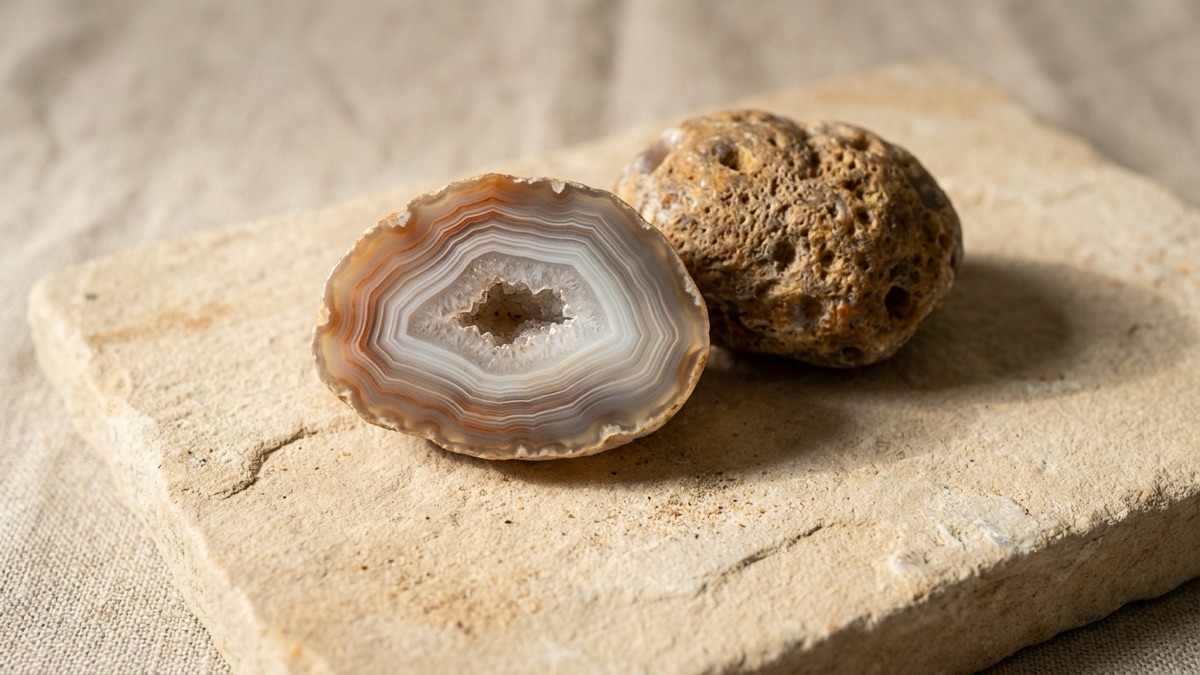
You spot it in the wet gravel: a pebble that looks lit from inside, with a waxy shine and a hint of stripes. You pocket it, it dries, and suddenly it looks like every other rock on the beach. Is it an agate? A flashlight and a piece of glass will usually tell you.
Quick answer
Agate is banded chalcedony, a form of quartz made of crystals too small to see. To spot one, look for a waxy shine, curved bands or rings, and light glowing through a thin edge when you hold a flashlight behind it. Agate scratches glass (about 6.5 to 7 on the Mohs scale) and breaks with smooth, shell-shaped surfaces.
Key takeaways
- Agate is chalcedony (microscopic quartz) with bands or other patterns. Jasper is the opaque cousin; a geode is a hollow ball that may be lined with agate.
- Most agates formed when silica-rich water filled gas bubbles in old lava, one thin layer at a time.
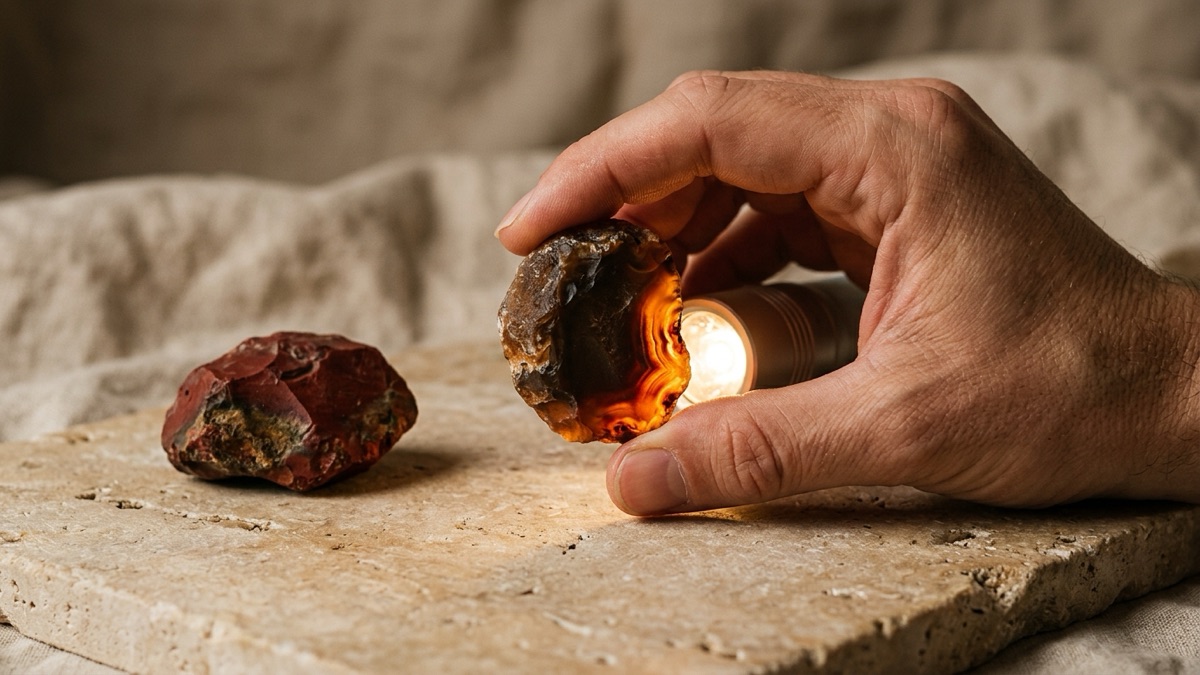
- The best field test is light: a thin edge of agate glows when a flashlight shines through it.
- Agate is hard (about 6.5 to 7), so it scratches glass, and it breaks with curved, glassy surfaces instead of flat faces.
- Collect only where it is allowed: reasonable personal amounts on most BLM land, nothing in national parks, and never on private land without permission.
What is agate stone?
Agate is a variety of chalcedony, and chalcedony is quartz. The difference from a clear quartz crystal is size: chalcedony is "cryptocrystalline", meaning it is built from minute, fibrous quartz crystals that you cannot see even with a hand lens. Peter Modreski's abstract for the New Mexico Mineral Symposium, published by the New Mexico Bureau of Geology, puts it simply: chalcedony is cryptocrystalline quartz, composed of minute, fibrous microcrystals.
What turns plain chalcedony into agate is pattern. The Natural History Museum in London describes agate as a type of chalcedony whose banding comes from impurities such as iron oxides, which give the layers different colors. The USGS gemstone list files agate, onyx, sardonyx, carnelian, moss agate and jasper together as cryptocrystalline varieties of silica.
Here is how agate's properties line up, using values from the University of Auckland, the USGS and our own Mohs hardness scale list:
| Property | Agate | What it means in your hand |
|---|---|---|
| Hardness | about 6.5 to 7 | Scratches glass; a steel knife cannot scratch it |
| Luster | waxy to glassy | Looks polished even when rough, especially when wet |
| Light | translucent | A thin edge glows with a flashlight behind it |
| Fracture | conchoidal | Breaks with smooth, curved, shell-like surfaces |
| Density | about 2.6 | Feels like an ordinary stone of its size, not heavy |
Luster means how a surface reflects light. Conchoidal fracture is the curved, rippled break you see on the edge of broken glass. Both matter more than color, because agate comes in almost every color.
How do agates form?
Most agates started as holes. When lava cools, gas bubbles get trapped in it, leaving round or almond-shaped cavities that geologists call vesicles. Modreski's abstract notes that chalcedony and agate most often fill gas cavities in volcanic rocks, although they can also form in sedimentary rock.
Later, groundwater carrying dissolved silica seeped through the rock and coated the inside of each cavity. The Natural History Museum describes the Jubilee agate from Rio Grande do Sul, Brazil, forming this way in lava flows that erupted more than 100 million years ago: silica-rich water passed through again and again, laying down thin layers on the walls, until only a small hollow was left in the middle. When conditions changed between layers, the color changed too, which is where the bands come from.
Lake Superior agates follow the same recipe, just much older. The Minnesota DNR says they began about one billion years ago, when the continent started to split and lava welled up. Water seeped into the bubble holes and deposited iron, quartz and other minerals in layers. Glaciers and erosion later spread the finished agates across much of Minnesota.
Fun fact
Agate is Minnesota's official state gemstone, named in 1969. Kentucky joined the club when a 2024 state law named Kentucky agate its official gemstone.
How do you identify an agate?
Work through these checks in order. No single one proves anything, but three or four together make a strong case.
- Light. Shine a bright flashlight through the thinnest edge. Agate glows; most other rocks stay dark.
- Luster. Look for a waxy shine, like a candle or a bar of soap, rather than a dull, sandy or sugary surface.
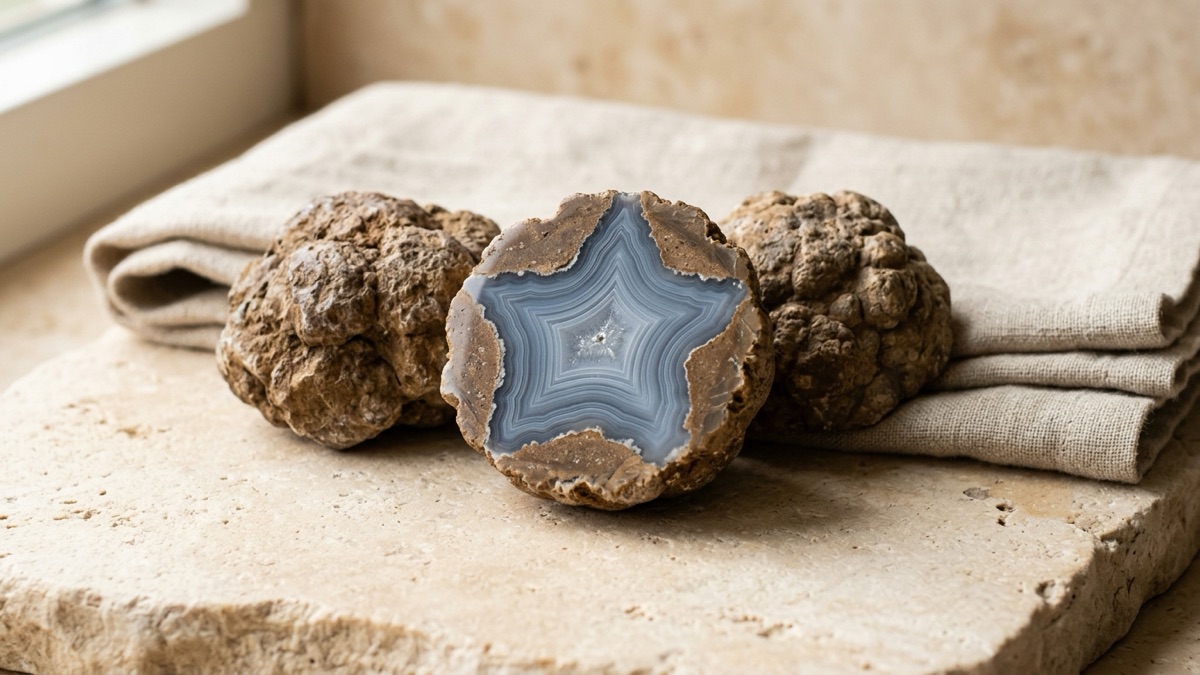
- Bands. Look for thin curved lines, rings or concentric layers, often following the shape of the stone. Some agates show them only on a broken or chipped face.
- Fracture. Check chipped spots for smooth, curved, shell-like surfaces with sharp edges.
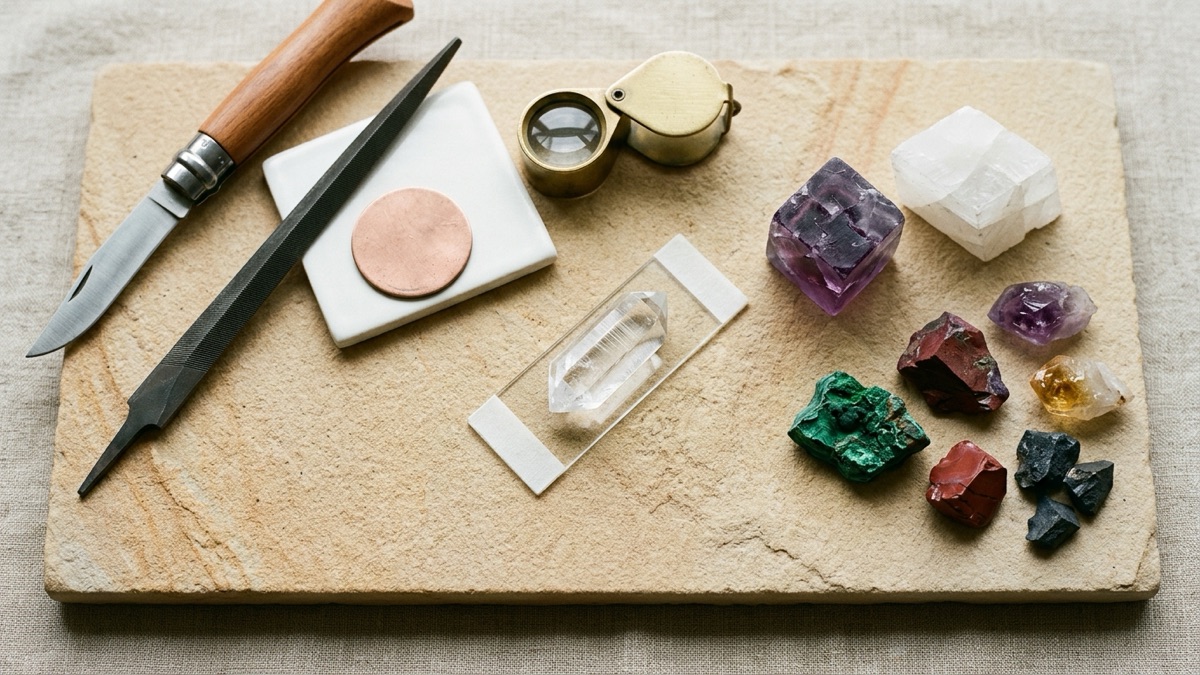
- Hardness. Try to scratch a piece of glass with a sharp corner. Agate scratches it. Test both ways, and rub the mark to be sure it is a scratch and not a powder trail.
- Heft. It should feel like a normal pebble of its size, neither heavy like a metal ore nor light like pumice.
A streak test tells you little here. Minerals harder than about 6.5 are as hard as the unglazed tile, so agate scratches the plate instead of leaving colored powder.
How do you spot a rough agate on a beach or in gravel?
Rough agates rarely look like the polished slices in shops. The outside is often frosted, pitted or stained, and the bands hide until the light hits them right. The Minnesota DNR describes Lake Superior agates as irregular spheres, colored red, orange and yellow by iron.
These habits help in the field:
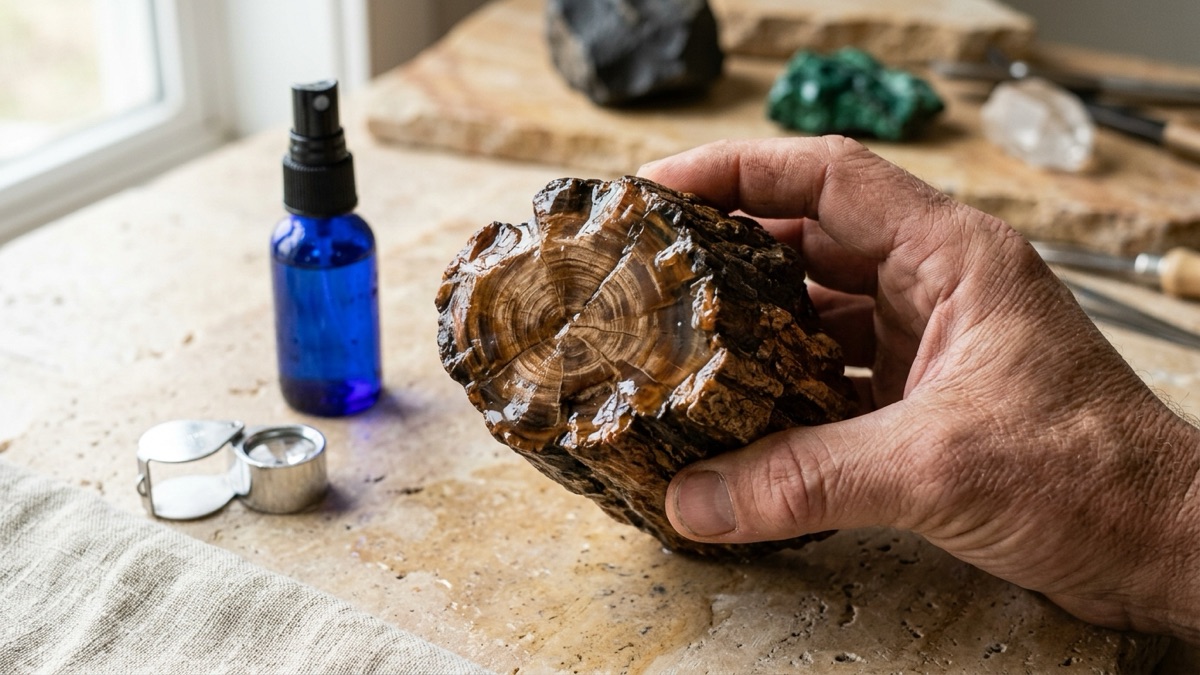
- Search wet stones. Water brings back the waxy shine that a dry, frosted surface hides. A spray bottle helps on a dry gravel bar.
- Put the sun in front of you. Walk toward low sun so light shines through the stones. Agates glow at the edges while ordinary pebbles look flat.
- Look for a translucent rim. Even a heavily stained agate often shows a thin, glassy, see-through edge.
- Check chips and cracks. A small conchoidal chip or a broken face may reveal a few bands.
- Go where gravel collects. The Minnesota DNR suggests river banks, river mouths, gravel pits and other places where pebbles and gravel abound.
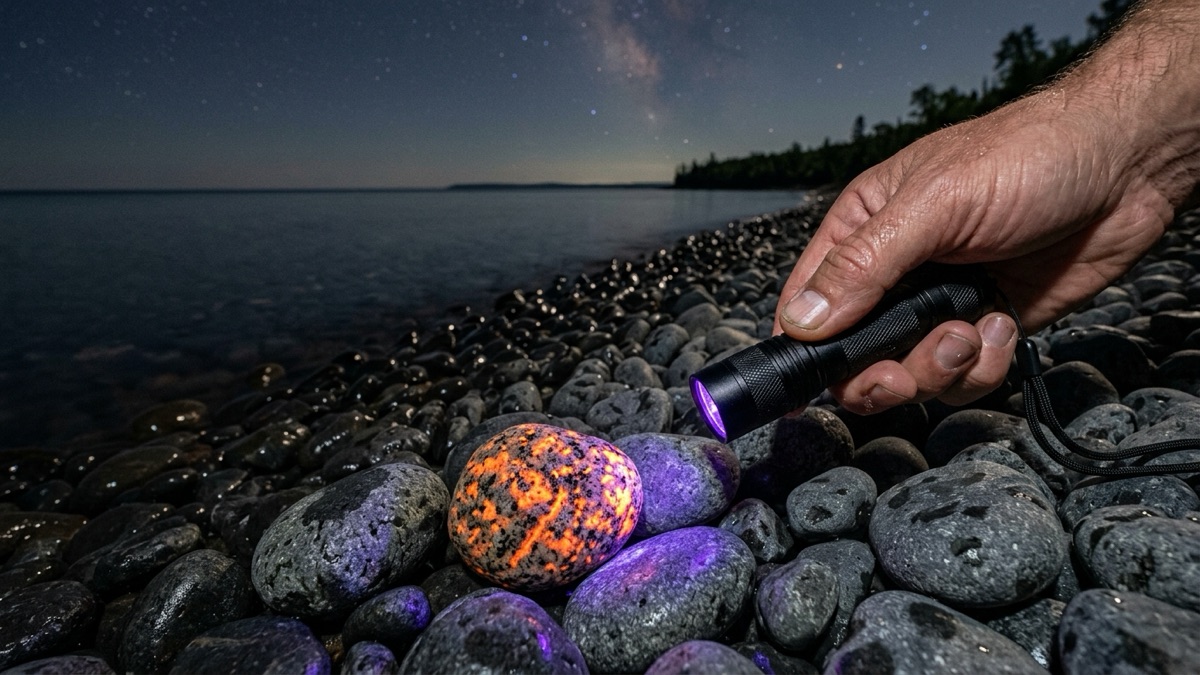
On the Great Lakes, an agate hunt often turns up two other local favorites. Yooperlites are gray syenite pebbles from Lake Superior beaches that glow orange under a long-wave UV flashlight, and the Petoskey stone is a fossil coral whose six-sided pattern shows up when the stone is wet.
Heads up
Gravel pits are almost always private or commercial property, and active pits are dangerous places to wander. Get the owner's permission first, stay away from working equipment and steep faces, and wear safety glasses if you break or chip anything.
Agate vs jasper vs geode: what is the difference?
These three names get mixed up constantly. In one line each:
- Agate is translucent chalcedony, usually with curved bands or another pattern.
- Jasper is opaque chalcedony; it contains enough impurities that light does not pass through it.
- A geode is a roughly round rock with a hollow middle lined with crystals. The Iowa Geological Survey says quartz dominates the insides of Iowa's geodes and calcite is common.
A stone can be two of these at once. Some geodes have a band of agate around the crystal-lined hollow, and some pieces have agate zones next to jasper zones. Our side-by-side guide to agate vs jasper walks through the flashlight test in detail.
Thunder eggs add a fourth name to the mix. They are rounded nodules from silica-rich volcanic rock, usually solid rather than hollow, with a core that is often agate. Our guide to thunder eggs shows how they form and where you may dig them.
What looks like agate but is not?
Plenty of rocks share one or two of agate's clues. The trick is to check them against the others.
| Look-alike | How it fools you | The test that separates it |
|---|---|---|
| Jasper | Same hardness and waxy shine | Light does not pass through a thin edge |
| Chert and flint | Smooth, hard, curved breaks | Usually opaque: a thin edge stays dark in the flashlight test |
| Quartz crystal or milky quartz | Hard, glassy, white or clear | Grows as crystals or glassy chunks, not in curved layers |
| Banded calcite | Layered and translucent | Soft (3): a copper coin or a knife scratches it, and it fizzes in vinegar |
| Glass and slag | Glassy, colorful, can glow in light | Look for gas bubbles and swirls; glass barely scratches glass, while agate scratches it cleanly |
| Dyed agate | Real agate with unreal color | Neon pinks, purples or blues, often strongest in cracks and certain bands |
Dyed agate deserves a note. Geology.com's gemstone pages (written by a geologist and gemologist) point out that agate is porous and readily accepts dye, and that most of the spectacularly colored agates in the gem trade have been dyed. That does not make them fake agate, but the color is not natural.
Petrified wood can fool you too, because most of it is quartz as well: it scratches glass and can show bands of color. Growth rings, bark texture and straight wood grain together give it away, as our guide on how to identify petrified wood explains.
What kinds of agate are there?
Agate names describe patterns, colors and places rather than different minerals. The Minnesota DNR sorts Lake Superior agates into fortification agates (repeating layered bands, like the walls of a fort), eye agates (round surface markings) and moss agates (with mineral deposits inside). The University of Auckland lists traditional names such as carnelian, sard, sardonyx, onyx and chrysoprase.
A few you will hear often:
- Banded or fortification agate: the classic concentric layers.
- Moss and dendritic agate: clear to milky chalcedony with dark, branching or mossy mineral growths inside. Our guide to dendritic and tree agate explains why the "trees" are not fossils.
- Onyx: black and white banded chalcedony.
- Carnelian: orange-red translucent chalcedony.
- Lake Superior agate: iron-red and orange bands, found across much of Minnesota. See our Lake Superior agate guide.
For the full lineup, from blue lace to crazy lace and iris agate, see types of agate.
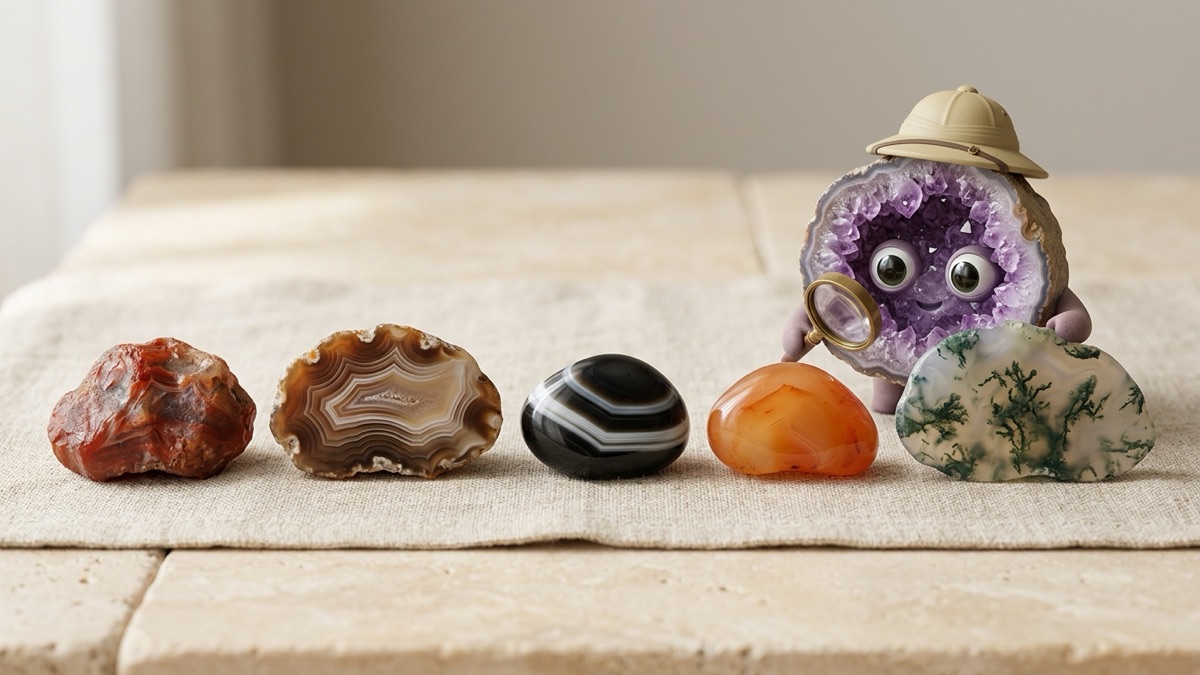
Try it
Not sure your pebble is agate, jasper or chert? Run it through the free rock identifier. It asks about luster, hardness, light and banding, then suggests likely matches and the one test that tells them apart.
Where can you legally collect agates?
Agates turn up in gravel almost anywhere old volcanic rock has eroded, but who manages the land decides whether you may pick them up.
| Where | Who manages it | The rule |
|---|---|---|
| Most BLM public land | Bureau of Land Management | Reasonable amounts for personal, noncommercial use, except in developed recreation sites or where posted as closed. Hand tools only: no explosives, motorized or mechanical equipment. |
| National parks | National Park Service | No collecting. Removing mineral resources is prohibited. |
| State parks, national forests, tribal land, beaches | Each agency or tribe | Rules vary. Check the managing agency's own page before you go. |
| Private land, including gravel pits | The owner | Ask permission first, every time. |
The BLM rule comes from federal regulation 43 CFR 8365.1-5, and selling or bartering what you collect needs a permit or contract. Our rock collecting rules guide covers national forests, state parks and the rest in more detail. Rules change, so check the current rules for the exact spot before every trip.
Are agates worth anything?
Most agates you find are worth more as a story than as a sale, and that is fine. The Minnesota DNR says collectors value Lake Superior agates for their size and unusual markings, and when we read its page in September 2026 it noted that exceptional specimens may be worth hundreds of dollars.
What pushes an agate up the scale:
- Size and completeness: a whole, large nodule beats a chip.
- Pattern: crisp, tight banding, eyes or scenic inclusions.
- Color: strong natural color, not dye.
- Locality: some named sources have devoted collectors.
- Condition: no big fractures or missing chunks.
Nobody can price an agate from a photo, and neither can we. For a real value, show it to a reputable dealer or at a rock and mineral club show. Our guide to agate value explains what drives prices up or down.
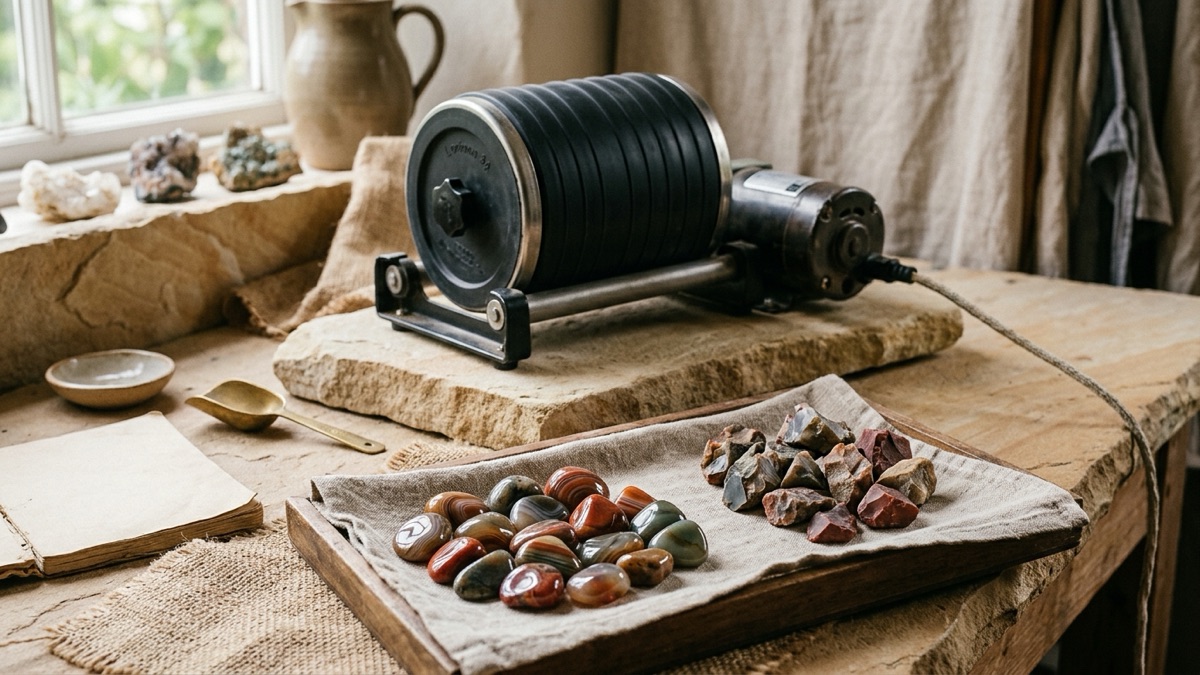
If you would rather polish your finds than sell them, agate is classic beginner tumbling rough: it is hard, dense and takes a bright polish. Our rock tumbler guide walks through the four stages.
The RockhoundID app, coming soon, will suggest likely matches from a photo and tell you which quick test confirms them.
The takeaway
Agate is quartz in disguise: microscopic crystals stacked in layers inside old gas bubbles, then set loose by weathering, rivers and ice. To spot one, trust light and hardness over color. A glowing edge, a waxy shine, curved bands and a clean scratch on glass add up to an agate. Collect where it is allowed, bring a flashlight, and look at every wet pebble twice.
The pictures in this guide are AI-generated illustrations of what to look for; real specimens vary, so trust the tests over any picture. RockhoundID guides help you narrow down what you found. They suggest likely candidates, not certain identifications or appraisals. For anything valuable, rare or possibly from space, ask a museum, a university geology department or your state geological survey, and check the collecting rules for the land before you take anything home.
Questions rockhounds ask
What is agate made of?
Agate is chalcedony, a form of quartz (silicon dioxide) built from crystals far too small to see. The bands are layers of that fine quartz, colored by traces of other minerals such as iron oxides.
How can you tell if a rock is an agate?
Hold a bright flashlight against a thin edge: agate lets light through and glows. It should also have a waxy shine, curved bands or rings, smooth shell-shaped breaks, and be hard enough to scratch glass.
Is agate a type of quartz?
Yes. Agate is a banded variety of chalcedony, and chalcedony is quartz whose crystals are microscopic. That is why agate is about as hard as quartz, around 6.5 to 7 on the Mohs scale.
Where can I find agates?
Look in gravel: river banks and river mouths, gravel beaches and gravel pits, especially in regions with old volcanic rock. On BLM land you may collect reasonable amounts for personal use; national parks allow none, and private land needs the owner's permission.
Are agates worth money?
Most beach and river agates are worth more as keepsakes than as sales. Size, strong banding, unusual patterns and a well-known locality raise interest, and exceptional pieces can sell well, but no photo can tell you what yours is worth.
Is agate a hard stone?
Yes, agate is a hard stone, about 6.5 to 7 on the Mohs scale, because it is a form of quartz. That makes it hard enough to scratch glass, and a steel knife cannot scratch it. A sharp knock can still chip it, which leaves smooth, shell-shaped breaks.
How do you identify agate rock outside?
To identify agate rock outside, search wet stones with the sun in front of you and look for a waxy shine, a glowing see-through edge and thin curved bands. Rough agates are often frosted, pitted or stained, so check chips and cracks for bands and smooth, shell-shaped breaks. A spray bottle brings the shine back on a dry gravel bar, and river banks, river mouths and gravel beaches are good places to look.
Where these facts come from
- Minnesota DNR: Lake Superior agate: www.dnr.state.mn.us/snapshots/rocks_minerals/lakesuperioragate.html
- New Mexico Bureau of Geology: Modreski (2013), The origin of chalcedony nodules from southwest New Mexico and southeast Arizona: geoinfo.nmt.edu/museum/nmms/abstracts/view.cfm?aid=484
- Natural History Museum (London): Jubilee agate, a royal piece of quartz: www.nhm.ac.uk/discover/news/2022/june/jubilee-agate--a-royal-piece-of-quartz.htm
- USGS: Gemstones (mineral gemstones): pubs.usgs.gov/gip/gemstones/mineral.html
- University of Auckland, minerals: Quartz: rocksminerals.flexiblelearning.auckland.ac.nz/minerals/quartz.html
- University of Auckland, rocks: Chert: rocksminerals.flexiblelearning.auckland.ac.nz/rocks/chert.html
- University of Auckland: Streak: rocksminerals.flexiblelearning.auckland.ac.nz/minerals/streak.html
- Geology.com (Hobart M. King): Agate: geology.com/gemstones/agate/
- RockTumbler.com (Hobart M. King): What is agate, jasper and chalcedony?: rocktumbler.com/blog/what-is-agate-jasper-chalcedony/
- Iowa Geological Survey: Iowa geodes: iowageologicalsurvey.uiowa.edu/iowa-geology/popular-interest/iowa-geodes
- eCFR: 43 CFR 8365.1-5, rockhounding on BLM public lands: www.ecfr.gov/current/title-43/subtitle-B/chapter-II/subchapter-H/part-8360/subpa
- eCFR: 36 CFR 2.1, preservation of natural resources in national parks: www.ecfr.gov/current/title-36/chapter-I/part-2/section-2.1
- Kentucky General Assembly: HB 378 (2024), state symbols: apps.legislature.ky.gov/record/24rs/hb378.html