Rock Collecting Rules: BLM, Forests, Parks and Private Land
You found a perfect little agate on a hike, and a small voice asks: am I allowed to keep this? In the US the answer depends far less on the rock than on who manages the ground under your boots. Here are the rules, agency by agency, in plain English.
Quick answer
It depends on who manages the land. On BLM public land you may take reasonable amounts of rocks and minerals for personal use. National forests usually allow hobby collecting, sometimes with a free permit. National parks ban it. State land varies, and private land needs permission. Vertebrate fossils and artifacts are off-limits.
Key takeaways
- The land manager sets the rules, not the rock: BLM, the Forest Service, the National Park Service, the state or a private owner.
- BLM land: reasonable amounts for noncommercial use, no motorized or mechanical tools except metal detectors, and nothing from active mining claims.
- National forests: usually open to hobby collecting, but each forest sets details, and some require a free permit.
- National parks: no collecting at all, whatever the unit is called.
- Never take vertebrate fossils or artifacts, and never sell what you collect on public land without a permit.
We read every rule below on the managing agency's own page or in the federal regulations on September 30, 2026, and give each page's own date where it shows one. Rules change, so treat this guide as a map, not a permit.
Who decides whether you can take a rock?
Whoever manages the land, so the first job is always to find out where you are standing.
| Land | Collecting allowed? | Key limits | Where the rule comes from |
|---|---|---|---|
| BLM public land | Yes, reasonable amounts | Personal use; no motorized or mechanical tools except metal detectors | 43 CFR 8365.1-5 |
| National forests and grasslands | Usually, varies by forest | Personal hobby use; free permit in some forests; no mechanical equipment | Forest Service guide FS-1091 |
| National Park Service areas | No | No rocks, minerals or fossils; detectors stowed | 36 CFR 2.1 |
| State parks and state land | Varies, often no | Check the state agency | State rules |
| Private land | Only with permission | The owner decides | The owner |
What are the BLM rockhounding rules?
The Bureau of Land Management (BLM) manages federal public land, much of it in the West. Its rule, 43 CFR 8365.1-5, says that except on developed recreation sites or where collecting is prohibited and posted, you may collect reasonable amounts of rocks, mineral specimens and semiprecious gemstones for noncommercial purposes. No explosive, motorized or mechanical devices may be used, except metal detectors. Collecting for sale or barter needs a contract or permit.
BLM's FAQ, dated February 28, 2024, fills in the details:
- Noncommercial means not selling for business or financial gain.
- No permit is generally needed for reasonable amounts, but one may be needed for certain equipment, more than negligible surface disturbance, or camping longer than posted.
- Not allowed (generally): developed recreation sites, active mining claims or other authorized mineral uses, and land where the mineral rights are privately owned.
- National monuments on BLM land: generally yes, except for rocks named as protected monument objects in the monument's proclamation or plan, or areas under temporary closure.
- Wilderness: generally yes, but only with non-motorized hand tools and minimal surface disturbance.
- Closures: BLM can close or limit collecting in specific areas, and collecting where it is prohibited can bring criminal or civil penalties under 43 CFR 8360.0-7.
How much is a "reasonable amount"?
The regulation does not put a national number on rocks and minerals. BLM Arizona's rockhounding brochure sets "reasonable" as up to 25 pounds a day with a total of 250 pounds a year, covering mineral specimens, common invertebrate fossils, semiprecious gemstones, rock and petrified wood, and says a group may not pool allowances to take a piece larger than 250 pounds. The Utah Geological Survey reports the same BLM limits in Utah, plus one piece a day. Elsewhere, ask the local BLM office.
Petrified wood
Petrified wood has its own federal rule, 43 CFR 3622.4: up to 25 pounds plus one piece per person per day, no more than 250 pounds a year, no pooling for bigger pieces, no explosives or power equipment, and no selling or bartering to commercial dealers. Petrified Forest National Park is a different story: collecting there is prohibited. Our guide to how to identify petrified wood helps you tell it from look-alikes.
Fossils
BLM's fossil page says you may casually collect common invertebrate fossils (such as mollusks and trilobites) and fossil leaves, up to 25 pounds a day per person, by surface collecting or with non-powered hand tools, for personal use only. Vertebrate fossils are another matter: it is illegal to dig, remove, collect or even make molds or casts of them without a research permit. Found something unusual? BLM asks you to leave it, photograph it, record the spot and report it. See our fossil identification guide.
Meteorites
BLM Arizona's brochure allows casual meteorite collecting on public land open to it: surface only, for personal use, and no more than 10 pounds per person per year. Other agencies differ (see national forests below). A meteorite is the piece of a meteor that survives to the ground (our guide to meteor vs meteorite explains the terms), and hunters often search with a detector: our meteorite metal detector guide covers where you may use one.
Try it
Found a heavy, dark rock that might be from space? Run it through the free meteorite checker before you get your hopes up, and handle it gently in the meantime.
What are the rules in national forests?
National forests and grasslands are run by the USDA Forest Service. Its national Rockhounding Guide (FS-1091, June 2017) says Forest Service policy allows collecting rocks, semiprecious stones and minerals for personal, hobby and noncommercial use, generally through a free use permit. It lists agates, jaspers, obsidian, chert, chalcedony, geodes and thundereggs, quartz crystals and common rocks as lapidary materials. No mechanical equipment may be used, prehistoric and historic artifacts may not be disturbed or removed, and meteorites are not available for collecting on Forest Service land. For fossils, Forest Service rules allow casual collecting of common invertebrate and plant fossils, up to 25 pounds a day and 100 pounds a year, and they may not be sold.
Collecting in monuments, wilderness and other special areas may or may not be allowed, and the local ranger district has the final word. Three forests show how much the details vary:
| Forest | What its own page says | Page updated |
|---|---|---|
| Prescott (Arizona) | Up to 10 pounds of rocks and minerals per person per day for personal use without a permit; no collecting in designated wilderness | April 2, 2025 |
| Tonto (Arizona) | Up to 10 pounds a day of rocks and minerals and 25 pounds a day of invertebrate fossils without a permit, from the surface only; digging with hand tools needs authorization | September 10, 2026 |
| Gifford Pinchot (Washington) | All rock and mineral collecting needs a permit from the ranger district; free use permits cover small amounts of agate, jasper, geodes and petrified wood; Mount St. Helens National Volcanic Monument is closed | April 24, 2026 |
Can you take rocks from national parks?
No. Under 36 CFR 2.1, possessing, removing or disturbing mineral resources and fossils is prohibited in areas the National Park Service administers, and so is possessing or using a mineral or metal detector unless it is broken down and stowed. The Park Service's own rules (36 CFR 1.2) apply to all federally owned land and water it administers, so the ban holds whether the sign says national park, national monument, national seashore or national recreation area.
The NPS fossil protection page, updated October 11, 2024, adds that only research permits allow collecting and that unauthorized collecting can bring criminal and civil penalties under the Paleontological Resources Preservation Act.
Heads up
A national monument can be run by the National Park Service, the BLM or the Forest Service, and the rules differ. BLM monuments generally allow small personal collections; Park Service monuments allow none; Forest Service monuments vary (Mount St. Helens is closed). Check who manages the monument before you pick anything up.
What about state parks, state land and beaches?
State rules vary widely, so check the agency that manages the exact spot:
- Iowa: the Iowa Geological Survey says geode collecting is not permitted in state parks.
- Utah: the Utah Geological Survey says state parks and sovereign lands are closed to collecting, while state trust lands require a rockhounding permit, for which a fee is charged.
- Arizona: BLM's Arizona brochure warns that Arizona State Trust Land is not public land, and that rockhounding and metal detecting are not allowed there.
- California: state park regulations (14 CCR 4307) forbid removing rocks, minerals and other geological features, except where rockhounding, meaning surface gathering of loose stones, is specifically permitted.
Beaches follow the same logic: a beach inside a National Park Service unit falls under park rules, and a state beach follows state rules. A few places are built for collecting, such as fee-dig parks; our guide to rockhounding near me covers how to find them.
Private land, tribal land and mining claims
Private land: always get the owner's permission before you enter. The Iowa Geological Survey notes, for example, that most Iowa geode sites are on private land.
Tribal land: tribal nations set their own rules. The Utah Geological Survey lists American Indian lands among those not open to collecting; ask the tribe's government before you go.
Mining claims: BLM's Arizona brochure says mining claimants may have the right to exclude others from their claims, and advises checking for claims before visiting a site. At the Oregon Sunstone Collection Area, BLM warns that collecting from a private claim without permission is not allowed and may bring legal penalties. BLM's Mineral and Land Records System (MLRS) holds mining claim records.
What can you never take?
- Vertebrate fossils, meaning bones, teeth and tracks of animals with backbones. BLM allows them only with a research permit, and the Utah Geological Survey says they may not be collected on any federal or state land in Utah except under permits issued to accredited institutions.
- Artifacts. BLM's Arizona brochure lists arrowheads and flakes, pottery and potsherds, mats, rock art, old bottles and pieces of equipment and buildings. None may be collected on public land without a permit, and human burial remains are protected on both public and private land. The Forest Service adds that if artifacts are present on the ground, or an area is marked as a sacred site, you should not collect any rocks there at all.
- Anything for sale. Selling or bartering what you collect on BLM land requires a contract or permit.
How do you check the rules before you go?
- Find the land manager. Use BLM's National Data map viewer for federal land and your county's parcel map for private land.
- Read that unit's own page: the BLM field office, the national forest or the state park.
- Call if anything is unclear. BLM tells collectors to contact the local office, and the Forest Service points to the local ranger district.
- Check for mining claims in BLM's MLRS records if you are collecting on BLM land.
- Save a copy of the page, with the date you checked it.
Once you are legally home with your finds, the free rock identifier can suggest likely candidates. The RockhoundID app, coming soon, will suggest likely matches from a photo and tell you which test confirms them. For gear that fits these rules, see rockhounding tools, and for where to start, the rockhounding for beginners hub.
The takeaway
Rock collecting rules follow the land, not the rock. BLM land generally welcomes small personal collections, national forests usually do on local terms, and national parks never do. Leave bones and artifacts where they lie, never sell what you take from public land, and check the managing agency's own page before every trip.
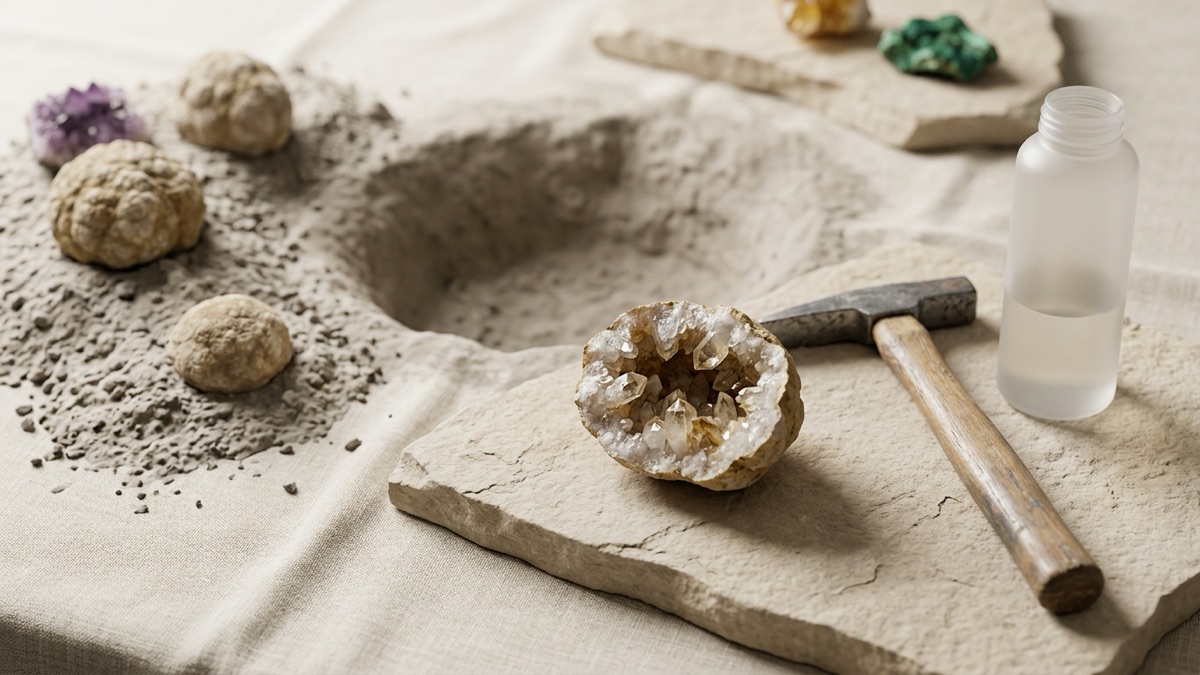
The pictures in this guide are AI-generated illustrations of what to look for; real specimens vary, so trust the tests over any picture. RockhoundID guides help you narrow down what you found. They suggest likely candidates, not certain identifications or appraisals. For anything valuable, rare or possibly from space, ask a museum, a university geology department or your state geological survey, and check the collecting rules for the land before you take anything home.
Questions rockhounds ask
Can you take rocks from national parks?
No. National Park Service rules (36 CFR 2.1) prohibit possessing, removing or disturbing rocks, minerals and fossils in any area the Park Service administers, including national seashores and many national monuments. Only researchers with a permit may collect.
How much can you collect on BLM land?
The rule allows reasonable amounts for noncommercial use without setting one national number for rocks. BLM Arizona defines reasonable as up to 25 pounds a day and 250 pounds a year, and petrified wood has a federal limit of 25 pounds plus one piece a day, up to 250 pounds a year.
Is it illegal to take rocks from public land?
It depends on the agency. BLM land generally allows small personal amounts, many national forests allow hobby collecting (some with a free permit), and national parks allow none. Collecting where it is prohibited can bring criminal or civil penalties.
Can I sell rocks I collect on public land?
Not without a permit. BLM's casual collecting is for noncommercial use only, collecting for sale needs a contract or permit, and petrified wood and fossils from public land may not be sold or bartered to dealers.
Can I keep an arrowhead I find on public land?
No. Arrowheads, flakes, pottery and other artifacts may not be collected on public land without a permit, and the Forest Service advises not collecting any rocks from an area where artifacts lie on the surface.
Where these facts come from
- eCFR: 43 CFR 8365.1-5, property and resources (BLM): www.ecfr.gov/current/title-43/subtitle-B/chapter-II/subchapter-H/part-8360/subpa
- BLM: Public collection of rocks, mineral specimens and semiprecious gemstones FAQ (February 28, 2024): www.blm.gov/sites/default/files/docs/2024-02/BLM-Rock-Collection-FAQs_2-28-24.pd
- BLM: Rockhounding on public lands (checked September 30, 2026): www.blm.gov/programs/recreation/rockhounding
- eCFR: 43 CFR 3622.4, petrified wood collection rules: www.ecfr.gov/current/title-43/subtitle-B/chapter-II/subchapter-C/part-3620/subpa
- eCFR: 43 CFR 8360.0-7, penalties: www.ecfr.gov/current/title-43/subtitle-B/chapter-II/subchapter-H/part-8360/subpa
- BLM: Collecting fossils (checked September 30, 2026): www.blm.gov/programs/paleontology/collecting-fossils
- BLM Arizona: Rock Hounding in Arizona brochure: www.blm.gov/sites/default/files/documents/files/2014%20Rockhounding_14_web_2018.
- USDA Forest Service: Rockhounding Guide, FS-1091 (June 2017): www.fs.usda.gov/media/229394
- Prescott National Forest: Rocks and minerals (updated April 2, 2025): www.fs.usda.gov/r03/prescott/recreation/rocks-minerals
- Tonto National Forest: Geology (updated September 10, 2026): fs.usda.gov/r03/tonto/natural-resources/geology
- Gifford Pinchot National Forest: Minerals and rocks (updated April 24, 2026): www.fs.usda.gov/r06/giffordpinchot/permits/minerals-rocks
- 36 CFR 291.11, Forest Service casual collecting of fossils: www.law.cornell.edu/cfr/text/36/291.11
- eCFR: 36 CFR 2.1, preservation of natural resources (National Park Service): www.ecfr.gov/current/title-36/chapter-I/part-2/section-2.1
- eCFR: 36 CFR 1.2, applicability and scope (National Park Service): www.ecfr.gov/current/title-36/chapter-I/part-1/section-1.2
- NPS: Fossil protection (updated October 11, 2024): www.nps.gov/subjects/fossils/fossil-protection.htm
- NPS Petrified Forest: Petrified wood: www.nps.gov/pefo/learn/nature/petrified-wood.htm
- Utah Geological Survey: Rock, mineral and fossil collecting rules: geology.utah.gov/popular/rocks-minerals/collecting-rules/
- Iowa Geological Survey: Iowa geodes: iowageologicalsurvey.uiowa.edu/iowa-geology/popular-interest/iowa-geodes
- California Code of Regulations, Title 14, section 4307 (state parks): www.law.cornell.edu/regulations/california/14-CCR-4307
- BLM: Sunstone Collection Area, Oregon: www.blm.gov/visit/sunstone-collection-area
- BLM: Maps (National Data map viewer): www.blm.gov/maps
- BLM: Mineral and Land Records System (MLRS): www.blm.gov/services/land-records/mlrs
Read next
rockhounding
Where to Find Geodes: The Best Places in the US