Meteorite Metal Detector: Do You Need One to Find Them?
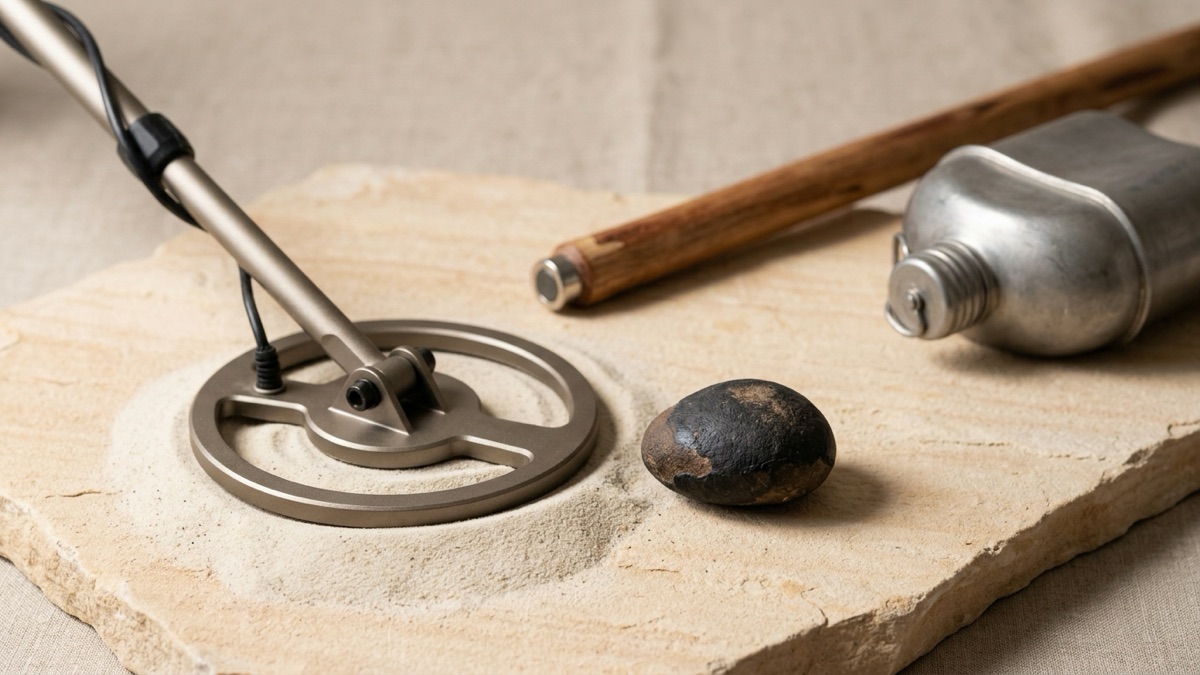
Picture it: a wide, dry lake bed, a slow sweep of the coil, and a sudden beep over a dark stone. That is the dream behind every search for a meteorite metal detector. The truth is a bit more complicated, and knowing it first can save you money and a run-in with a ranger.
Quick answer
You do not need a metal detector to find a meteorite, but it helps in the right place. Iron meteorites and most stony ones contain iron-nickel metal, so a detector responds to them. It responds to nails and slag too, and it cannot tell whether metal contains nickel. Detectors are banned in national parks.
Key takeaways
- A detector responds to the iron-nickel metal in iron meteorites and most stony meteorites. The rare metal-poor kinds give it little or nothing to find.
- No detector can tell meteorite metal from a nail or a lump of cast iron, and none can detect nickel.
- Many hunters pair a detector with a strong magnet on a walking stick, then test each pickup with a cheap fridge magnet.
- The best hunting ground is open, flat and dry with few other rocks. Most US finds come from arid states.
- Rules first: no detectors in national parks, limited surface collecting on BLM land, and leave anything historic where you found it.
Why does a metal detector react to meteorites?
Because most meteorites carry real metal. Washington University in St. Louis geochemist Randy Korotev notes that more than 95 percent of meteorites contain iron-nickel metal, which does not occur naturally in Earth rocks. That metal is what a detector notices, and it is why most meteorites attract a cheap magnet.
How much metal there is depends on the type:
| Meteorite type | Metal content | What a detector has to work with |
|---|---|---|
| Iron | Nearly all iron-nickel metal | A solid metal target |
| Stony-iron | Roughly half metal | Plenty of metal |
| H ordinary chondrite | About 15 to 20 percent metal | Many scattered metal grains |
| L ordinary chondrite | About 7 to 11 percent | Fewer grains |
| LL ordinary chondrite | About 3 to 5 percent | Little metal |
| Achondrite | Little or none | Next to nothing |
The pattern is simple: the less metal a meteorite holds (figures from Korotev's pages), the less there is for a detector to respond to. Achondrites, the group that includes lunar and martian meteorites, are the ones a detector is most likely to miss. Our guide to what a meteorite is explains the types.
Can a metal detector tell a meteorite from junk?
No, and it is the most important thing to know before you buy one. Korotev puts it plainly: a detector might tell a US nickel coin from a penny, but it cannot tell whether a piece of metal or a rock contains enough nickel to be a meteorite. Iron meteorites hold about 5 to 30 percent nickel, while industrial iron usually holds less than 1 percent, and only a chemical analysis can measure the difference.
The shortcuts people try do not fix that. Korotev reports that nickel allergy test kits (the dimethylglyoxime or DMG swab) are so sensitive that they can turn pink on ordinary cast or wrought iron, giving false positives. Handheld X-ray guns at scrap yards, coin shops and jewelers are mostly built to test metals and ores, and he finds their results on rocks are often misleading, though in skilled hands they can help with iron meteorites. For a possible iron meteorite, he recommends a lab analysis for iron, nickel, chromium and manganese.
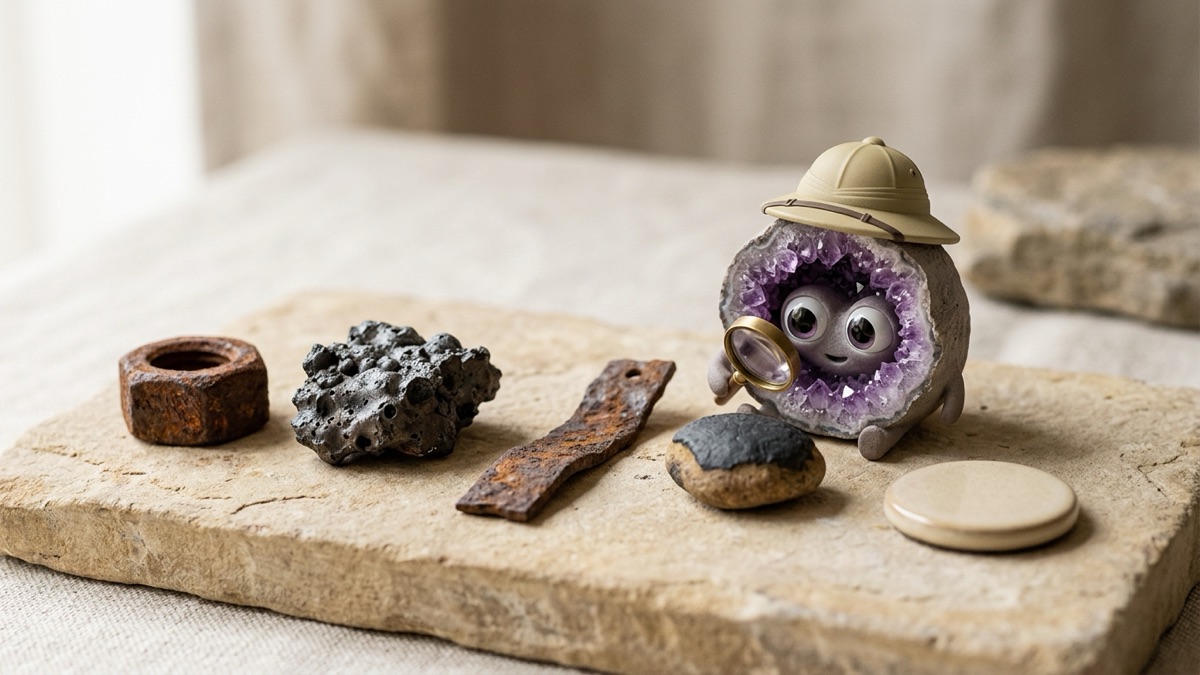
Meanwhile, most beeps are junk. The photos people send Korotev include hex nuts, machine parts and poured metal, many found with metal detectors. A free field check helps: iron meteorites have no flat sides, right angles or straight lines, and they do not bend or break unless badly rusted.
Tip
Carry a cheap multimeter. Korotev notes that on solid metal, the probes read a low resistance, under about 10 ohms, while shiny hematite and pyrite do not conduct. It will not settle an ordinary chondrite, whose metal grains are not connected, but it quickly separates real metal from metallic-looking rock.
How do meteorite hunters use detectors and magnets?
The American Meteor Society says meteorite hunters often use metal detectors or very strong magnets attached to a walking stick, and that meteorites have been known to jump out of loose soil when a strong magnet passes over. A magnet on a stick is cheap, light and quick over open ground, while a detector can find metal-rich stones just under the surface.
There is one catch with the magnet cane. A strong rare-earth magnet grabs magnetite-rich Earth rocks too, so treat every pickup as a candidate, not a find. Test it the way Korotev recommends: a weak ceramic fridge magnet should still stick, and a sawn or broken face should show shiny metal grains. Our magnetic rocks guide covers the Earth rocks your cane will collect.
When a meteoroid breaks up in the air, the American Meteor Society explains, its fragments land in a roughly elliptical strewn field a few miles long, with the larger pieces usually farther along. Arizona State University notes that strewn field maps come from private vendors and from scientific articles about particular falls. Expect to be patient: Korotev notes that even experienced hunters can go years between finds.
Where are meteorites found?
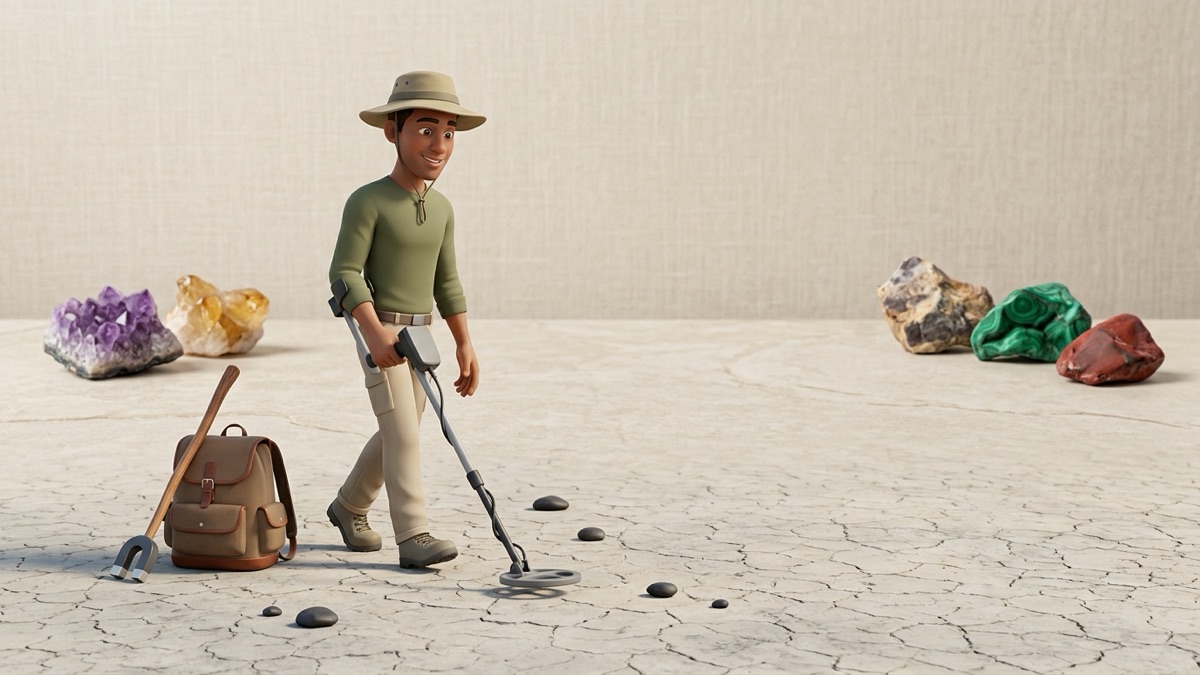
Almost always in deserts. Korotev's statistics show that nearly all meteorites are found in deserts, counting Antarctica, where nearly 42,000 have been collected. In the United States, about two thirds of finds come from arid parts of California, Nevada, Arizona, New Mexico, Texas and Kansas.
The American Meteor Society describes the best hunting grounds as open, flat, dry places with a light-colored background, where dark stones stand out. Far from a desert, it suggests freshly plowed fields after rain. Beaches, stream beds, roads and railroads are poor bets, and slag is common there.
Where is it legal to metal detect for meteorites?
Check this before you pack the car. The land manager decides what you may do, and the rules differ a lot:
| Land | Metal detectors | Meteorites |
|---|---|---|
| National parks | Must stay broken down and stowed | No collecting at all |
| BLM public land | Allowed for rockhounding | Limited hobby collecting from the surface |
| National forests | Allowed as low-impact recreation in suitable spots | Ask the ranger district first |
| Bureau of Reclamation and Fish and Wildlife Service land | Check with the agency | BLM says casual collecting is not allowed |
| Private land | Only with the owner's permission | Belongs to the landowner |
National parks. Under 36 CFR 2.1, possessing or using a metal detector in a national park is prohibited unless it is broken down and stowed, and removing minerals is prohibited too.
BLM land. The Bureau of Land Management (BLM) manages much of the public land in the West, including a lot of desert. Its rule at 43 CFR 8365.1-5 bans explosive, motorized and mechanical collecting tools but makes an exception for metal detectors. BLM's 2012 meteorite policy, Instruction Memorandum 2012-182, allowed hobby collecting without a permit: surface collection only, up to 10 pounds of meteorites per person per year, for personal use, with no sale or barter.
Developed recreation sites, some national monuments and conservation areas, some wilderness areas and other closed areas were off limits. That memo lists a 2013 expiration date but was still posted on BLM's site when we checked in September 2026, so confirm the current rules with the local field office. Because the policy limits hobby collecting to the surface, ask before you dig for a detector target.
National forests and private land. The Forest Service allows recreational detecting in appropriate places, with shallow holes you fully backfill, but its page does not address meteorites, so ask the ranger district. On private land, get permission first; BLM's meteorite FAQ notes that courts have long held that meteorites belong to the owner of the land surface. Our guide to rock collecting rules covers the rest.
Heads up
Old metal can be protected history. On national forests, for example, the Forest Service treats materials at least 100 years old with scientific or cultural interest as archaeological resources under the Archaeological Resources Protection Act. If your detector turns up an old artifact, stop, leave it where it is and report it. And carry plenty of water: meteorite country is hot, dry and remote.
What should you do when the detector finds something?
Work through it in order:
- Check that you may dig. BLM hobby collecting is surface only, and national forest holes must be shallow and backfilled.
- Look at the shape. Flat faces, right angles, straight lines or a manufactured look mean junk.
- Try a cheap magnet and look for a crust. Metal that ignores a fridge magnet is not a meteorite, and a thin, dark skin that is darker than the inside is the best sign of a stony one.
- Record it, do not clean it. Photograph it in place and save the location. No wire brush, acid, other chemicals or blow torch.
Then run the full set of checks in our hub on how to identify a meteorite, and compare your find with the common look-alikes in meteorite or meteor-wrong.
Which metal detector is best for meteorites?
We do not rank detector models, because we have not tested them side by side, and no detector can identify a meteorite anyway. Any detector responds to metal, none can detect nickel, and a strong magnet on a walking stick works for stones lying on the surface. If you do buy one, practice in your own yard on a small iron object at a few depths, so you learn what a small target sounds like. Our guide to rockhounding tools covers the rest of a sensible field kit.
Try it
Found a candidate? Run it through the free meteorite checker. Nine quick questions give you an honest verdict and the look-alikes your answers point to.
The takeaway
A metal detector is a helper, not a meteorite finder. It points you to metal, and your magnet, your eyes and eventually a lab decide what that metal is. The RockhoundID app, coming soon, will suggest likely matches from a photo and point out the meteorite checks a photo cannot settle. Pick legal ground, bring water, and enjoy the walk, because most days the desert keeps its meteorites to itself.
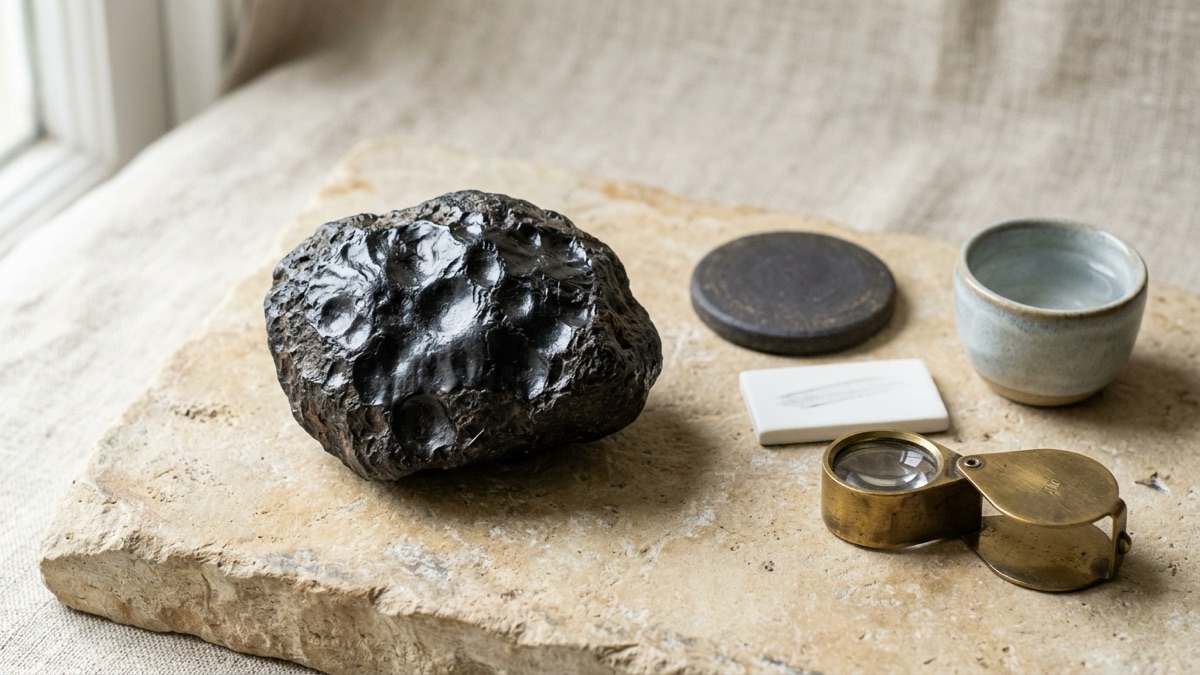
The pictures in this guide are AI-generated illustrations of what to look for; real specimens vary, so trust the tests over any picture. RockhoundID guides help you narrow down what you found. They suggest likely candidates, not certain identifications or appraisals. For anything valuable, rare or possibly from space, ask a museum, a university geology department or your state geological survey, and check the collecting rules for the land before you take anything home.
Questions rockhounds ask
Can a metal detector find meteorites?
Yes, iron meteorites and most stony meteorites contain iron-nickel metal that a detector responds to, and meteorite hunters use detectors for exactly that. A detector responds to nails, cans and slag just the same, though, so every signal still has to be checked.
Can a metal detector tell if metal contains nickel?
No. Washington University in St. Louis explains that metal detectors cannot tell whether iron metal contains enough nickel to be a meteorite. That takes a laboratory analysis for iron, nickel, chromium and manganese.
Do all meteorites set off a metal detector?
No. Achondrites, a rare group of stony meteorites that includes lunar and martian meteorites, usually hold little or no metal, so a detector has little to respond to. Iron meteorites give the strongest target, and ordinary chondrites fall in between.
Can I use a metal detector to hunt meteorites on BLM land?
BLM regulations allow metal detectors for rockhounding on open public land, and a 2012 BLM policy allowed hobby collecting of up to 10 pounds of meteorites per person per year from the surface, for personal use only. Check with the local BLM field office before you go.
Can I use a metal detector in a national park?
No. National Park Service rules prohibit possessing or using a metal detector in a park unless it is broken down and stowed, and collecting rocks, minerals or meteorites is not allowed there.
Where these facts come from
- Washington University in St. Louis (Randy Korotev): Metal detectors: sites.wustl.edu/meteoritesite/items/metal-detectors/
- Washington University in St. Louis: Metal, iron and nickel: sites.wustl.edu/meteoritesite/items/metal-iron-nickel/
- Washington University in St. Louis: Man-made metal things: sites.wustl.edu/meteoritesite/items/man-made_metal_things/
- Washington University in St. Louis: Meteorite testing: sites.wustl.edu/meteoritesite/items/meteorite-testing/
- Washington University in St. Louis: Magnetic attraction: sites.wustl.edu/meteoritesite/items/magnetic_attraction/
- Washington University in St. Louis: Some meteorite realities: sites.wustl.edu/meteoritesite/items/some-meteorite-realities/
- Washington University in St. Louis: Meteorite statistics: sites.wustl.edu/meteoritesite/items/some-meteorite-statistics/
- American Meteor Society: Fireball FAQs (archived copy, December 2025): web.archive.org/web/20251230021807/https://www.amsmeteors.org/fireballs/faqf/
- BLM Instruction Memorandum 2012-182: Collection of Meteorites on Public Land: www.blm.gov/policy/im-2012-182
- BLM IM 2012-182 attachment: FAQs on meteorites on public land: www.blm.gov/sites/blm.gov/files/uploads/IM2012-182_att1.pdf
- 43 CFR 8365.1-5, BLM: property and resources: www.ecfr.gov/current/title-43/subtitle-B/chapter-II/subchapter-H/part-8360/subpa
- 36 CFR 2.1, National Park Service: preservation of natural resources: www.ecfr.gov/current/title-36/chapter-I/part-2/section-2.1
- USDA Forest Service: Metal detecting: www.fs.usda.gov/visit/know-before-you-go/metal-detecting
- Arizona State University, Buseck Center for Meteorite Studies: FAQ, meteorite facts: meteorites.asu.edu/faq/faq-meteorite-facts
Read next


rockhounding
Where to Find Geodes: The Best Places in the US