Rock Tumbler Grit: Which Grit, How Much and Why
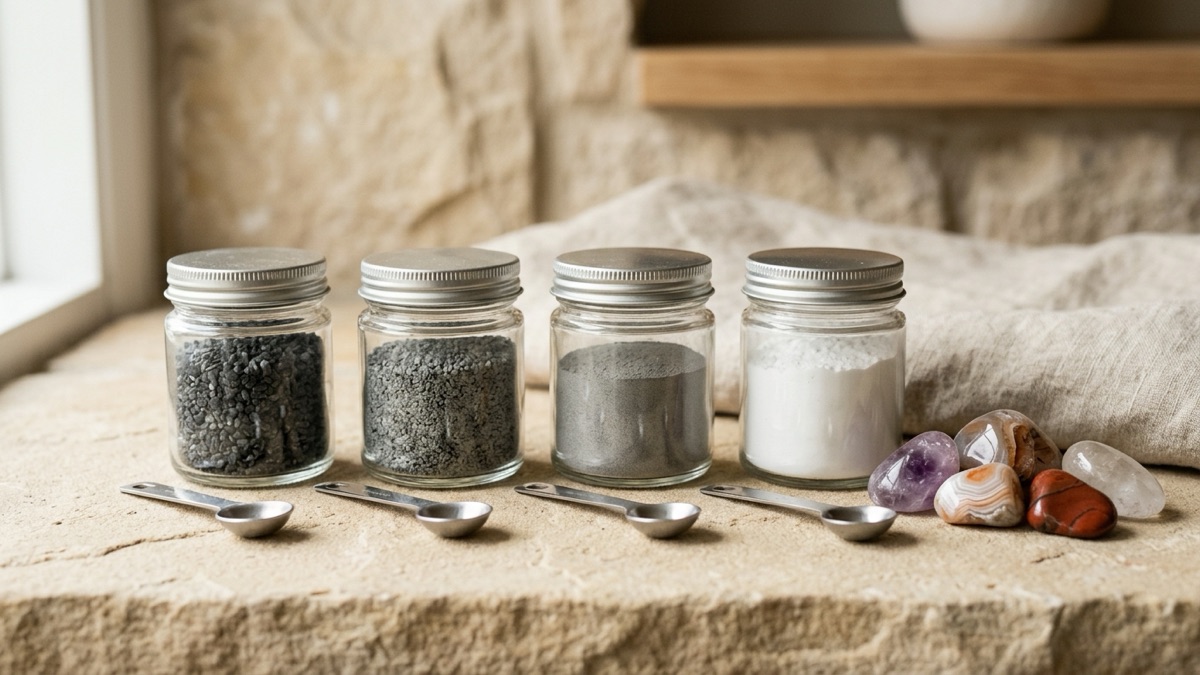
The tumbler gets the credit, but the grit does the work. The machine just turns; the grit is what actually grinds your rocks from rough to glassy. Pick the wrong grit, or not enough, and you can spend a month polishing scratches.
Quick answer
Rock tumbler grit is crushed silicon carbide, far harder than the agate and jasper you tumble. Use 60/90 for the coarse stage, about 120/220 or 150/220 for medium, 500 or 600 for fine, then an aluminum oxide or cerium oxide polish. In a rotary tumbler, add about two level tablespoons per pound of rock.
Key takeaways
- The bigger the grit number, the finer the grain. A 60 grit grain is about a quarter of a millimeter across; 500 grit is about 25 microns; polishes are only about 1 to 4 microns.
- Silicon carbide works because it is very hard (about 9 to 9.5 on the Mohs scale), breaks into sharp grains and is inexpensive. Beach sand is quartz, no harder than most tumbling rough.
- Rotary tumblers use about two level tablespoons per pound of rock; vibratory tumblers about half a tablespoon.
- Grit wears out as it works. Start every stage with fresh grit, and do not bother trying to recycle it.
- Give every grit size its own spoon and container, and never let the slurry go down a drain.
What is rock tumbler grit made of?
Almost all tumbling grit is silicon carbide, a man-made abrasive. RockTumbler.com explains that it is produced by heating petroleum coke and sand in an electric furnace, then crushing the result and screening it into sizes. The same material is used on sandpaper and for sandblasting.
Three things make it ideal for tumbling:
- It is very hard. At about 9 to 9.5 on the Mohs scale, it is well above agate, jasper and quartz, which sit around 7.
- It breaks into sharp, angular grains. Points and edges cut; rounded grains mostly roll.
- It is inexpensive. It is sold by the pound, and a pound goes a long way in a small tumbler.
Fun fact
Silicon carbide does occur in nature, as the mineral moissanite, but RockTumbler.com notes that natural moissanite is extremely rare and found only in tiny amounts. Every grain in your grit bag was made in a furnace.
What do the grit numbers mean?
Grit numbers work like sandpaper: small numbers mean big grains, big numbers mean tiny ones. The number comes from the screens used to sort the grains: the higher the number, the finer the screen. Here are approximate grain sizes from RockTumbler.com's grit chart. A micron is a thousandth of a millimeter.
| Grit number | Grain size, about | Where you meet it |
|---|---|---|
| 60 | 250 microns | Coarse stage (the big end of 60/90) |
| 90 | 166 microns | Coarse stage (the small end of 60/90) |
| 120 | 125 microns | Medium stage (120/220) |
| 150 | 100 microns | Medium stage (150/220) |
| 220 | 68 microns | Medium stage |
| 500 | 25 microns | Fine or pre-polish stage |
| 600 | 20 microns | Fine or pre-polish stage |
| Polish | about 1 to 4 microns | Final stage |
Two labels confuse almost everyone:
- "60/90" is a range, not a fraction. It is an ungraded mix of grains smaller than 60 grit but larger than 90 grit. Ungraded grit costs less than grit screened to one exact size, and it works fine for the coarse and medium stages.
- "500F" means finer than 500. The F stands for finer.
Bigger is not faster, either. RockTumbler.com tried very coarse 20 grit on hard flint and found almost all of it survived a month in the barrel with little rounding to show for it. The reason: a spoonful of huge grains contains far fewer particles, so there are fewer cutting points. RockTumbler.com recommends extra coarse 46/70 grit only for barrels of at least six pounds, or for month-long runs.
Which grit goes in each stage?
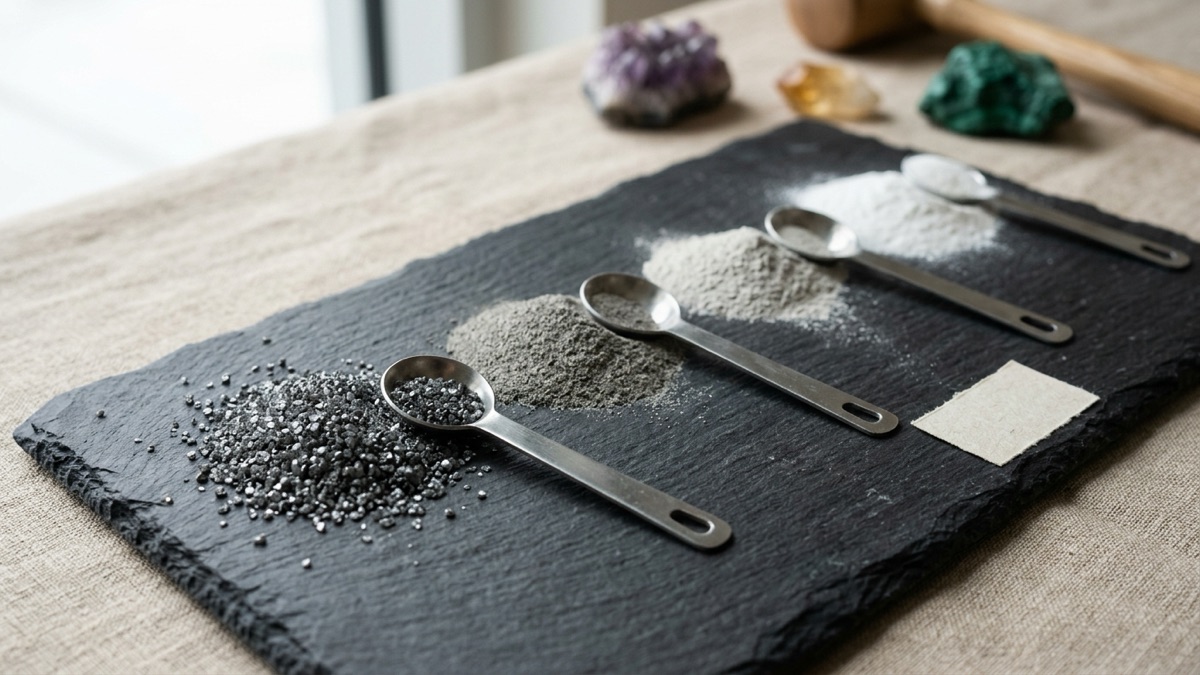
Every stage has one job, and each finer grit removes the scratches left by the one before it.
| Stage | Typical abrasive | Its job |
|---|---|---|
| 1. Coarse | 60/90 silicon carbide | Grinds off points and edges; does all the shaping |
| 2. Medium | 120/220 or 150/220 silicon carbide | Erases the coarse scratches, leaves a smooth frosted surface |
| 3. Fine (pre-polish) | 500 or 600 silicon carbide | Erases the medium scratches, gets the surface ready to shine |
| 4. Polish | Aluminum oxide, cerium oxide or tin oxide | Brings up the bright luster |
Makers vary a little. Lortone's Model 3A manual uses 60/90 and 120/220 silicon carbide, then an aluminum oxide pre-polish and an aluminum oxide polish. Kingsley North's instructions use 80, 220 and 600 grit, then cerium oxide. If your tumbler came with a grit kit and instructions, follow those first.
Vibratory tumblers usually skip the coarse stage. RockTumbler.com says coarse grains are too large to cling to the rocks in a vibrating bowl, so vibratory recipes start with medium grit. Our comparison of rotary vs vibratory tumblers covers the other differences.
Which rock tumbler polish should you use?
Polishes are much finer than grit and are usually oxides rather than silicon carbide. RockTumbler.com describes the common choices this way:
- Aluminum oxide. The everyday polish for agate, jasper, petrified wood and quartz. A popular grade has particles centered around 3 microns, and it costs less than tin or cerium oxide.
- Cerium oxide. A favorite for natural and man-made glass, obsidian, and feldspars such as moonstone and labradorite. It also works on agate and jasper. It is the polish we would reach for when tumbling sea glass.
- Tin oxide. A classic from the early days of the hobby, still liked for quartz, agate, and especially obsidian and glass.
Some people add a 1000 grit step between fine grit and polish. RockTumbler.com says it is rarely needed for everyday tumbling, but they use it before polishing very soft materials such as fluorite and calcite.
How much grit do you need per pound of rock?
For a rotary tumbler, the standard amount is about two level tablespoons of grit or polish per pound of rock, with water to just below the top of the rocks. RockTumbler.com uses that ratio for all four stages. Lortone's 3A manual gives fixed amounts for its barrel instead: 4 tablespoons for each silicon carbide stage and 6 for the aluminum oxide pre-polish and polish.
A vibratory tumbler needs far less, about half a tablespoon per pound, because the grit sticks to the wet rocks instead of sloshing around in a slurry. That works out to roughly a quarter as much grit and polish for the same rocks.
More grit is not better. If you open the barrel after a week and find lots of unbroken grit, RockTumbler.com suggests two fixes: run a few more days to wear it out, or check whether the barrel was loaded more than about two thirds full, which stops the rocks from tumbling. Softer rocks, below about Mohs 6 or 7, also wear grit out more slowly, so you can use a little less.
Try it
Want to see why grit beats sand? Compare quartz (7) with corundum (9) in the free Mohs hardness scale tool. Silicon carbide is about as hard as corundum or a little harder, so it scratches your agate easily, while sand, which is mostly quartz, is only as hard as the rocks you are trying to grind.
Can you use sand instead of grit?
You can, but you will probably switch back after one batch. RockTumbler.com's reasons boil down to three:
- Hardness. Most beach and river sand is quartz, about 7 on the Mohs scale, the same as agate, jasper and petrified wood. Materials of equal hardness barely cut each other.
- Grain shape. Natural sand grains are usually rounded, while crushed silicon carbide is sharp and angular.
- Sizes and electricity. You would have to sieve sand into coarse, medium and fine yourself, and the extra weeks of running time to make up for slow cutting cost more in electricity than the grit you saved.
The one exception they mention: very soft materials such as obsidian, marble, fluorite or calcite, where sand of the right size might do the job.
Can you reuse rock tumbler grit?
The practical answer is no. Every time a grain gets pinched between two rocks, it scratches the rock and chips a little itself. By the end of a week, your coarse grit has become a much larger number of much smaller pieces mixed with rock mud. Screening it out would cost more time and water than new grit is worth.
That breakdown is not all bad. RockTumbler.com has experimented with skipping the fine stage by running rocks two extra weeks in medium grit, which grinds the grit finer on its own. They only do it with rocks of about Mohs 7, and about half the time they run the polish 12 to 24 hours longer too. For your first batches, stick with all four stages.
How do you handle, store and clean up grit?
- One spoon per grit. Keep a labeled container and its own measuring spoon for each size. A few coarse grains in the polish will scratch every stone.
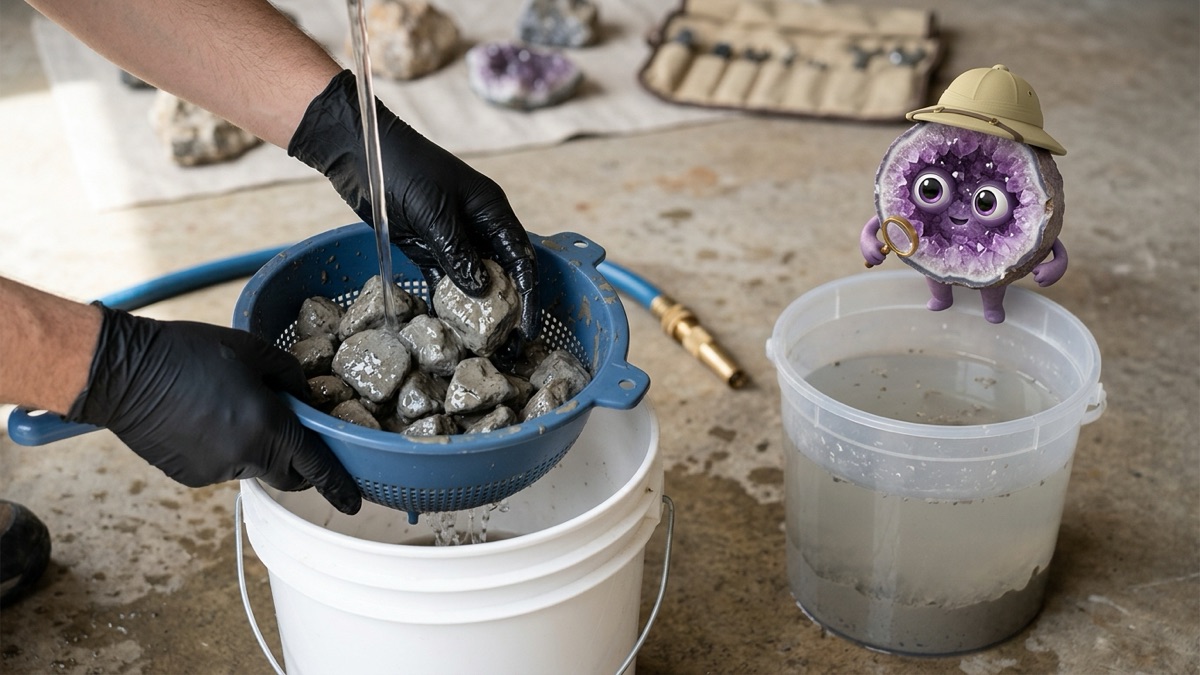
- Wash rocks right away. Rinse in a colander over a bucket as soon as the barrel is open, before the mud dries on the rocks.
- Clean everything between stages. Rocks, barrel, lid, rim, colander and your hands. Some tumblers keep a separate barrel only for polish.
- Keep grit out of the plumbing. Kingsley North warns that slurry settles in pipes and hardens like cement, and says to dispose of it outdoors or in the trash. Let the mud settle to the bottom of the bucket, pour the clear water off outside, and let the sludge dry before you bag it.
Heads up
Wear safety glasses when you dump and rinse a barrel, because the mud splashes, and pour dry grit gently so you do not raise a cloud of dust. Wash your hands afterward.
The takeaway
Grit is simple once you know the pattern: silicon carbide from coarse to fine, then an oxide polish, about two tablespoons per pound in a rotary tumbler, fresh every stage, and never down the drain. For the full routine of loading, timing and cleaning, see our step-by-step rock tumbler guide. To choose rough that deserves good grit, start with the best rocks for tumbling, and check the before and after guide to see what each stage should leave behind. The RockhoundID app, coming soon, will suggest likely matches from a photo and tell you which test confirms them.
The pictures in this guide are AI-generated illustrations of what to look for; real specimens vary, so trust the tests over any picture. RockhoundID guides help you narrow down what you found. They suggest likely candidates, not certain identifications or appraisals. For anything valuable, rare or possibly from space, ask a museum, a university geology department or your state geological survey, and check the collecting rules for the land before you take anything home.
Questions rockhounds ask
What grit do you use first in a rock tumbler?
Most rotary instructions start with 60/90 silicon carbide, a coarse grit that does the shaping. It is followed by a medium grit around 120/220 or 150/220, a fine grit around 500 or 600, and then a polish.
Can I use sand instead of rock tumbler grit?
It will barely work. Most sand is quartz, the same hardness as agate and jasper, and its grains are rounded. Silicon carbide is much harder and breaks into sharp grains, so it grinds far faster, and the extra running time sand needs usually costs more than the grit you save.
How much grit do you put in a rock tumbler?
In a rotary tumbler, about two level tablespoons of grit or polish per pound of rock is the usual rule. Vibratory tumblers use much less, about half a tablespoon per pound. Your tumbler's own manual may give an exact amount for its barrel.
What is the difference between aluminum oxide and cerium oxide polish?
Both are fine polishing powders. Aluminum oxide is the everyday choice for agate, jasper and quartz and usually costs less. Cerium oxide is a favorite for glass, obsidian and feldspars such as moonstone, and also works on agate and jasper.
Can you reuse rock tumbler grit?
Not in any useful way. Grit breaks into smaller and smaller pieces as it works, so by the end of a stage it is spent. Start each stage with fresh grit and throw the old slurry out with the trash.
Where these facts come from
- RockTumbler.com: what is rock tumbler grit? (silicon carbide and grit sizes): rocktumbler.com/blog/what-is-silicon-carbide-grit/
- RockTumbler.com: rock tumbler grit (amounts, reuse, extra coarse and 1000 grit): rocktumbler.com/grit.shtml
- RockTumbler.com: can I use sand instead of rock tumbler grit?: rocktumbler.com/blog/can-i-use-sand-in-a-rock-tumbler-instead-of-grit/
- RockTumbler.com: rock tumbler polish: rocktumbler.com/polish/
- RockTumbler.com: rock tumbler instructions: rocktumbler.com/tips/rock-tumbler-instructions/
- RockTumbler.com: experimental tumbling, skipping fine grit: rocktumbler.com/tips/skipping-fine-grit/
- Lortone: Model 3A rotary tumbler instructions and parts list (PDF): lortone.com/cdn/shop/t/4/assets/3A_Tumbler_Instructions.pdf
- Kingsley North: rotary rock tumbling instructions: kingsleynorth.com/pages/rotary-rock-tumbling-instructions
- Kingsley North: how to keep your rock tumbling equipment clean: kingsleynorth.com/blogs/posts/how-to-keep-your-rock-tumbling-equipment-clean
Read next
identification
Streak Test: What Your Rock's Streak Color Means
identification
Rock Identification Apps: What a Photo Can Really Tell