Agate vs Jasper: How to Tell Them Apart in Seconds
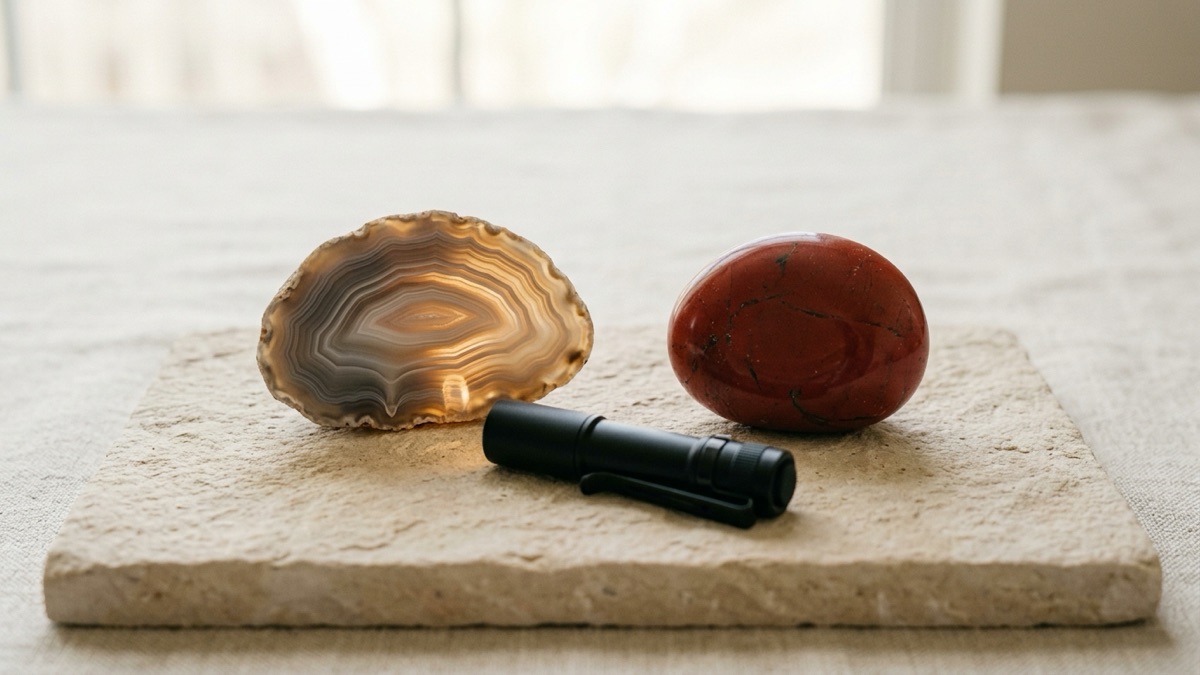
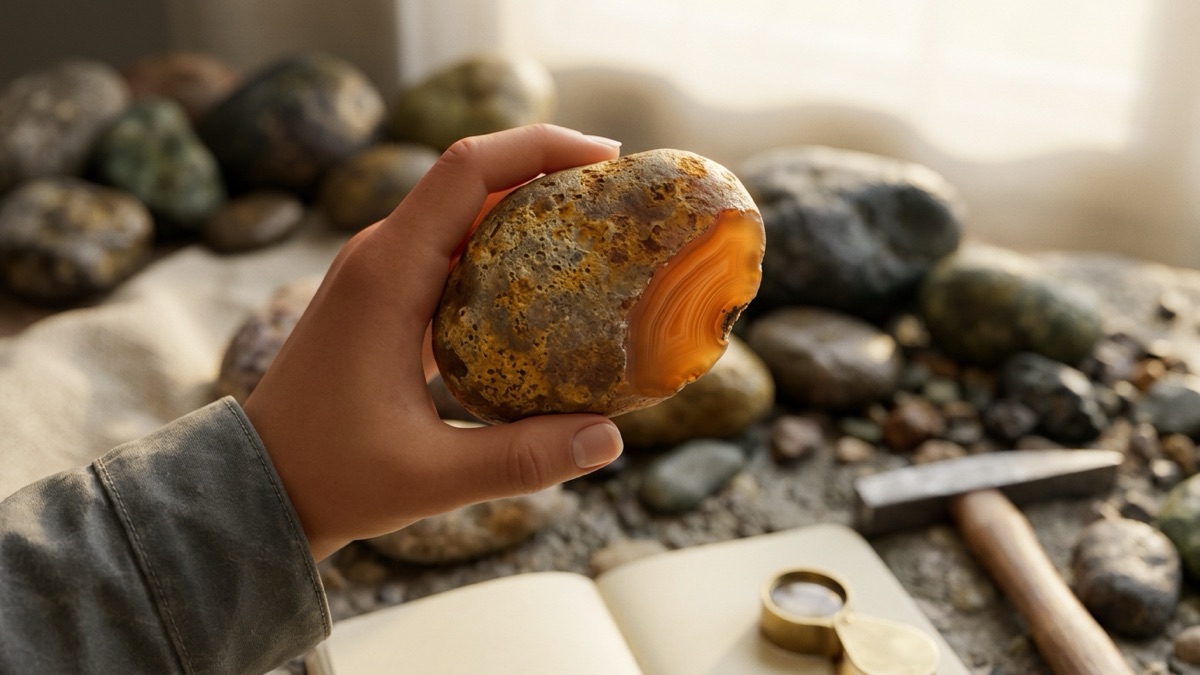
You have two smooth pebbles from the same creek. Both are hard, both have a nice shine, one is striped and one is brick red. One is agate and one is jasper, and a flashlight can tell you which is which in about three seconds.
Quick answer
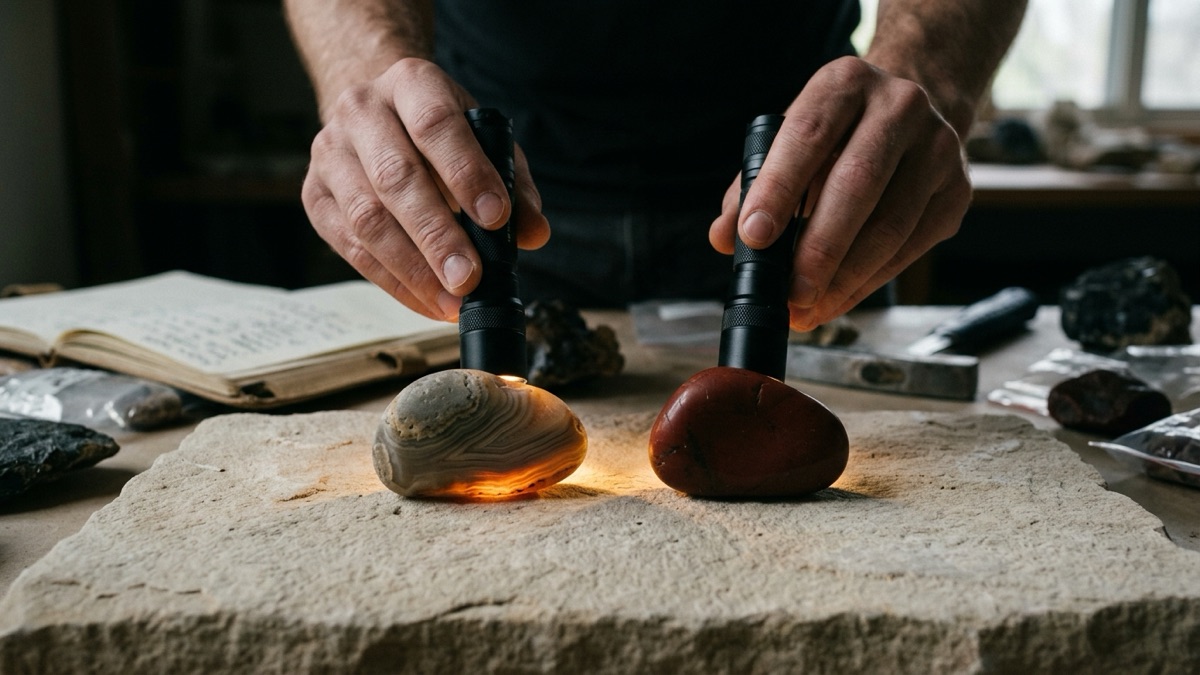
Agate and jasper are both chalcedony, a form of quartz made of microscopic crystals, and both are about 6.5 to 7 on the Mohs scale. The difference is light. Hold a bright flashlight behind a thin edge: agate is translucent and glows, while jasper is opaque because impurities block the light, so it stays dark.
Key takeaways
- Agate and jasper are the same mineral family: chalcedony, which is quartz with crystals too small to see.
- Agate is translucent and usually banded. Jasper is opaque, often in earthy reds, browns, yellows and greens.
- The flashlight test on a thin edge is the fastest way to tell them apart.
- Hardness will not separate them (both scratch glass), but it does rule out soft look-alikes.
- Some stones are both, with agate and jasper zones side by side.
What is the difference between agate and jasper?
It comes down to how much light gets through. Geologist and gemologist Hobart King defines agate as a translucent to semitransparent chalcedony, and jasper as an opaque variety of chalcedony. Jasper contains enough impurities and foreign material to make it opaque.
The University of Auckland's quartz page makes the family link even plainer, calling jasper a colorful impure agate. The USGS gemstone list files agate, onyx, carnelian, moss agate and jasper together as cryptocrystalline varieties of silica. "Cryptocrystalline" means the crystals are so small you need a microscope to see them.
So you are not choosing between two different minerals. You are asking whether this piece of chalcedony is clear enough to pass light or clouded enough to block it.
What is chalcedony, and how is it different from agate?
Chalcedony is the umbrella. Peter Modreski's abstract for the New Mexico Mineral Symposium, published by the New Mexico Bureau of Geology, describes chalcedony as cryptocrystalline quartz made of minute, fibrous microcrystals. The Natural History Museum in London calls agate a type of chalcedony, which is itself a variety of quartz, with bands colored by impurities such as iron oxides.
In practice, the names split like this:
- Chalcedony: plain, translucent, usually one soft color (milky white, gray, pale blue).
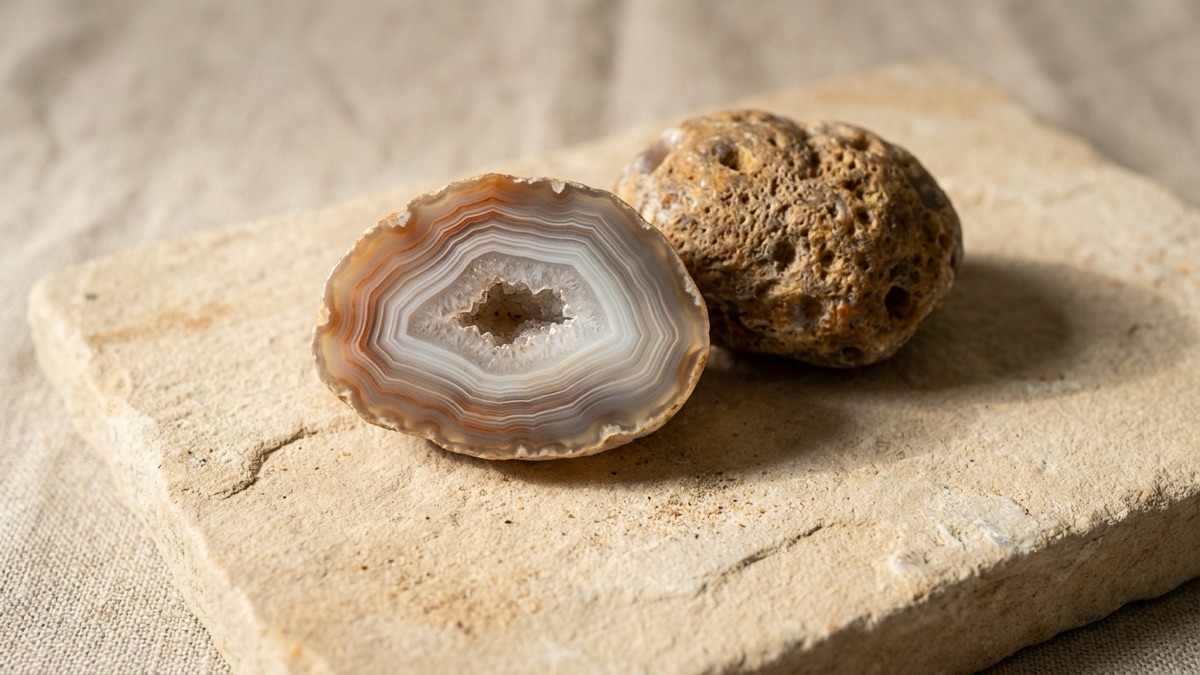
- Agate: translucent chalcedony with bands, rings or another pattern.
- Jasper: opaque chalcedony in any color or pattern.
That is why "chalcedony vs agate" is a naming question rather than a mineral one. Every agate is chalcedony. Not every chalcedony has enough pattern to be called agate.
How do you do the flashlight test?
This is the test that settles most agate vs jasper arguments on the spot.
What you need
A small, bright LED flashlight (a phone light works in a pinch), a dim spot or some shade, and the stone. A drop of water helps if the surface is frosted.
Step by step
- Find the thinnest edge of the stone. A thin rim, a chipped corner or a flake works best.
- Press the light against one side of that edge, or hold it just behind it.
- Look at the edge from the other side. If light glows through it, you are looking at translucent chalcedony: agate or plain chalcedony.
- Check the thick part too. Agate often glows at the edges and goes dark in the middle. That is normal; thickness matters.
- If nothing glows anywhere, even at a paper-thin edge, the stone is opaque, which points to jasper (or another opaque rock).
When the test gets tricky
- Dark agate (black onyx, deep red pieces) may need a very bright light and a very thin edge.
- Thick, round pebbles with no edges can fool you. Try a different spot, or look for a chip.
- Mixed stones have translucent zones and opaque zones. King notes that some specimens have both, and people sometimes call them jaspagate or jasper-agate.
Agate vs jasper at a glance
Values below come from our rock identifier dataset, which cites the University of Auckland, the USGS and the Minnesota DNR.
| Feature | Agate | Jasper |
|---|---|---|
| Light through a thin edge | Yes, it glows | No, it stays dark |
| Usual pattern | Curved bands, rings, eyes or mossy inclusions | Solid color, spots, swirls or landscape-like scenes |
| Usual colors | Almost any: white, gray, red, orange, brown, blue, yellow, black | Earthy: brick red, brown, mustard yellow, orange, green |
| Luster | Waxy to glassy | Dull to waxy |
| Hardness (Mohs) | about 6.5 to 7 | about 6.5 to 7 |
Both leave a white streak, if any, and both have a specific gravity of about 2.6, so weight will not help you either. Light is the tie-breaker.
What is jasper, and why is it opaque?
Jasper is chalcedony with a lot of company. As it formed, fine particles of other minerals got mixed in with the silica. Those particles block light and supply the color. King's definition is simply that jasper holds enough impurities and foreign material to make it opaque.
Iron is a common source of red, orange and yellow in the quartz family. The Minnesota DNR credits iron for the red, orange and yellow of Lake Superior agates, and the National Park Service credits impurities such as iron, carbon and manganese for the colors of petrified wood, which is mostly quartz.
Because jasper is opaque, its beauty is all on the surface: patterns, spots and "scenes" rather than glowing depth. Picture jasper is the classic example, with brown and tan patterns that look like desert landscapes.
Which stones are agate and which are jasper?
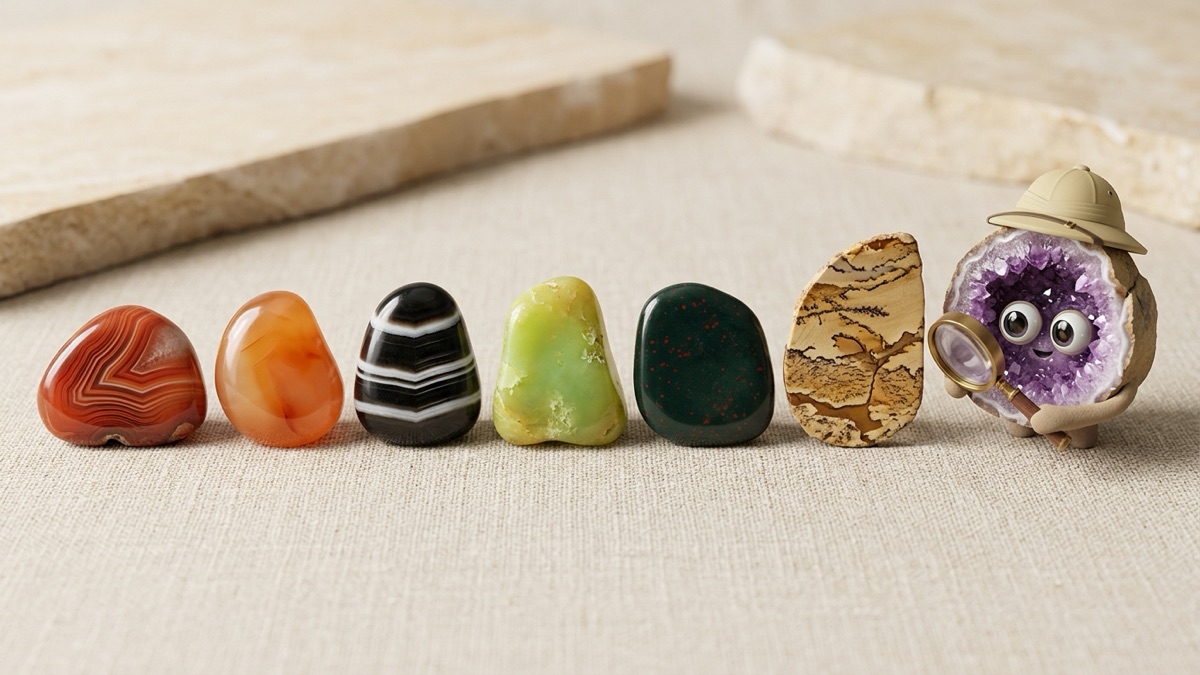
Many famous stones are named varieties of one or the other. Here are some you may already own:
| Stone | Family | What it looks like |
|---|---|---|
| Lake Superior agate | Agate | Red, orange and yellow iron-stained bands |
| Carnelian | Translucent chalcedony (agate side) | Orange-red and glowing |
| Onyx | Agate | Black and white bands |
| Chrysoprase | Translucent chalcedony | Yellowish green to green, usually from traces of nickel |
| Bloodstone | Mostly opaque chalcedony (jasper side) | Dark green with red spots of iron oxide |
| Picture jasper | Jasper | Brown and tan landscape patterns |
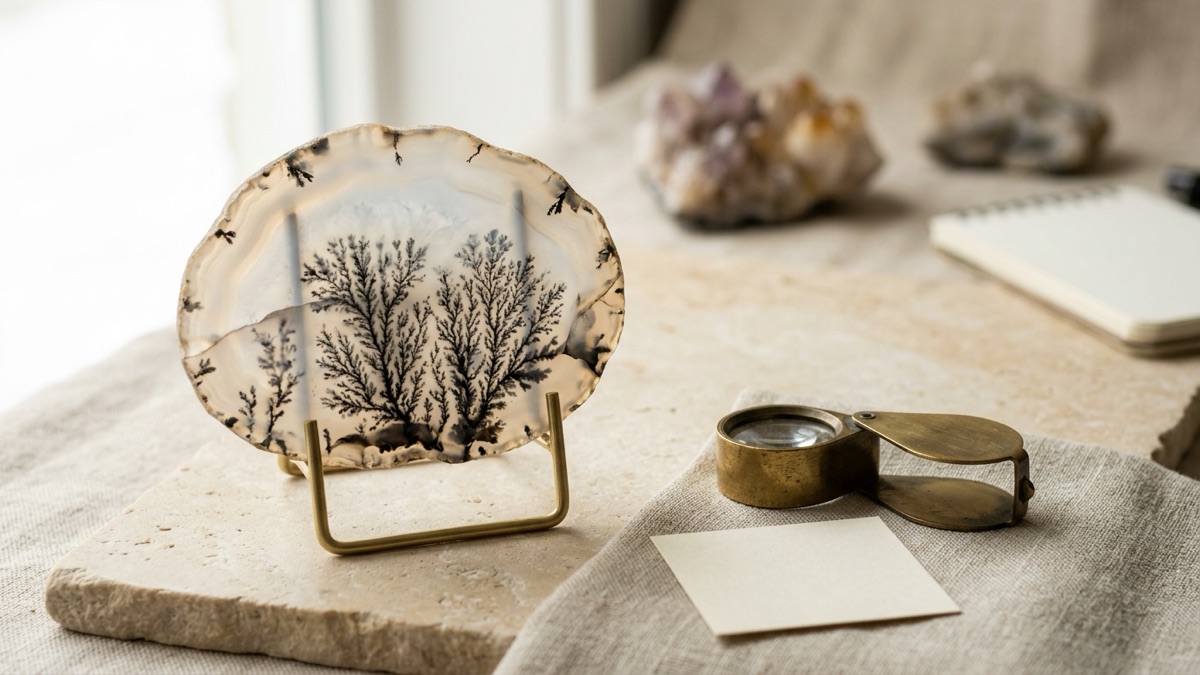
| Moss or dendritic agate | Agate | Clear to milky, with dark branching growths inside |
For the red and orange beach stones of the upper Midwest, see our Lake Superior agate guide. For the branching kind, see dendritic and tree agate.
What else looks like agate or jasper?
Before you decide between agate and jasper, make sure you have chalcedony at all. These look-alikes show up in the same gravel:
- Chert and flint: fine-grained silica rock that breaks with smooth, curved (conchoidal) surfaces. The University of Auckland notes chert comes in all colors, depending on its impurities. It passes every test here the same way jasper does, so an opaque, hard, fine-grained pebble could fairly be called either.
- Quartzite: a metamorphic rock made from quartz-rich sandstone or chert. It is hard like jasper, but the University of Auckland notes you can see its interlocking quartz grains with the naked eye, which gives it a sugary look.
- Banded calcite: layered and sometimes translucent, but far softer (3). A copper coin or knife scratches it, and it fizzes in vinegar.
- Glass and slag: glassy and colorful, but often full of round gas bubbles.
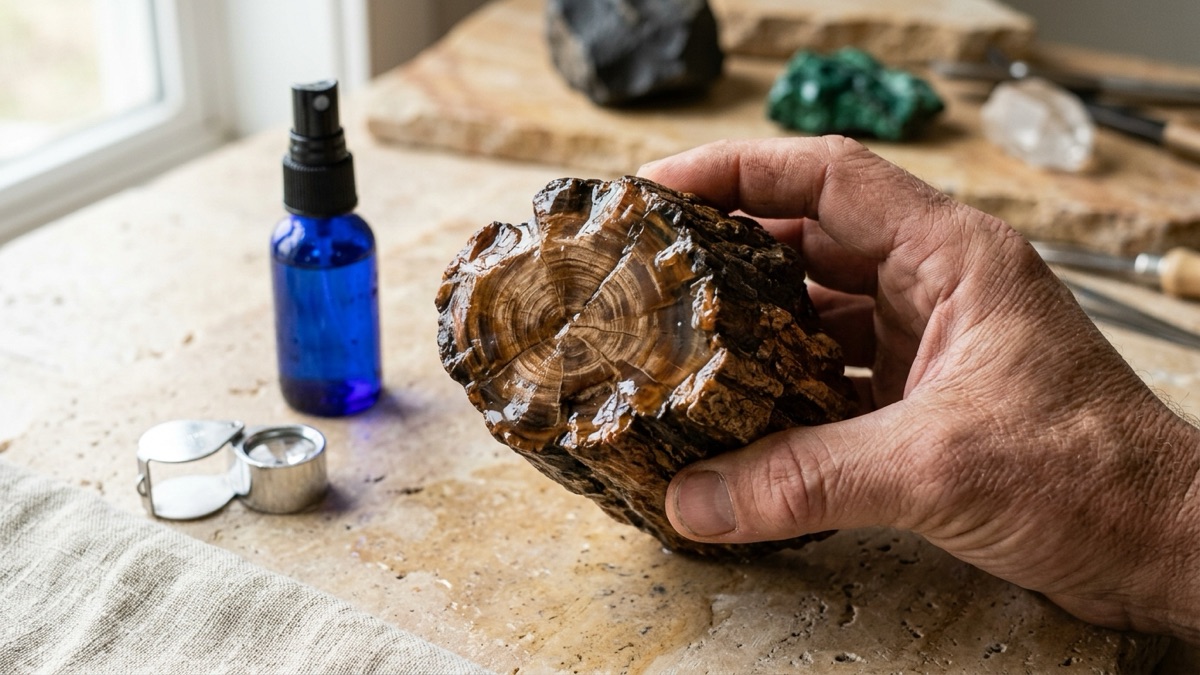
- Petrified wood: mostly quartz, so it can be agate-like or jasper-like. Look for growth rings and wood grain. Our guide to identifying petrified wood covers the clues.
The quick sequence: scratch glass first (chalcedony, chert, quartzite and petrified wood all do; calcite does not), then do the flashlight test, then check the surface with a hand lens.
Try it
Check where your stone sits against glass, steel and quartz on the free Mohs hardness scale, then use the rock identifier to see which silica stones match your answers.
Heads up
If you break a stone to get a thin edge, wear safety glasses, wrap it in a cloth and tap gently. Chalcedony breaks into razor-sharp flakes.
Does it matter which one you have?
For tumbling, not much. Agate and jasper share the same hardness, so they tumble well together in the same barrel, which is exactly what our guide to the best rocks for tumbling recommends. Jasper often takes a glossy polish that shows off its patterns, and agate comes alive when light shines through the finished stone.
For value, it depends on the individual piece far more than the name. Strong banding, rare patterns, a known locality and good condition matter in both. Neither name guarantees a price, and nobody can value a stone from a photo alone. Our agate stone guide covers what collectors look for.
The RockhoundID app for Android suggests likely matches from a photo and tells you which quick test confirms them.
The takeaway
Agate and jasper are two faces of the same quartz family. Agate lets light in; jasper keeps it out. Carry a small flashlight, find the thinnest edge, and let the glow decide. Then scratch a piece of glass to be sure you are holding chalcedony and not a softer impostor.
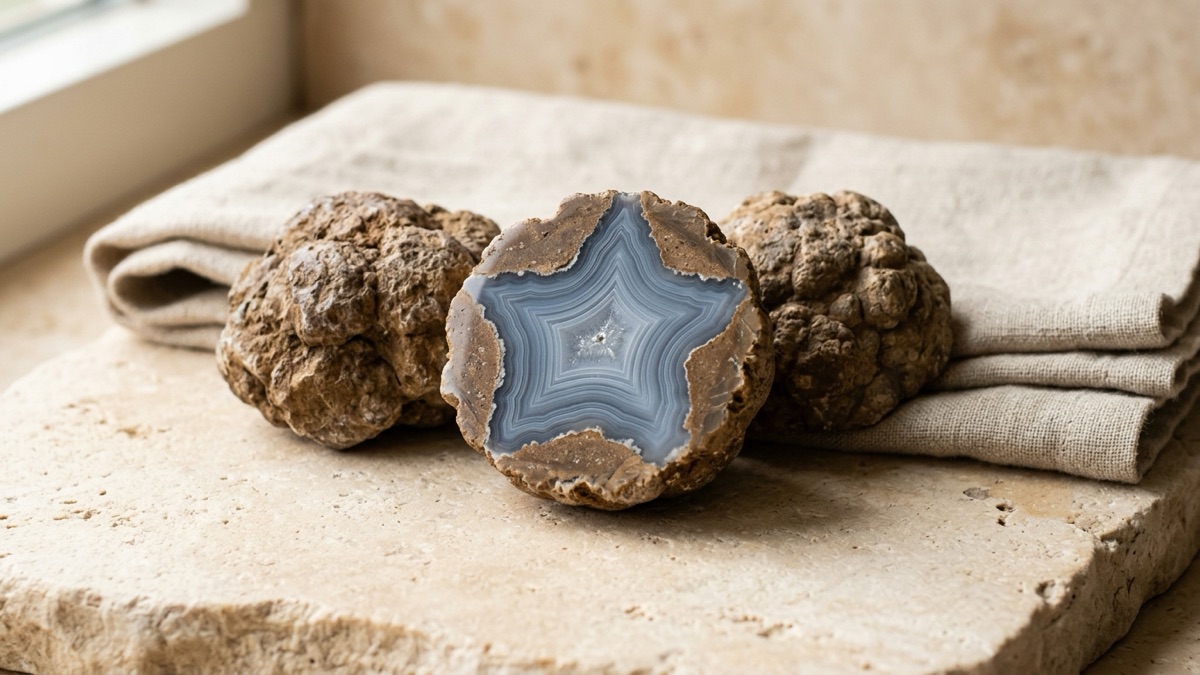
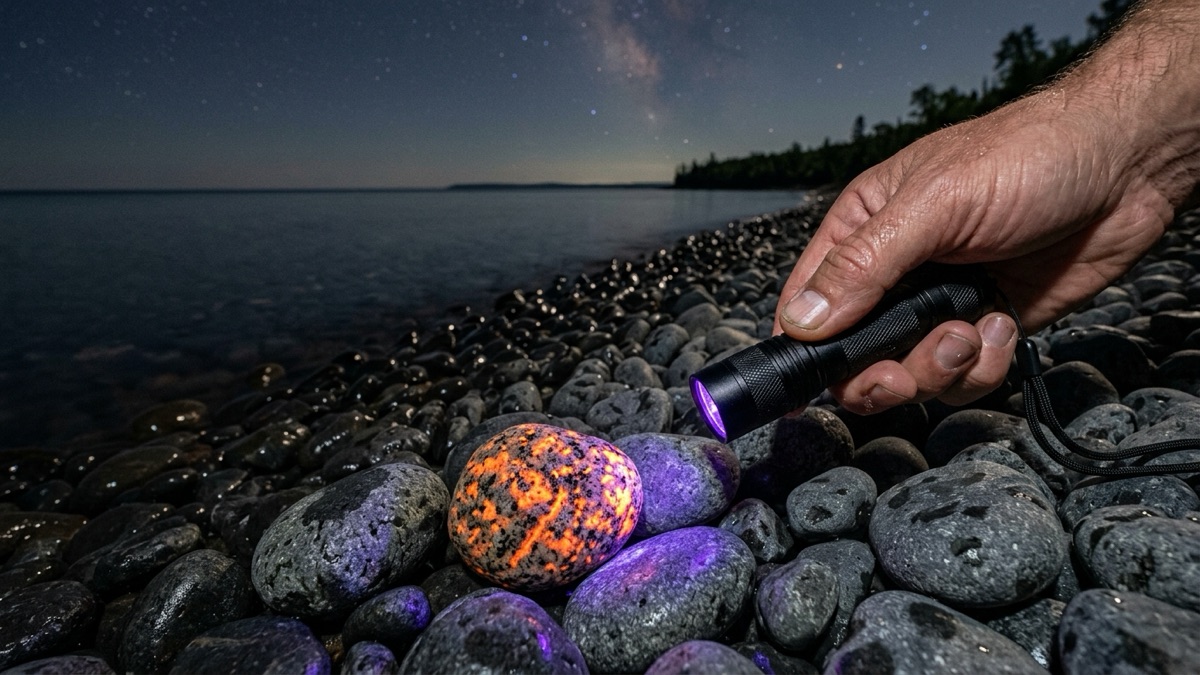
The pictures in this guide are AI-generated illustrations of what to look for; real specimens vary, so trust the tests over any picture. RockhoundID guides help you narrow down what you found. They suggest likely candidates, not certain identifications or appraisals. For anything valuable, rare or possibly from space, ask a museum, a university geology department or your state geological survey, and check the collecting rules for the land before you take anything home.
Questions rockhounds ask
Is jasper a type of agate?
Not quite. Both are chalcedony, the microscopic form of quartz. Agate is the translucent, usually banded kind, and jasper is the opaque kind, clouded by impurities so light cannot pass through it.
What is the easiest way to tell agate from jasper?
Shine a bright flashlight through the thinnest edge of the stone. Agate lets some light through and glows at the edge. Jasper stays dark, even at a thin edge.
Can one stone be both agate and jasper?
Yes. Some stones have translucent agate zones next to opaque jasper zones. Collectors sometimes call these jasp-agate or jaspagate.
Are agate and jasper the same hardness?
Yes, both are about 6.5 to 7 on the Mohs scale, so both scratch glass. Hardness confirms you have chalcedony but does not tell agate from jasper; light does.
What is the difference between chalcedony and agate?
Chalcedony is the family name for quartz made of microscopic fibers. Agate is chalcedony with bands or another pattern. Plain, single-color translucent pieces are usually just called chalcedony.
Where these facts come from
- RockTumbler.com (Hobart M. King): What is agate, jasper and chalcedony?: rocktumbler.com/blog/what-is-agate-jasper-chalcedony/
- University of Auckland, minerals: Quartz: rocksminerals.flexiblelearning.auckland.ac.nz/minerals/quartz.html
- University of Auckland, rocks: Chert: rocksminerals.flexiblelearning.auckland.ac.nz/rocks/chert.html
- USGS: Gemstones (mineral gemstones): pubs.usgs.gov/gip/gemstones/mineral.html
- New Mexico Bureau of Geology: Modreski (2013), The origin of chalcedony nodules from southwest New Mexico and southeast Arizona: geoinfo.nmt.edu/museum/nmms/abstracts/view.cfm?aid=484
- Natural History Museum (London): Jubilee agate, a royal piece of quartz: www.nhm.ac.uk/discover/news/2022/june/jubilee-agate--a-royal-piece-of-quartz.htm
- Minnesota DNR: Lake Superior agate: www.dnr.state.mn.us/snapshots/rocks_minerals/lakesuperioragate.html
- Geology.com (Hobart M. King): Chrysoprase: geology.com/gemstones/chrysoprase/
- Geology.com (Hobart M. King): Bloodstone: geology.com/gemstones/bloodstone/
- University of Auckland, rocks: Quartzite: rocksminerals.flexiblelearning.auckland.ac.nz/rocks/quartzite.html
- National Park Service, Petrified Forest: petrified wood: www.nps.gov/pefo/learn/nature/petrified-wood.htm