How Much Is a Meteorite Worth? Prices and Pitfalls
You found a heavy, dark rock in the backyard, or you inherited "Grandpa's meteorite" in a shoebox, and one question jumps the line: what is it worth? The honest answer is less exciting than the headlines about multimillion-dollar space rocks, but it is a lot more useful.
Quick answer
A meteorite's value depends on its type, size, beauty, whether anyone saw it fall and, above all, whether it is a named, classified meteorite. As of September 2026, one Arizona dealer listed common classified meteorites at about $0.50 to $5 a gram and Martian ones near $200 a gram. An unconfirmed, unnamed rock has little market value.
Key takeaways
- Most rocks people hope are meteorites are not. Confirmation comes first, price second.
- Price per gram swings from well under a dollar (common irons) to about $200 (Mars).
- Type, size, beauty, fall versus find and a good story all move the price. So does an official name.
- Classification takes lab work that likely costs several hundred dollars, so an unclassified rock sells for little.
- Where you found it matters: land rules and some countries' export laws decide whether you can keep or sell it.
Is my rock worth anything?
Start with the odds. From 1900 through 2024, about 1,862 meteorites were found in all of North America, roughly 15 a year. Randy Korotev of Washington University in St. Louis (WUSTL), who is sent photos of dozens of meteorwrongs every week, is blunt about both halves of the question: most rocks are not meteorites, and if you do find a real one, it is not worth as much as you think or wish.
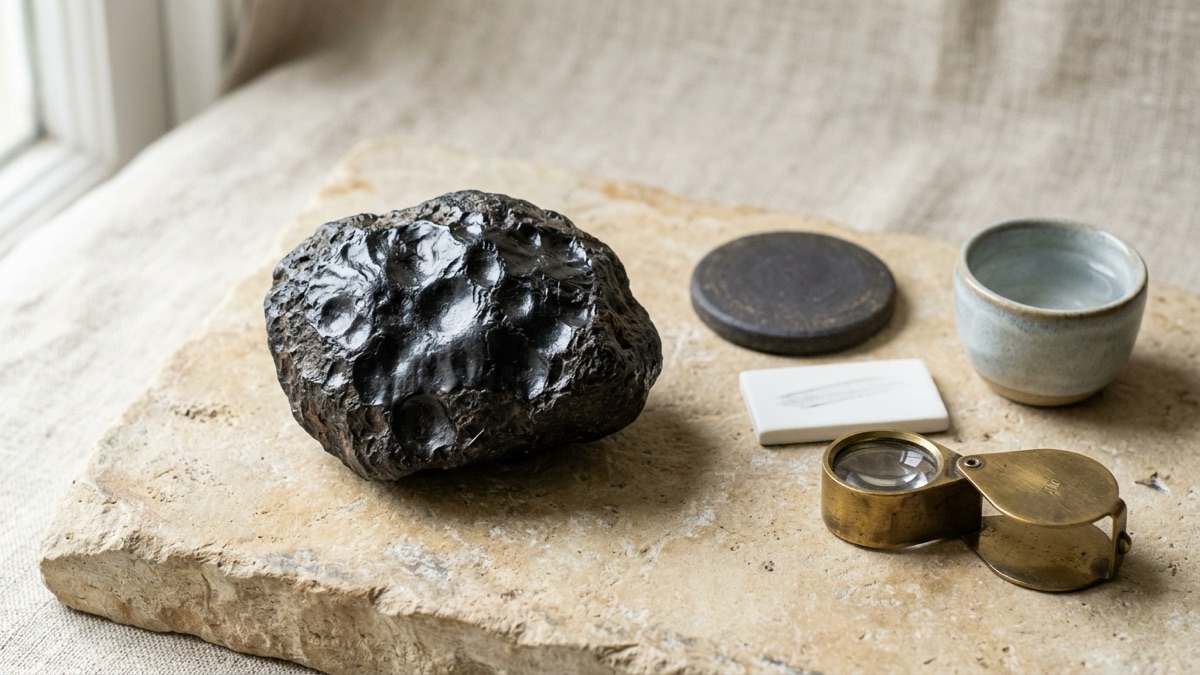
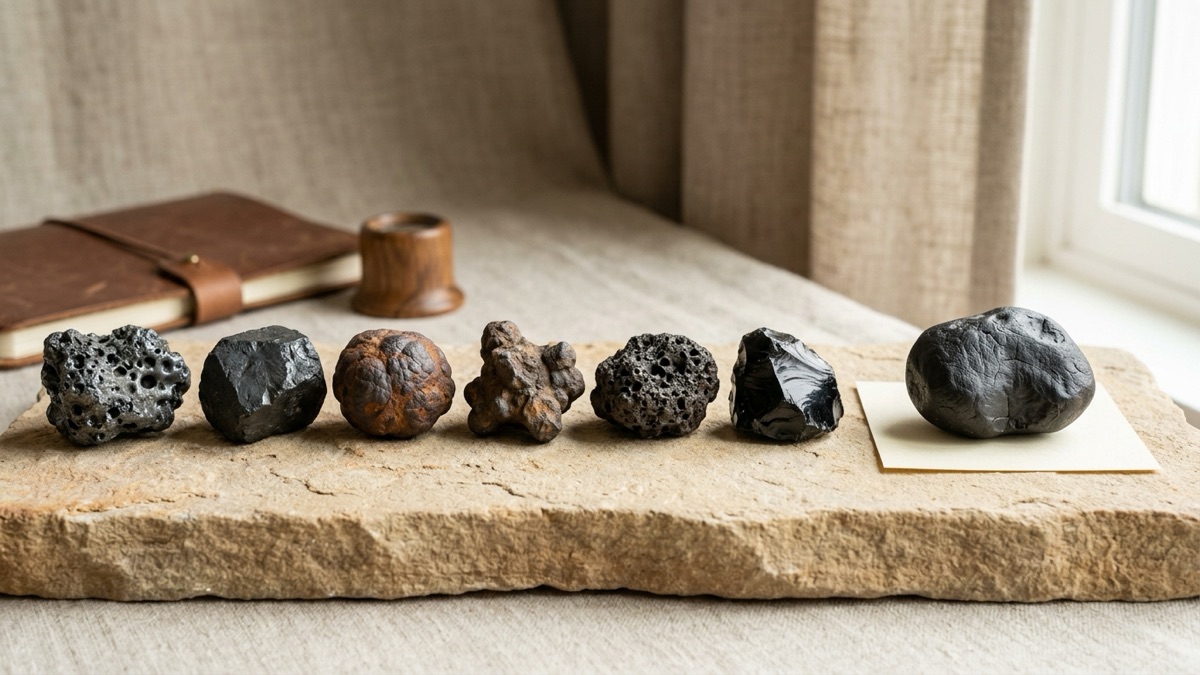
So before you think about money, check the basics. Does it have a thin, dark fusion crust? Does a cheap fridge magnet stick? Are there shiny metal specks on a cut face? Our step-by-step guide to how to identify a meteorite walks through each clue, and meteorite or meteorwrong covers the slag, iron concretions and magnetite that fool most people.
Try it
Answer nine quick questions in the free meteorite checker before you spend a cent on testing. It gives an honest verdict and tells you which clue to check next.
What makes one meteorite worth more than another?
WUSTL lists the factors that move a meteorite's price: how rare its type is, how big or small the piece is, how attractive it is, whether it was a fall or a find, and whether there is a good story behind it. Add one more that underpins all of them: an official name.
| Factor | Pushes the price up | Keeps the price down |
|---|---|---|
| Type | Mars, the Moon, pallasites | common stony meteorites and common irons such as Campo del Cielo |
| Fall or find | a witnessed fall, collected fresh | a weathered find with no known fall date |
| Size | small pieces cost more per gram | big masses cost less per gram, though more in total |
| Looks and preparation | etched slices, polished spheres, attractive whole stones | plain, rusty or heavily weathered pieces |
| Name and paperwork | listed in the Meteoritical Bulletin, with a documented history | no name, no history, no classification |
A fall is a meteorite that someone saw come down and then recovered. A find is one discovered later with no witnessed fall. Falls are much rarer: about 854 recognized falls worldwide from 1900 through 2024. You can see the fall premium in two ordinary stony meteorites. As of September 2026, Aerolite Meteorites, a dealer in Tucson, Arizona, listed a 30.9 g piece of Chelyabinsk, which fell in Russia in 2013, for $927, about $30 a gram. The same dealer listed a 184.6 g piece of Gold Basin, found in Arizona in 1995, for $184, about $1 a gram. Chelyabinsk also comes with a very good story, which WUSTL counts as part of the price.
What do meteorites actually sell for?
Here are real asking prices and one auction result, each with where and when it came from. They are examples, not an appraisal of anything you own.
| Meteorite and type | Listing or sale | Works out to about |
|---|---|---|
| Campo del Cielo (iron, found in Argentina) | 1.858 kg for $929, Aerolite, as of September 2026 | $0.50 a gram |
| Gold Basin (stony, found in Arizona) | 184.6 g for $184, Aerolite, as of September 2026 | $1 a gram |
| Muonionalusta (iron, etched slice) | 53.7 g for $240, Aerolite, as of September 2026 | $4.50 a gram |
| Imilac (pallasite) | 12.1 g for $363, Aerolite, as of September 2026 | $30 a gram |
| Bechar 003 (from the Moon) | 1.0 g for $55, Aerolite, as of September 2026 | $55 a gram |
| NWA 12269 (from Mars) | 3.0 g for $600, Aerolite, as of September 2026 | $200 a gram |
| NWA 16788 (from Mars, 24.67 kg) | sold at Sotheby's in July 2025 for about $5.3 million with fees, per AP | $215 a gram |
Two things jump out. First, even the most valuable meteorite ever sold at auction, according to Sotheby's, works out to roughly the same price per gram as a small Martian chip from a dealer. The big number comes from the size, not a magic multiplier. Second, the common types really are cheap. WUSTL noted in 2025 that a legitimate dealer offered a 33 g piece of NWA 869, a common stony meteorite, for $66, and that real lunar meteorites could be bought for less than $100 a gram.
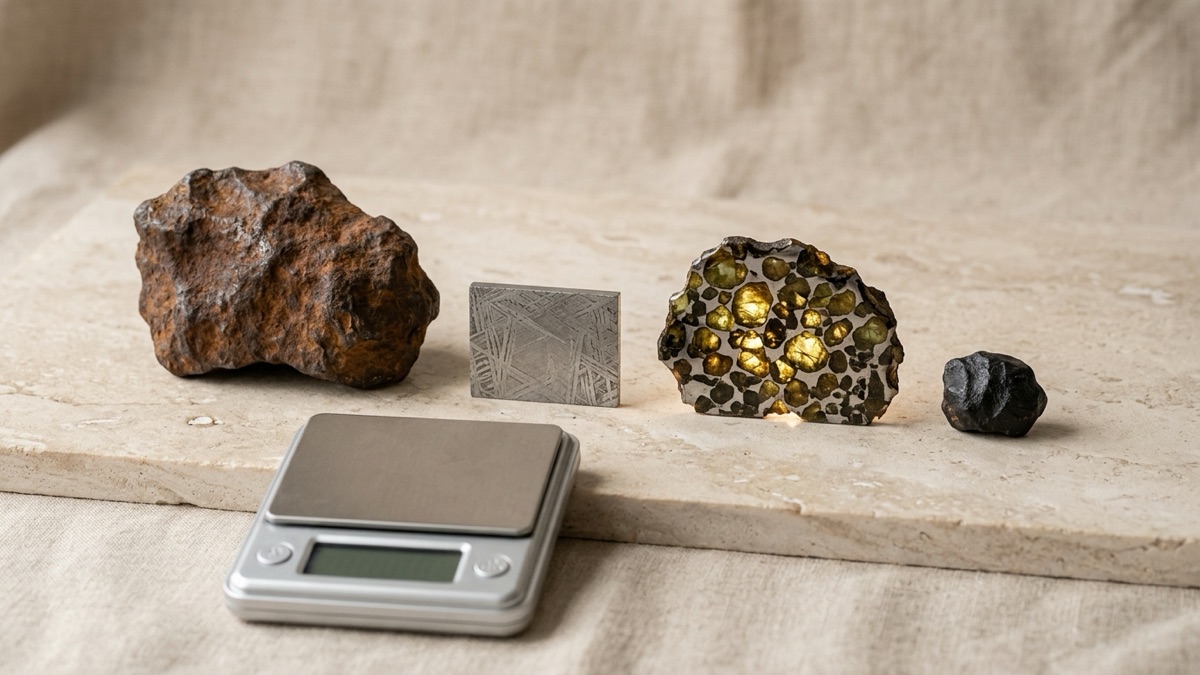
Preparation matters too. As of September 2026, Meteorite Exchange, Inc. listed small polished Gibeon spheres at about $30 a gram, while Aerolite listed a 9 kg Gibeon mass for $22,500, about $2.50 a gram. Same meteorite, very different work behind each gram. Size works the same way: Meteorite Exchange listed a 6.4 g piece of Muonionalusta for $28.80 (about $4.50 a gram), while Aerolite listed a 437 g piece for $656 (about $1.50 a gram). Our guide to the Gibeon meteorite explains why that iron is so popular for slices and rings.
Heads up
A listing price is what a store asks when it sells. It is not what anyone will pay you for a rock, and it is not an appraisal. If you need a formal valuation for insurance, ask a qualified appraiser who works with meteorites.
Why is an unclassified meteorite worth so little?
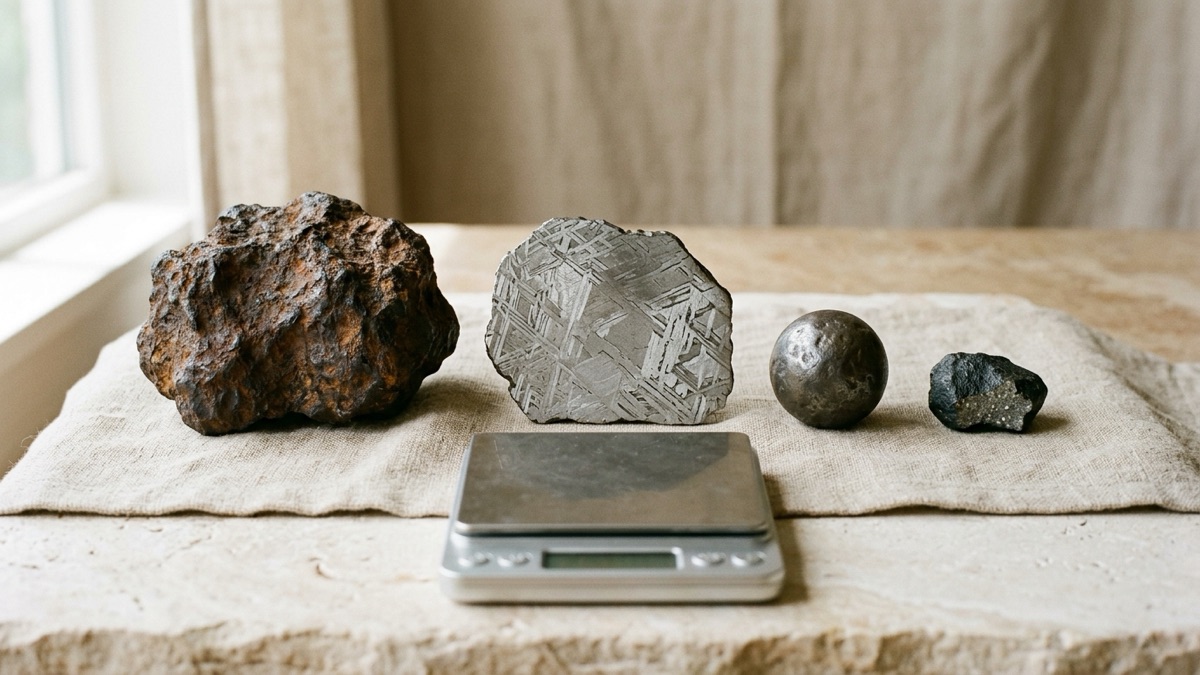
Because nobody can check it. WUSTL's rule of thumb: every rock scientists recognize as a meteorite gets a name once it is classified and approved, and all approved meteorites are listed in the Meteoritical Bulletin Database. If a rock is offered as a meteorite without a stated name, it is probably not a legitimate one. Serious buyers look the name up before they pay.
Getting that name takes real lab work. Classifying a stony meteorite means making a thin slice, studying it under a petrographic microscope and running electron microprobe analyses, and WUSTL says it will likely cost several hundred dollars. Iron meteorites need chemical analysis for iron, nickel, chromium and manganese. Arizona State University's Center for Meteorite Studies no longer runs a public identification service and points finders to state geological surveys, university geology departments and natural history museums.
Heads up
Do not clean or "test" a possible meteorite with a wire brush, abrasives, acid, other chemicals or a torch to make it look better. WUSTL warns against every one of them, because they can wreck the evidence a lab needs.
Who owns a meteorite you find?
This decides whether you can sell it at all, so check before you pick anything up.
- Private land: get the owner's permission first, and settle who keeps any find before you start hunting.
- National parks (US): collecting rocks and minerals is prohibited, and so is possessing or using a metal detector unless it is broken down and stowed.
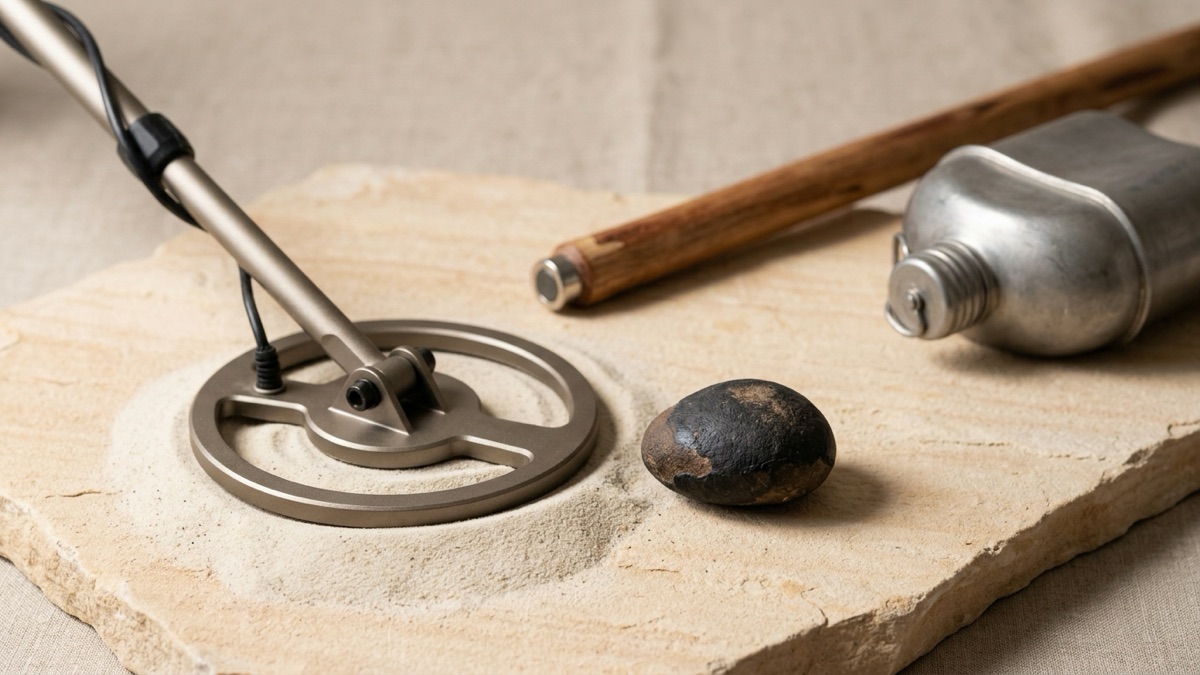
- BLM land (US): the general rule allows reasonable amounts of rocks and mineral specimens for noncommercial use, but collecting for sale needs a contract or permit. Ask the local BLM office how it handles meteorites before you go. Our meteorite metal detector guide covers where detectors are allowed.
- Other countries: rules can be strict. Namibia's National Heritage Act of 2004 makes all meteorites property of the state and requires the National Heritage Council's consent to buy, sell or export one. After the Mars rock NWA 16788 was auctioned, AP reported that Niger opened an investigation into the circumstances of its discovery and sale, and that the country then suspended the export of precious stones, semiprecious stones and meteorites.
How do you avoid fake meteorites?
WUSTL points out that many to most rocks sold online as meteorites really are meteorites, and that there are many reputable dealers. The fakes tend to share the same tells:
- No official name, or a vague label like "space rock" or "unclassified meteorite."
- Pseudoscientific language about energy or powers, often with misspellings.
- Absurdly high prices. WUSTL says most rocks offered online for more than $10,000 are not really meteorites.
- Impossible colors. Meteorites are not blue, purple or bright yellow.
- Impossible combinations. A rock cannot be both a lunar meteorite and an iron, and lunar meteorites do not contain enough metal to attract a magnet.
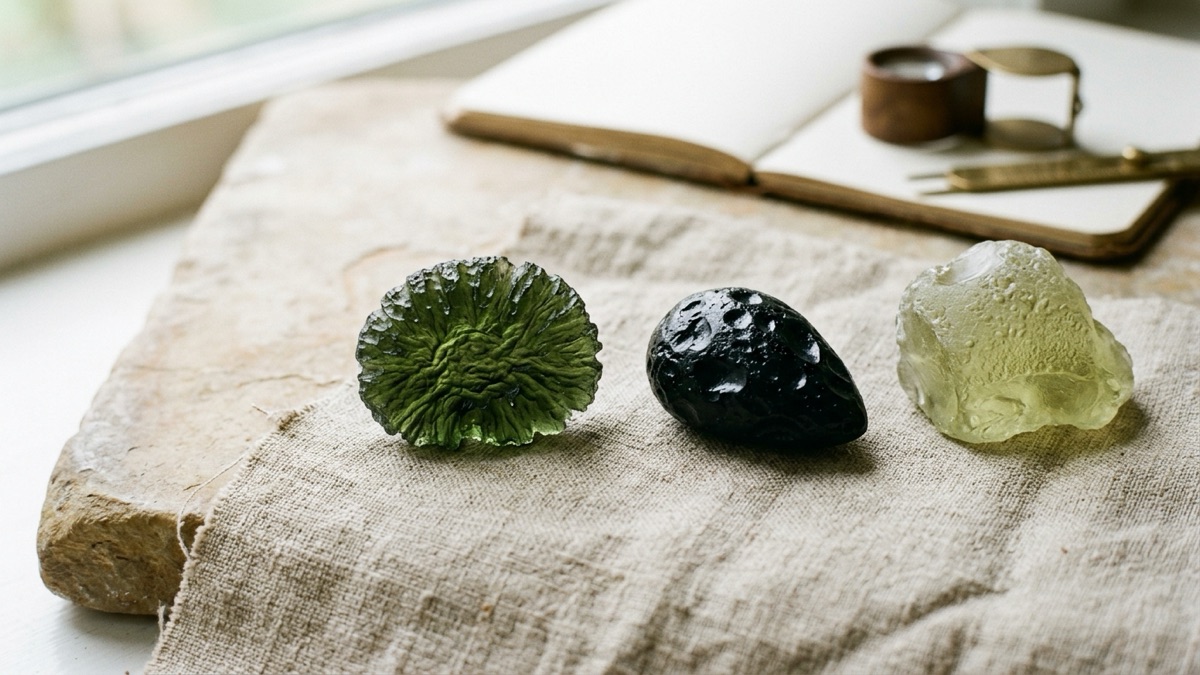
Impact glass is a special case: moldavite and other tektites are real products of meteorite impacts but are not meteorites themselves, and green glass fakes are everywhere. Our guide to meteorite impact glass covers the clues.
The takeaway
A real meteorite is a rare and wonderful thing, but its value comes from what it is, not what it could be. Confirm it first, get it classified if it really looks promising, and then compare dated prices from established dealers for the same type. Treat unnamed rocks with big price tags as the red flag they are. The RockhoundID app for Android runs a meteorite reality check on your finds and suggests the next test to try.
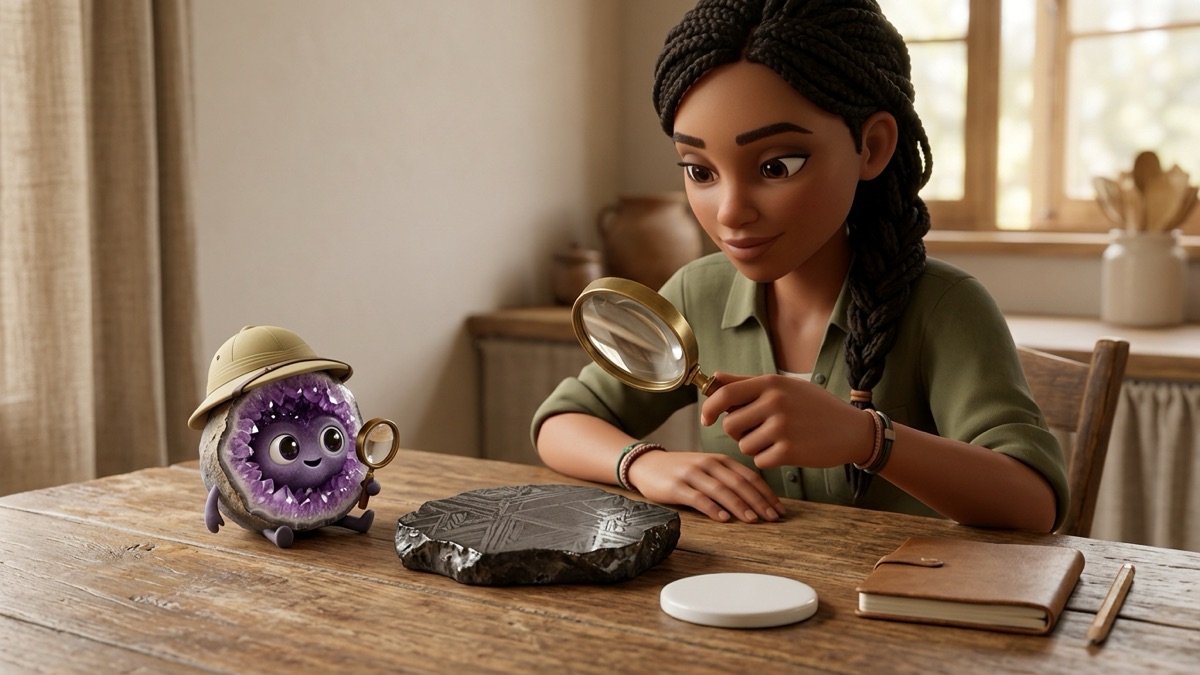
The pictures in this guide are AI-generated illustrations of what to look for; real specimens vary, so trust the tests over any picture. RockhoundID guides help you narrow down what you found. They suggest likely candidates, not certain identifications or appraisals. For anything valuable, rare or possibly from space, ask a museum, a university geology department or your state geological survey, and check the collecting rules for the land before you take anything home.
Questions rockhounds ask
How much is a meteorite worth per gram?
It depends on the type. As of September 2026, one Arizona dealer listed a common iron like Campo del Cielo at about 50 cents a gram, ordinary stony finds at about 1 dollar a gram, witnessed falls and pallasites around 30 dollars a gram, and Martian meteorites around 200 dollars a gram. These are asking prices, not appraisals.
Is an unclassified meteorite worth anything?
Very little on the open market. Serious buyers want a meteorite with an official name listed in the Meteoritical Bulletin Database, and getting a stone classified takes lab work that Washington University in St. Louis says will likely cost several hundred dollars.
Who can tell me what my meteorite is worth?
Nobody can put a price on a rock until it is confirmed as a meteorite and classified. After that, compare prices from established meteorite dealers, or ask a qualified appraiser if you need a formal valuation for insurance.
Can I sell a meteorite I found?
That depends on where you found it. On private land you need the owner's permission, national parks ban collecting entirely, BLM rules require a permit to collect for sale, and some countries, such as Namibia, make meteorites state property.
Are meteorites sold online real?
Many are, especially from established dealers who name the meteorite. Washington University in St. Louis warns that ads with no official name, pseudoscientific claims or absurdly high prices are usually selling ordinary rocks.
Where these facts come from
- Washington University in St. Louis meteorite site: Some meteorite realities (selling and buying): sites.wustl.edu/meteoritesite/items/some-meteorite-realities/
- Washington University in St. Louis meteorite site: Caveat emptor: sites.wustl.edu/meteoritesite/items/caveat-emptor/
- Meteoritical Bulletin Database (Chelyabinsk, Gold Basin, Campo del Cielo, NWA 12269, Bechar 003, NWA 16788 entries): www.lpi.usra.edu/meteor/metbull.php
- Aerolite Meteorites online store (prices checked September 30, 2026): aerolite.org/shop/
- Meteorite Exchange, Inc.: Muonionalusta and Gibeon listings (prices checked September 30, 2026): www.meteorites-for-sale.com/iron-meteorites.html
- AP News: Mars rock fetches nearly $5.3 million at auction (July 16, 2025): apnews.com/article/mars-rock-meteorite-auction-dinosaur-sothebys-01d7ccfc8dc580a
- AP News: Why Niger is investigating the $5 million sale of the largest Mars rock found on Earth (August 11, 2025): apnews.com/article/niger-mars-meteorite-auction-sahara-17d755247b8ee04eb6d084caf
- National Heritage Council of Namibia: National Heritage Act, No. 27 of 2004: nhc-nam.org/wp-content/uploads/2024/04/Gaz_3361_ACT_27_OF_2004.pdf
- Arizona State University, Buseck Center for Meteorite Studies: sample identification FAQ: meteorites.asu.edu/faq/faq-sample-identification
- eCFR: 43 CFR 8365.1-5, property and resources (BLM): www.ecfr.gov/current/title-43/subtitle-B/chapter-II/subchapter-H/part-8360/subpa
- eCFR: 36 CFR 2.1, preservation of natural resources (National Park Service): www.ecfr.gov/current/title-36/chapter-I/part-2/section-2.1