How to Sell Rocks and Minerals: Where, Price and Rules
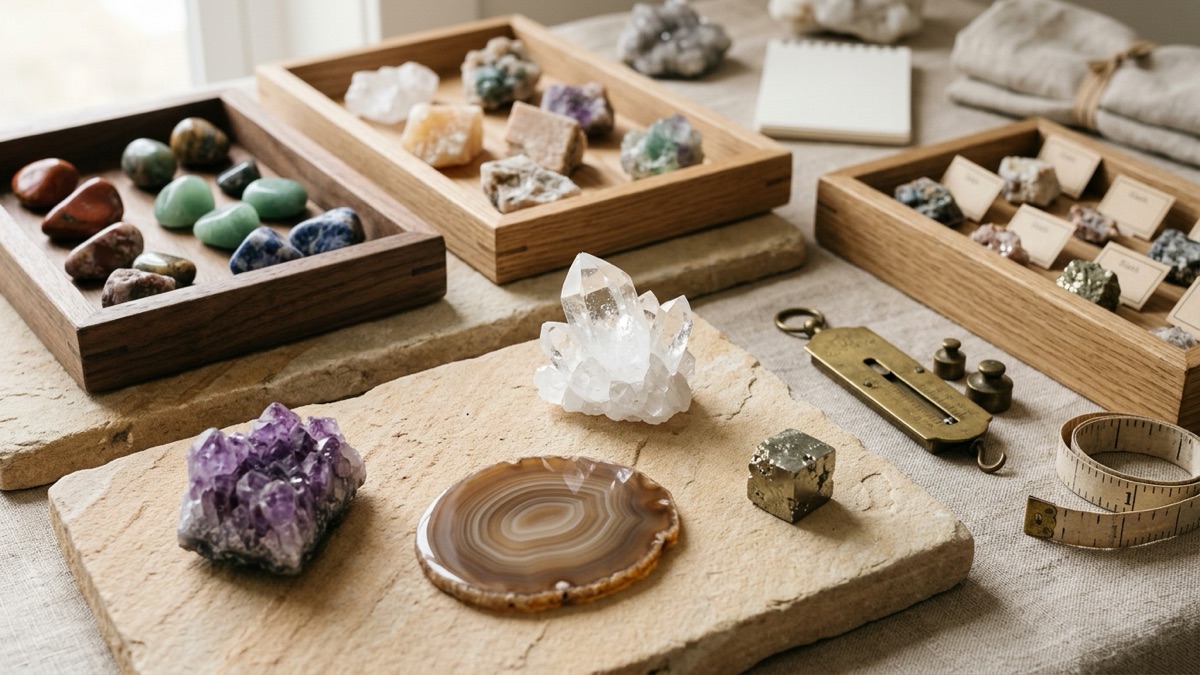
How to sell rocks and minerals comes down to four steps: identify what you have, price it from what similar pieces actually sold for, pick the selling place that fits the piece, and make sure it is yours to sell.
Quick answer
Identify the rock first, then price it from sold listings, not asking prices. Sell common pieces in lots at a club show, to a rock shop or online, and take significant specimens or estates to a specialist dealer or auction house. Rocks collected free on BLM land are for noncommercial use, and nothing taken from a national park may be sold.
Key takeaways
- Identification comes first. A named specimen with a locality sells; a mystery rock mostly does not.
- Price from sold prices. A retail dealer's list price is a ceiling, and a dealer who buys from you pays less.
- The four main places to sell are clubs and shows, rock shops and dealers, online marketplaces and auction houses.
- A good listing gives the name, locality, size, weight, condition and any treatment, with honest photos.
- Where a rock came from decides whether you may sell it.
What should you do before you sell a rock?
Find out what it is. A buyer pays for "amethyst cluster, Artigas, Uruguay," not for "purple rock." The USGS says rocks and minerals must be examined in person for an accurate identification, and it suggests a state geological survey, a natural science museum, a university geology department, a rock shop, a gem and mineral club or the vendors at a show.
You can narrow things down at home first with the scratch, streak, magnet and weight tests in our guide on how to identify rocks. The RockhoundID app for Android ranks likely matches from a photo and names the quick test that separates the look-alikes. It does not put a price on a rock.
Try it
Answer a few questions in the free rock identifier to see likely candidates among 66 common rocks, minerals and look-alikes. It runs in your browser and never uploads a photo.
Two habits protect the price. Write down the locality: the Mineralogical Society of America (MSA) says a missing locality can destroy a specimen's scientific and commercial value. And do not coat or scrub the piece, because the MSA says coating usually lowers value. Water and a soft brush are enough.
What actually sells, and what does not?
Collectors buy quality, not quantity. Our hub on rocks worth money explains why; this is the short version.
| Material | Does it sell? | Why |
|---|---|---|
| Sharp, undamaged crystals and clusters with a locality | Yes | This is what mineral collectors look for |
| Colorful agate, jasper and petrified wood, especially polished | Yes, mostly at modest prices | Pattern, color and polish do the work |
| Geodes with good crystals | Yes | They sell as display pieces |
| Classified meteorites with an official name | Yes | Buyers can check the name |
| Tumbled stones and common rough | Only in bags or lots | Retail prices are too low to sell one at a time |
| Unlabeled specimens | For much less | No locality, less value |
| Gravel, landscape rock, slag, badly chipped pieces | No | Nobody collects them |
Retail prices show why common material goes in lots. As of November 2026, the dealer FossilEra listed agates and obsidian from $3 a piece and pyrite from $5. Those are a retailer's prices for photographed, described pieces, so a single loose stone from your shelf leaves little room for a sale of its own.
How do you price rocks to sell?
Look up what similar pieces actually sold for, not what sellers are asking. Match the material, size, quality, damage and locality, and use several sales rather than one. Then expect a dealer to offer less than retail, because the dealer has to resell the piece at a profit.
- Search sold prices. eBay's pricing help page says you can see past sale prices by choosing "Completed listings" in Advanced Search. Sellers with Seller Hub can also use Product research, which eBay says covers the last 3 years of sales with the average sold price and the sold price range.
- Check auction archives. Auction houses that sell minerals publish past results. Our value guides cite many, such as a pair of polished Arizona petrified wood slabs that sold at Bonhams for $8,925 in December 2021.
- Use dealer list prices as a ceiling. A private seller's price usually sits below a dealer's price for a similar piece.
- Mark down for flaws. Chipped tips, cracks, repairs, dye and a missing locality all lower the price.
- Decide what is a lot. Group common pieces by type, and price only the good ones individually.
Our guides to agate value, petrified wood value and the most valuable minerals list dated prices you can compare against.
Tip
One high sale is not the market. If nine similar pieces sold low and one sold high, the nine are your price.
Where can you sell rocks, crystals and minerals?
There are four main routes, and the right one depends on the piece and on your time.
| Place | Best for | Trade-offs |
|---|---|---|
| Gem and mineral club or show | Common to mid-range pieces, lots, honest advice | Face to face and low cost, but local and tied to show dates |
| Rock shop or dealer | A quick sale, or a whole collection in one deal | Fast, but the offer is a wholesale one |
| Online marketplace | Single good specimens that photograph well | The widest audience, but fees, packing, shipping and returns are on you |
| Auction house | Significant specimens and estates | Reaches serious collectors, but selective, slow and takes a commission |
Clubs and gem and mineral shows
Start here if you are new. The American Federation of Mineralogical Societies (AFMS) lists seven regional federations and has a map for finding a local club, and the MSA notes that shows often have an identification booth run by members. Ask the club or the show organizer whether members can sell, swap or rent a table.
Rock shops and dealers who buy collections
A dealer can look at a whole collection and make one offer, which is the fastest route. The offer will be below retail, so get a second one for anything substantial.
Online marketplaces
Online listings reach the most buyers and take the most effort, and fees come off the top. As of November 2026:
- eBay says it charges an insertion fee when you create a listing and a final value fee when the item sells, with up to 250 listings a month free of the insertion fee. The final value fee is a percentage of the total sale, shipping included, plus a per order fee. For most categories eBay lists 13.6% on the total up to $7,500 per item.
- Etsy says it charges a $0.20 listing fee per item and a transaction fee of 6.5% of the total order amount. Other fees can apply, so read its fee page and its rules on what may be listed.
Rules matter as much as fees. eBay's policy does not allow items taken from government or protected land, and it says artifacts, fossils and relics must follow all government regulations. eBay also says it cannot assess the legality of a sale, so that part is on the seller.
Auction houses
For a significant specimen or estate, an auction house that holds mineral, fossil and meteorite sales reaches collectors you cannot. Houses are selective. Send clear photos, measurements and the locality, and ask for the terms in writing: the seller's commission, any other charges, whether there is a reserve (a minimum price), and when you get paid.
How do you photograph and describe a specimen?
Good photos and a plain description sell a rock. Hype does not.
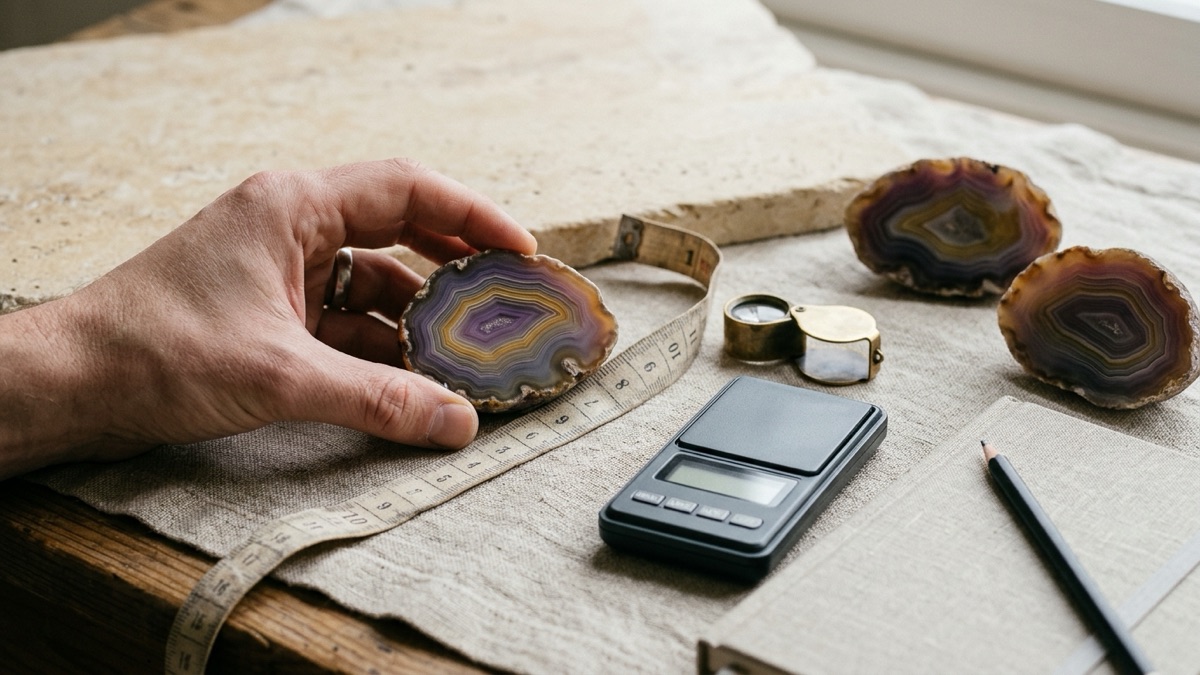
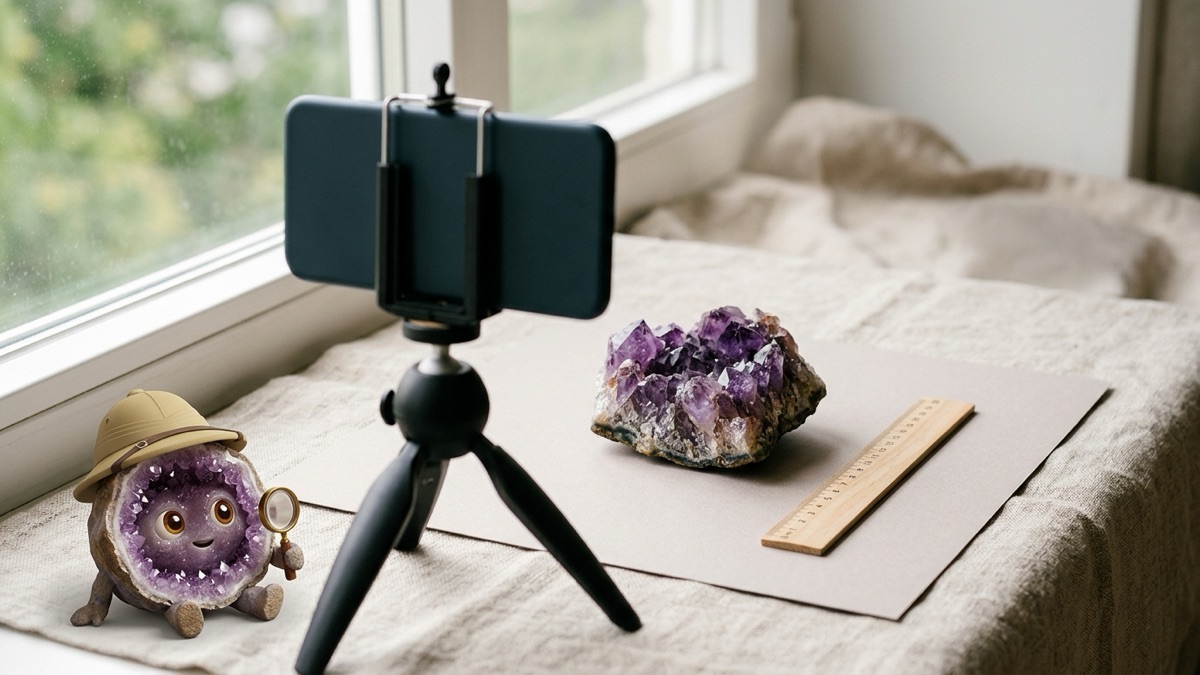
- Photos. Use daylight and a plain background. Shoot several angles, include a ruler for scale, and add a close-up of any damage.
- Name and locality. Say what it is, who identified it and where it is from, as exactly as you know. If you do not know, say "unidentified" or "locality unknown."
- Size and weight. Give the longest dimensions in inches or centimeters and the weight in grams or pounds.
- Condition and treatment. List chips, cracks, repairs and glue, and say if the piece has been polished, dyed, heated, stabilized or coated.
Leave out claims you cannot back up. Do not call a rock a meteorite, jade or a gem without proof, and describe what a crystal is, not what it is supposed to do.
How do you sell a rock collection you inherited?
Slowly, and with the labels intact.
- Do not clean, sort or relabel anything yet. Keep every label, card and box with its specimen. Washington University in St. Louis (WUSTL) says meteorites without a card or bill of sale, like many found in a late relative's collection, are not worth much to collectors.
- Photograph each drawer and shelf as you found it, so you know which label belongs to which rock.
- Make a simple list: name, locality, size and any receipts or catalog.
- Set aside the standouts: large undamaged crystals, old dealer or museum labels, cut gems, meteorites and gold.
- Ask a gem and mineral club member to look it over before you accept any offer.
- Choose a route. Take one dealer offer for everything, sell the best pieces individually and the rest in lots, or consign a significant collection to an auction house.
What can you not legally sell?
Where a rock came from decides whether you may sell it. In short: nothing from a national park, nothing you collected free on BLM land as a business, and no vertebrate fossils or artifacts from federal land. Rocks from private land, collected with the owner's permission, are the clearest case for selling.
| Where it came from | May you sell it? | The rule |
|---|---|---|
| National park | No | 36 CFR 2.1 prohibits removing minerals, fossils and archeological resources, and the sale of natural products |
| BLM land: rocks and minerals collected free | Not as a business | Noncommercial only; collecting for sale or barter to commercial dealers needs a contract or permit (43 CFR 8365.1-5) |
| BLM land: petrified wood collected free | No | Personal use; not sold or bartered to commercial dealers (43 CFR 3622.4) |
| BLM land: common invertebrate and plant fossils | No | The BLM says they may not be bartered or sold |
| Federal land: vertebrate fossils | No | Collecting needs a research permit; selling is barred (16 U.S.C. 470aaa-5) |
| Federal or tribal land: arrowheads and other artifacts | No | Removing them without a permit, and selling, buying or trading them, is barred (16 U.S.C. 470ee) |
| BLM land: meteorites collected free | No | The BLM says they are for personal use and may not be bartered or sold |
| Private land, with the owner's permission | Generally yes | The National Park Service notes that private owners near Petrified Forest may collect, mine and sell their wood |
The BLM explains that noncommercial means the collector is not selling the items for a business or financial gain. State parks, national forests, tribal lands and beaches have their own rules. Our guide to rock collecting rules covers each land type, and arrowhead value explains the artifact laws.
Heads up
This is a summary, not legal advice, and rules change. Before you sell anything you collected yourself, ask the office that manages the land. On private land, get permission in writing, and make sure it covers selling.
Do meteorites need paperwork before they sell?
In practice, yes. Serious buyers want a meteorite that an expert has classified and that has an official name. WUSTL says a classified, named meteorite is worth more than an unnamed one, that classification will likely cost several hundred dollars, and that a rock offered as a meteorite without a stated name is probably not a legitimate one.
So do not list a find as a meteorite on a hunch. Run it through the free meteorite checker, then get an in-person opinion. If it is real, WUSTL's advice is to contact a meteorite dealer. Our guide to how much a meteorite is worth covers classification and dated prices.
When is it worth paying for an appraisal?
Pay for an appraisal when you need a written value, not when you are curious. For ordinary pieces, sold prices and a dealer's opinion are enough. A paid appraisal makes sense for insurance, for an estate, before a major sale, and for a donation: IRS Publication 561 says that if you claim a deduction of more than $5,000 for a donated item or a group of similar items, including a collection, you generally need a qualified appraisal.
The American Society of Appraisers lists members under Gems and Jewelry and under Personal Property. Ask what experience the appraiser has with minerals, fossils or meteorites, and keep the appraiser and the buyer separate people. University geology departments usually will not help with prices; the University of Minnesota's department, for one, says it does not authenticate or provide value estimates.
The takeaway
Selling rocks and minerals goes well when you do it in order: identify the piece, price it from real sales, choose a selling place that fits it, describe it honestly, and check that it is yours to sell. Most collections bring modest money and a few pieces carry the value, so spend your effort on those. The RockhoundID app for Android can help with the first step by suggesting likely matches from a photo and the test that confirms them.
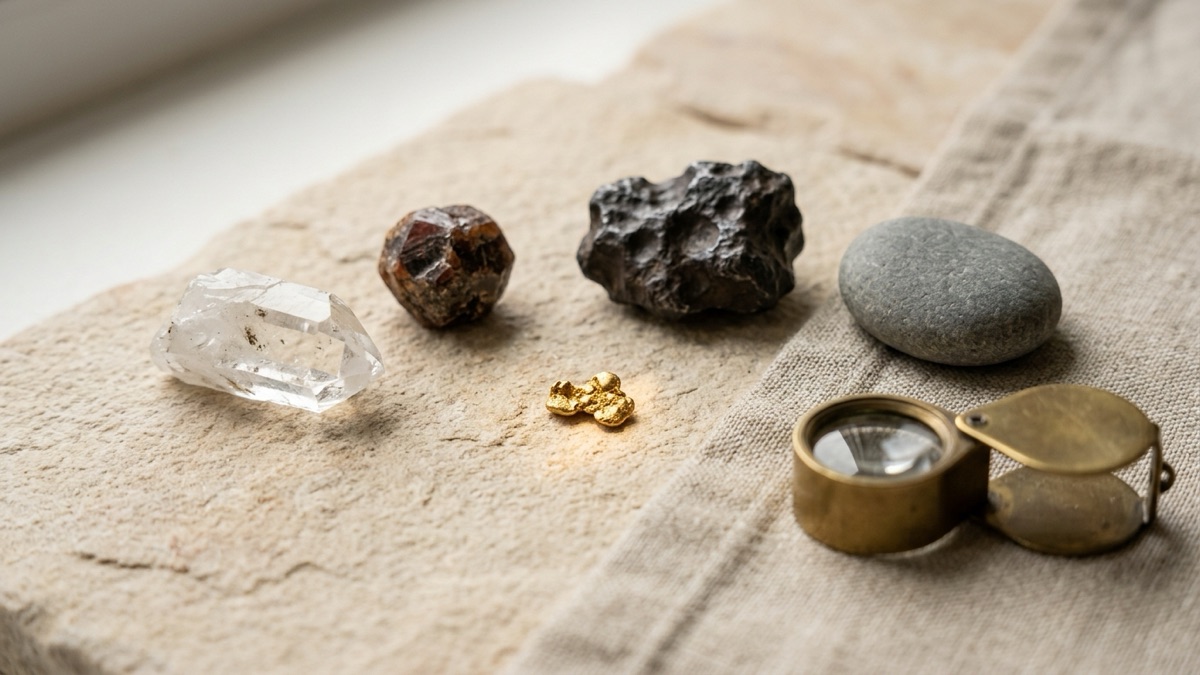
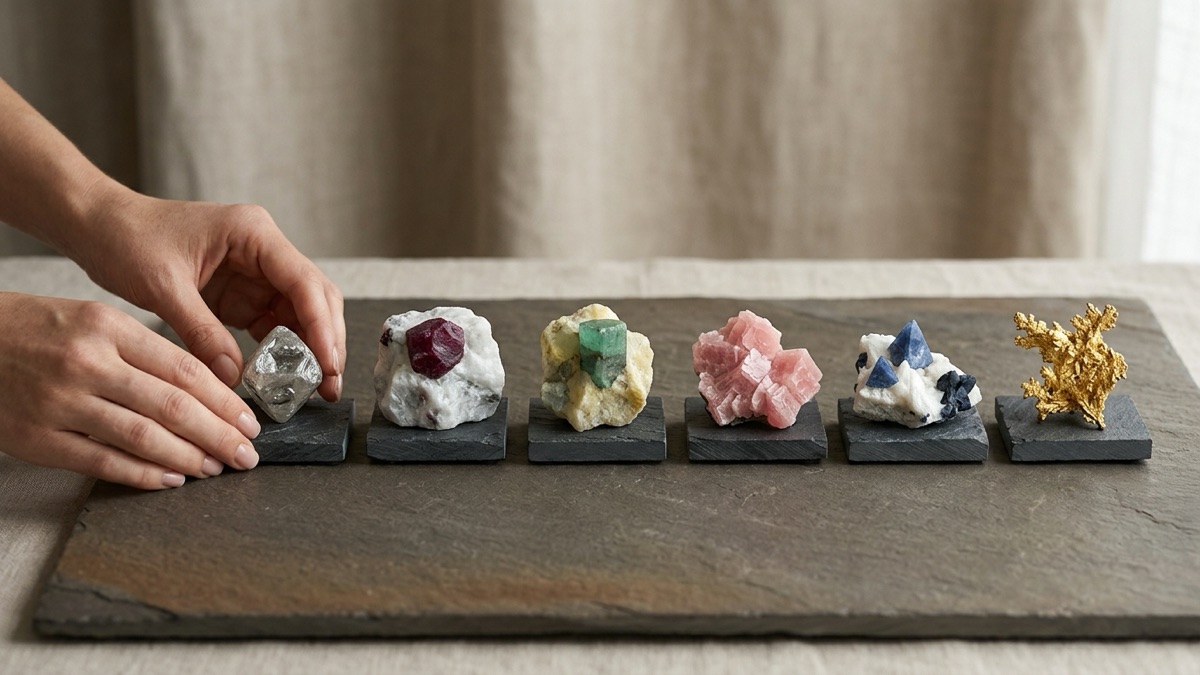
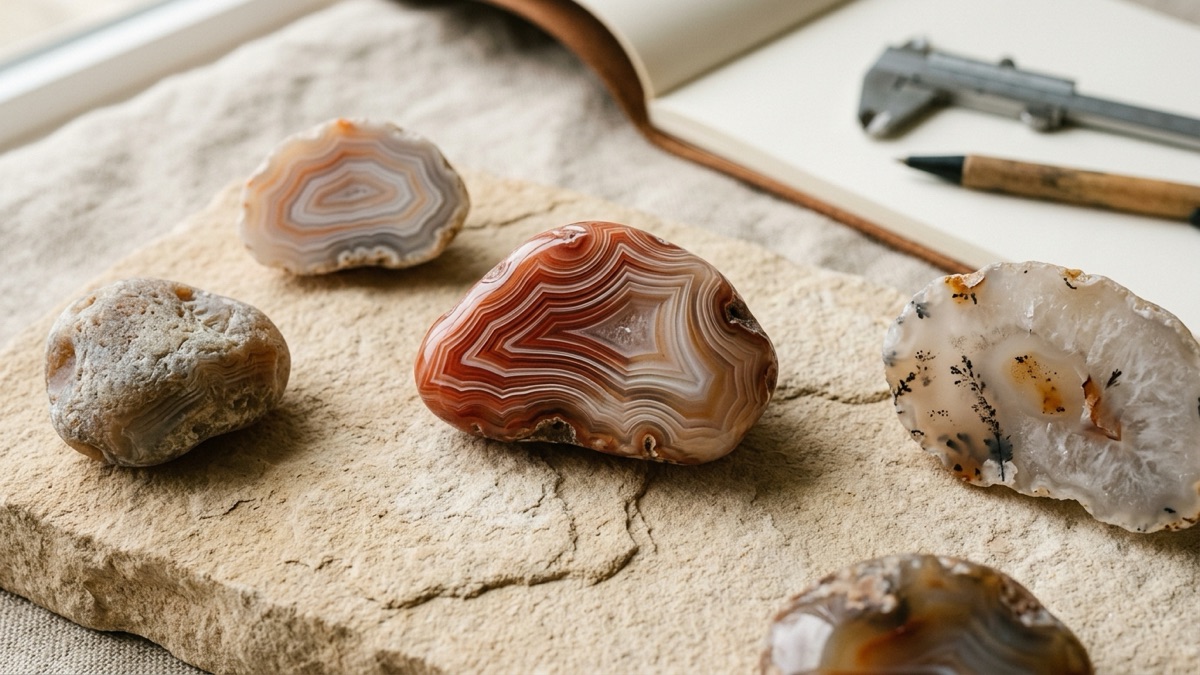
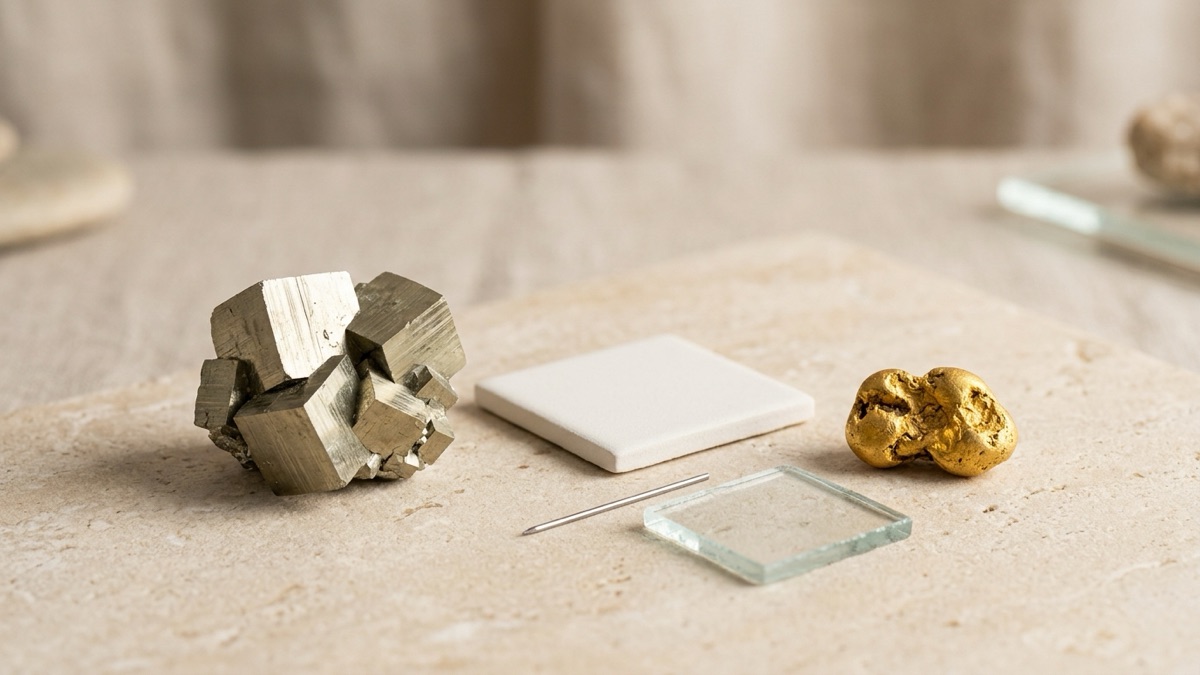
The pictures in this guide are AI-generated illustrations of what to look for; real specimens vary, so trust the tests over any picture. RockhoundID guides help you narrow down what you found. They suggest likely candidates, not certain identifications or appraisals. For anything valuable, rare or possibly from space, ask a museum, a university geology department or your state geological survey, and check the collecting rules for the land before you take anything home.
Questions rockhounds ask
Where is the best place to sell rocks and minerals?
It depends on the piece. Common material sells best in lots at a gem and mineral club or show, or to a rock shop. A single good specimen reaches more buyers on an online marketplace. A significant specimen or a whole estate belongs with a specialist dealer or an auction house that handles minerals. Faster sales usually mean lower prices.
How do I price rocks to sell?
Look up what similar pieces actually sold for, not what sellers are asking. Match the material, size, quality, damage and locality, and use several sales rather than one. Treat a retail dealer's list price as a ceiling, and expect a dealer who buys from you to offer less, because they have to resell it at a profit.
How do I sell a rock collection I inherited?
Keep every label with its specimen and do not clean anything. Photograph and list what is there, set aside the standout pieces, and ask a local gem and mineral club member to look it over. Then choose: one offer from a dealer for the whole collection, selling the best pieces one by one, or an auction house for significant collections.
Where can I sell crystals?
The same places as other minerals: gem and mineral shows, rock shops, online marketplaces and, for showpieces, auction houses. Sharp, undamaged crystals and clusters with a known locality sell best. Say plainly if a crystal has been polished, dyed, heated or repaired, and describe what it is, not what it is supposed to do for the buyer.
Can I sell rocks I found on public land?
Usually not as a business. On BLM land, free collecting is for noncommercial purposes, and collecting for sale or barter to commercial dealers needs a contract or permit. Petrified wood and common fossils collected free may not be sold or bartered. National parks allow no collecting at all. Check with the office that manages the land.
Can I sell a meteorite I found?
Only if it is yours to sell and it is really a meteorite. Meteorites collected free on BLM land are for personal use and may not be sold. A rock from private land needs the owner's agreement. Buyers also expect a classified meteorite with an official name, and classification will likely cost several hundred dollars.
Do I need an appraisal before I sell rocks or minerals?
Not for ordinary pieces; sold prices and a dealer's opinion are enough. Pay a qualified appraiser when you need a written value for insurance, an estate or a donation. The IRS generally requires a qualified appraisal when you claim a deduction of more than $5,000 for a donated item or collection.
Is it legal to sell arrowheads and fossils?
It depends on where they came from. Federal law prohibits removing artifacts from public and tribal lands, and selling artifacts or fossils taken from federal land illegally. Vertebrate fossils on federal land may be collected only under a research permit. Items from private land, collected with the owner's permission, follow state law.
Where these facts come from
- USGS FAQ: Can you identify my rock or mineral?: www.usgs.gov/faqs/can-you-identify-my-rock-or-mineral
- Mineralogical Society of America: Mineral collecting (locality labels): www.minsocam.org/MSA/collectors_corner/MineralCollecting.htm
- Mineralogical Society of America FAQ: Mineral collecting (cleaning and coating specimens): www.minsocam.org/MSA/collectors_corner/faq/faqmincoll.htm
- American Federation of Mineralogical Societies: Find a club and regional federations: www.amfed.org/
- eBay Help: Pricing items (completed listings): www.ebay.com/help/selling/getting-started-selling/pricing-items?id=4133
- eBay Help: Product research in Seller Hub: www.ebay.com/help/selling/selling-tools/terapeak-research?id=4853
- eBay Help: Selling fees (checked November 2026): www.ebay.com/help/selling/fees-credits-invoices/selling-fees?id=4822
- eBay: Artifacts, cave formations and grave-related items policy: www.ebay.com/help/policies/prohibited-restricted-items/artifacts-cave-formations
- Etsy Help: Etsy fee basics (checked November 2026): help.etsy.com/hc/en-us/articles/360035902374-Etsy-Fee-Basics
- FossilEra: Agates for sale (list prices checked November 2026): www.fossilera.com/minerals-for-sale/polished-agates
- FossilEra: Obsidian for sale (list prices checked November 2026): www.fossilera.com/minerals-for-sale/obsidian
- FossilEra: Pyrite for sale (list prices checked November 2026): www.fossilera.com/minerals-for-sale/pyrite
- Bonhams: Pair of book-matched petrified wood slabs (December 2021): www.bonhams.com/auction/26880/lot/2326/pair-of-book-matched-petrified-wood-slabs
- 36 CFR 2.1: Preservation of natural, cultural and archeological resources (National Park Service): www.govinfo.gov/content/pkg/CFR-2024-title36-vol1/xml/CFR-2024-title36-vol1-sec2
- 43 CFR 8365.1-5: Property and resources (BLM): www.govinfo.gov/content/pkg/CFR-2024-title43-vol2/xml/CFR-2024-title43-vol2-sec8
- 43 CFR 3622.4: Petrified wood collection rules (BLM): www.govinfo.gov/content/pkg/CFR-2024-title43-vol2/xml/CFR-2024-title43-vol2-sec3
- BLM: Rockhounding: www.blm.gov/programs/recreation/rockhounding
- BLM: Public collection of rocks, mineral specimens and semiprecious gemstones FAQ (February 2024): www.blm.gov/sites/default/files/docs/2024-02/BLM-Rock-Collection-FAQs_2-28-24.pd
- BLM: Collecting fossils on public lands: www.blm.gov/programs/paleontology/collecting-fossils
- BLM: FAQs on meteorites on public land (Instruction Memorandum 2012-182, attachment 1): www.blm.gov/sites/blm.gov/files/uploads/IM2012-182_att1.pdf
- 16 U.S.C. 470ee: Archaeological Resources Protection Act, prohibited acts: www.govinfo.gov/content/pkg/USCODE-2023-title16/html/USCODE-2023-title16-chap1B-
- 16 U.S.C. 470aaa-5: Paleontological Resources Preservation Act, prohibited acts: www.govinfo.gov/content/pkg/USCODE-2023-title16/html/USCODE-2023-title16-chap1C-
- National Park Service: Archaeological Resources Protection Act: www.nps.gov/subjects/archeology/archaeological-resources-protection-act.htm
- National Park Service, Petrified Forest: Frequently asked questions (wood sold in shops comes from private land): www.nps.gov/pefo/faqs.htm
- Washington University in St. Louis: No, I am not going to buy your rock or help you sell it: sites.wustl.edu/meteoritesite/items/meteorites-are-not-worth-as-much-as-most-peo
- Washington University in St. Louis: Caveat emptor: sites.wustl.edu/meteoritesite/items/caveat-emptor/
- Washington University in St. Louis: Meteorite testing: sites.wustl.edu/meteoritesite/items/meteorite-testing/
- IRS Publication 561: Determining the value of donated property: www.irs.gov/publications/p561
- American Society of Appraisers: Find an appraiser: myaccount.appraisers.org/Directories/Find-An-Appraiser
- University of Minnesota, Earth and Environmental Sciences: Rock, mineral, fossil and meteorite ID: cse.umn.edu/node/114076