Arrowhead Value: What Old Points Are Worth and the Law
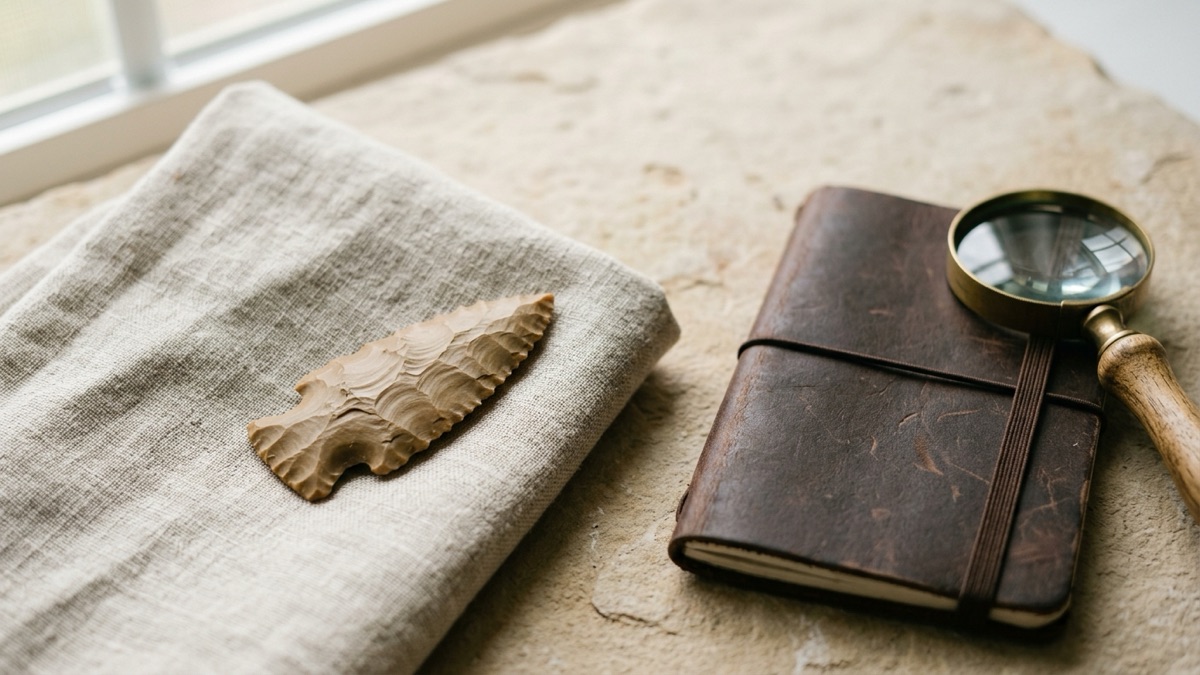
A chipped stone point turned up in a plowed field, a creek bank or a box of grandpa's things, and the first two questions are always the same: what is it worth, and am I allowed to have it? The second question matters more than the first, so it comes first here.
Quick answer
Most arrowheads sell for small sums; documented Paleo points sell for a fortune. Morphy Auctions sold the Rutz Clovis point for $276,000 in November 2013; Bonhams sold a museum group of points and tools for $4,270 in May 2010. On federal and tribal land, taking an arrowhead is illegal; on private land, the landowner and state law decide.
Key takeaways
- Arrowheads are archaeological resources under federal law when they are at least 100 years old, which nearly all are.
- On BLM, Forest Service and National Park Service land, you may not pick up, dig for or keep an arrowhead. ARPA's "surface arrowhead" clause limits criminal penalties only.
- On private land, get the owner's permission and check state law: Texas leaves artifacts to the landowner, while Florida makes removing them from state land a crime.
- Value comes from type and age, size, material, condition, and documented provenance. Common points are cheap; Clovis points from known finds have sold for five and six figures.
- Only an in-person examination can authenticate a point. No photo can.
Can you legally keep an arrowhead?
This is the part to read carefully, because the answer depends entirely on whose land the point was on.
Federal land: the Archaeological Resources Protection Act
The Archaeological Resources Protection Act (ARPA, 16 U.S.C. 470aa to 470mm) protects "archaeological resources" on public lands and Indian lands. The Act defines them as material remains of past human life or activities that are of archaeological interest and at least 100 years old (16 U.S.C. 470bb). The regulations that implement it list tools, weapons and weapon projectiles among the covered items, and define an arrowhead as any projectile point that appears to have been designed for use with an arrow (43 CFR 7.3).
Section 470ee(a) says no person may excavate, remove, damage or otherwise alter any archaeological resource on public or Indian lands without a permit. The criminal penalties are steep: up to $10,000 and a year in prison for a first offense, up to $20,000 and two years if the resource's value and repair cost exceed $500, and up to $100,000 and five years for a repeat offense (16 U.S.C. 470ee(d); 43 CFR 7.4).
You will read online that ARPA has an "arrowhead exception." Here is what the Act actually says: nothing in the criminal penalty subsection "shall be deemed applicable to any person with respect to the removal of arrowheads located on the surface of the ground" (16 U.S.C. 470ee(g)). That clause limits criminal prosecution under ARPA. It does not change the prohibition in 470ee(a), it does not touch the civil penalties a land manager may assess under 43 CFR 7.15, and it does not override each agency's own regulations. Those regulations are blunt:
| Land manager | What the rule says | Source |
|---|---|---|
| Bureau of Land Management | Projectile points (arrowheads) and stone tools cannot be collected under ARPA; it is illegal to remove, damage or dig up any cultural item | BLM, "Can I keep this?" |
| Forest Service | Removing any prehistoric, historic or archaeological resource or artifact is prohibited; if you find one while metal detecting, stop and report it to the local office | 36 CFR 261.9(g) and (h); Forest Service metal detecting page |
| National Park Service | Possessing, removing, digging or disturbing cultural or archeological resources is prohibited, and so is possessing or using a metal detector | 36 CFR 2.1 |
| Tribal lands | Covered by ARPA as Indian lands; tribal permission and permits govern everything | 16 U.S.C. 470bb |
The BLM Arizona rockhounding brochure spells out the same list for its state: arrowheads, flakes, pottery, potsherds, mats, rock art and even old bottles are not collectable without a permit, and human burials are protected on public and private land alike.
Heads up
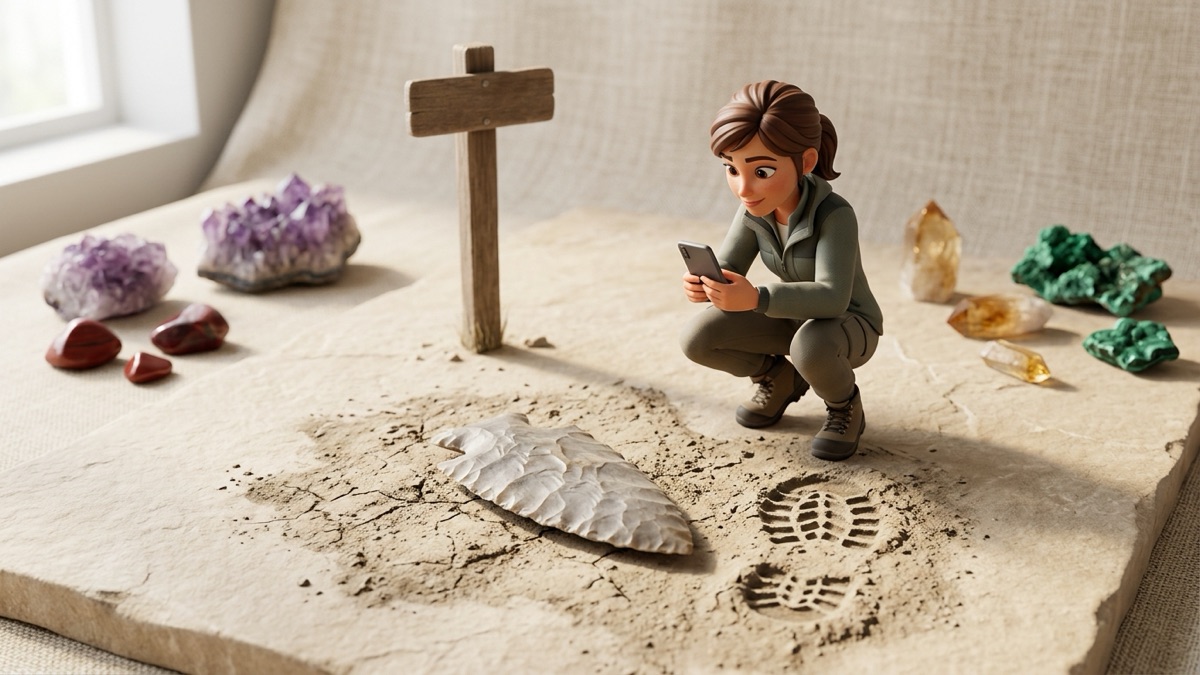
Never dig for artifacts on public or tribal land, and do not pick up a point "just to look" and pocket it. If you find one, photograph it in place, note the spot, leave it, and tell the managing office. Our guide to rock collecting rules covers the rock side of the same rules.
State land and private land
States write their own rules, and they vary a lot. Two examples, checked in September 2026:
- Texas. The Texas Historical Commission says state law prohibits collecting artifacts from public property without an antiquities permit, which it issues only to qualified professional archeologists. On private land, the commission says there are presently no laws protecting all archeological sites, and artifacts found there belong to the landowner, who decides what happens to them. It also warns that uncontrolled collecting destroys the information a site holds.
- Florida. Florida Statutes 267.13 makes it a first-degree misdemeanor to remove, deface or alter an archaeological site or specimen on land owned or controlled by the state, including state sovereignty submerged lands (river and lake bottoms), and a third-degree felony to do it by excavation or to sell artifacts you know were taken illegally.
Before you collect anywhere, look up your state historic preservation office and read its page on artifact collecting. Then get the landowner's permission in writing. A point with a landowner's letter and a find spot is both legal and, as you will see below, worth more.
What are arrowheads worth?
With the legal question settled, here is what documented sales look like. These are published auction results, current as of September 2026; dealer asking prices and price guides run far lower for everyday points.
| Piece | Sale | Price |
|---|---|---|
| Large group of arrowheads and hand tools from the Roy Rogers and Dale Evans Museum, many self-collected in Ohio, plus a pottery jug and two mortars | Bonhams, New York, May 27, 2010 | $4,270 with premium |
| Cache of 20 Motley points from Kentucky | Morphy Auctions, November 2013 | $28,000 |
| Rutz Clovis point, sea green obsidian, 9.75 inches, found in a field in Douglas County, Washington, in the 1950s | Morphy Auctions, November 2013 | $276,000, a record for a North American flaked stone artifact |
| Translucent quartz Clovis point from Fulton County, Illinois | Morphy Auctions, May 17, 2014 | $69,000 with premium |
| Ross blade, exotic flint, Hopewell, 8 inches | Morphy Auctions, May 17, 2014 | $276,000 with premium |
A museum group of ordinary points and tools brought about $4,000 for the whole lot, which works out to very little per piece. The six-figure results are single, famous, documented Paleo and Hopewell pieces. Everything in between is decided by the factors below.
What makes one point worth more than another?
Type and age
Collectors sort points by shape and by the culture and period they belong to. The oldest well-known type, Clovis, sits at the top of the market; the Rutz point dates to roughly 10,000 to 9,000 BC. Later, smaller triangular points made for true arrows are far more common and far cheaper. Note the word choice: archaeologists say "projectile point" because many pieces called arrowheads were spear or dart tips, and the regulations reserve "arrowhead" for points designed for an arrow.
Size and workmanship
Long, thin, symmetrical points with fine flaking are rare because they were hard to make and easy to break. The Rutz point is the largest Clovis point on record at 9.75 inches, and that size is a big part of its price.
Material
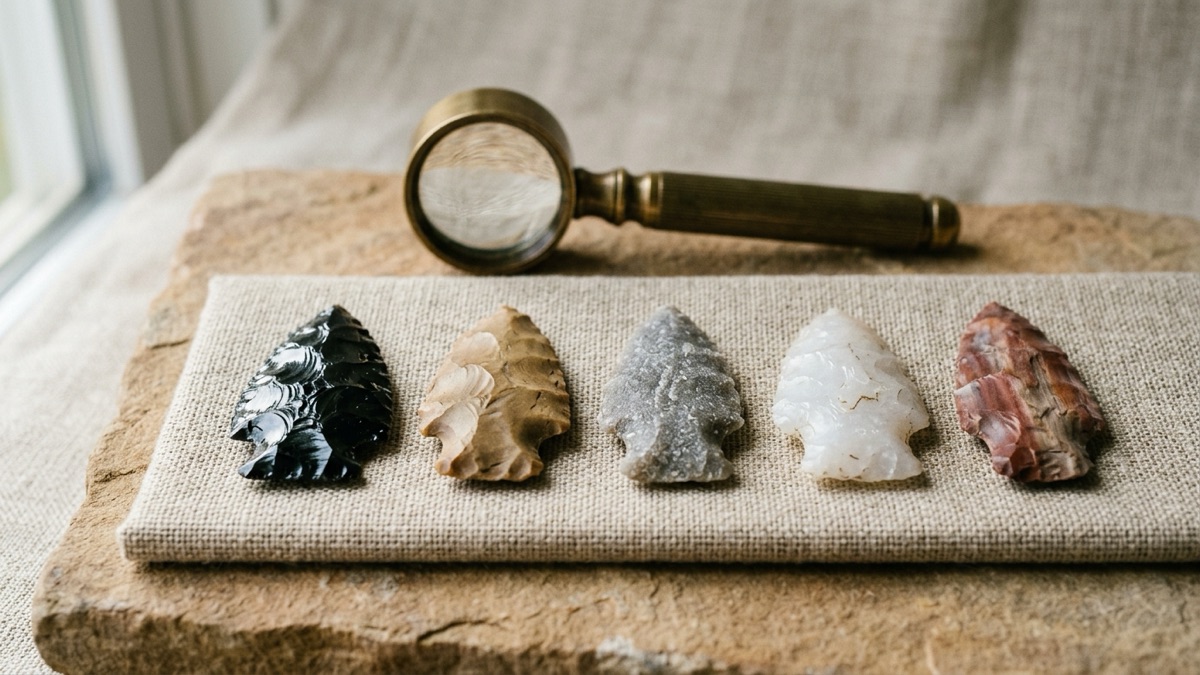
The stone matters. The USGS says obsidian, with edges sharper than the finest steel, was prized for arrowheads and traded hundreds of miles. Chert and flint, the workhorse materials, are hard, fine-grained rocks that break with a curved, shell-like (conchoidal) fracture, which is exactly what a knapper needs. The Park Service notes that petrified wood was knapped into tools for thousands of years. Colorful or translucent stone, like the sugar quartz Clovis that brought $69,000, adds a premium.
Condition
A broken tip, a missing ear or a modern chip cuts value sharply. Points that spent centuries in a plowed field often show plow scars. Honest sellers describe every break.
Provenance and documentation
Where it was found, by whom, when, and on whose land. The record-setting Rutz point came with a family story and a county. A point with no history is harder to authenticate and harder to sell, and one that may have come from public land is one no reputable dealer will touch.
Authenticity
Modern reproductions are everywhere, and skilled knappers make points that fool beginners. Dealers and collector societies examine flaking patterns, edge wear, surface aging and the stone itself, and many buyers insist on a written authentication from a recognized examiner. Collector price guides such as the Overstreet arrowhead guide list types and typical ranges, but a guide value is not a sale.
What is my arrowhead made of?
Knowing the stone helps with both identification and value, and it is the one part of this you can test yourself.
| Material | What to look for | Quick check |
|---|---|---|
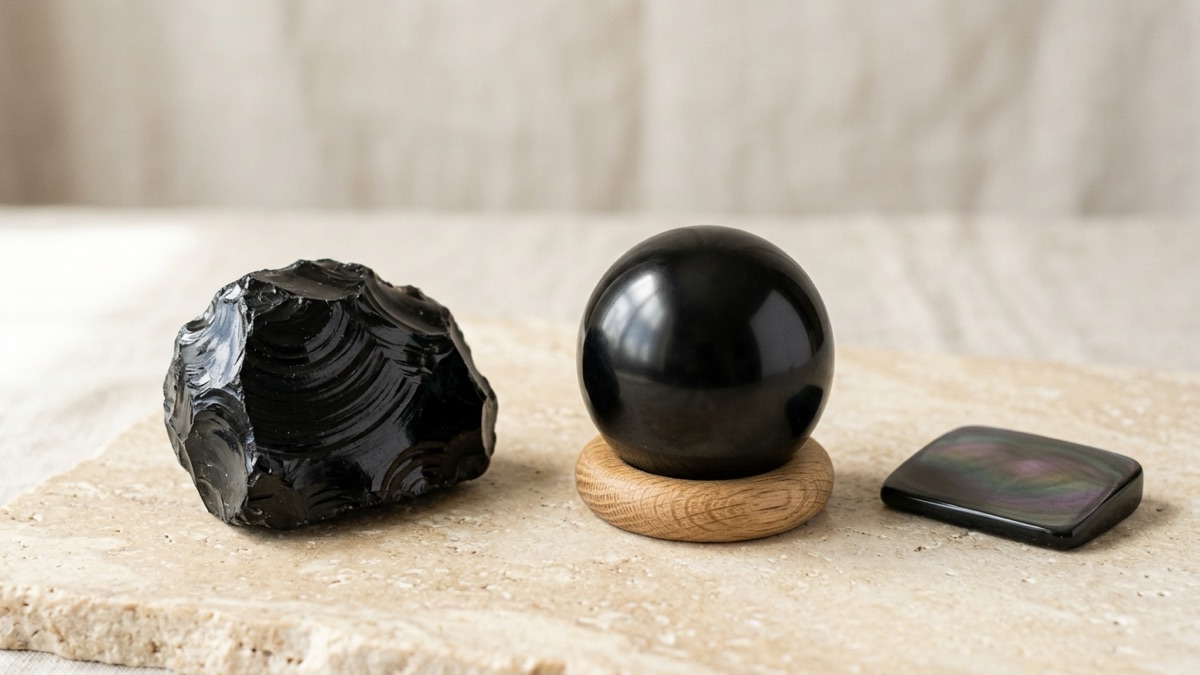
| Obsidian | Black, brown or green natural glass, glossy, translucent on thin edges | Glassy all the way through under a lens; no grains |
| Chert and flint | Smooth, waxy to dull, gray, tan, brown, white or black, no visible grains | Scratches glass; curved fracture surfaces |
| Quartzite | Grainy, sugary look, very tough | Scratches glass; grains visible with a lens |
| Quartz | Clear to milky, glassy | Scratches glass; often translucent |
| Petrified wood | Grain lines or growth rings still visible | Scratches glass; look for wood structure |
Do not scratch a real artifact to test it. Look at a broken edge with a hand lens instead, or test a plain flake of the same stone from the area. Our guides to obsidian and to rocks that look like glass show what natural glass looks like, and river rock identification covers chert, quartzite and their look-alikes.
Try it
To sort the stone itself, answer a few questions in the free rock identifier. It suggests likely candidates for the material; it cannot tell you whether a piece was worked by human hands, and neither can any app.
How do you get an arrowhead valued?
- Settle the legal question first. Where was it found, and whose land was it? If the answer is federal, tribal or state land, the right call is to contact the managing agency, not a dealer.
- Write down what you know. Find spot, date, finder, landowner permission. Keep any old labels or letters.
- Do not clean, oil or "improve" it. Surface aging is part of authentication.
- Have it examined in person by an experienced dealer or a collector society, and ask about authentication.
- Compare with dated auction results for the same type, size, material and condition, not with the record prices.
- For insurance or an estate, hire a qualified appraiser. The American Society of Appraisers lists members under Personal Property.
For where artifacts sit next to gold, meteorites and gem rough, see our hub on rocks worth money.
The takeaway
Most arrowheads are worth a little, a few are worth a great deal, and none of them are worth a federal charge. On public and tribal land, leave points where they lie and report them. On private land, get permission, record the find spot and keep the paperwork, because documentation is what turns a nice point into a valuable one. Then get an in-person opinion before you name a price. The RockhoundID app for Android suggests likely matches for the stone from a photo and tells you which test confirms them.
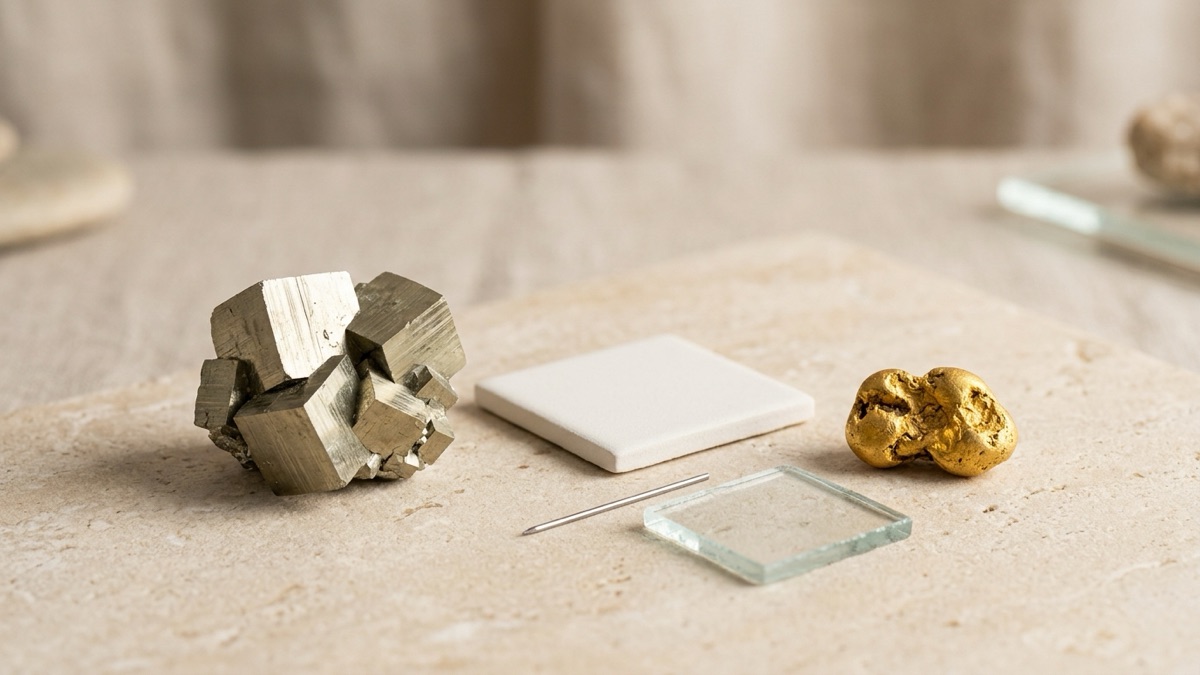
The pictures in this guide are AI-generated illustrations of what to look for; real specimens vary, so trust the tests over any picture. RockhoundID guides help you narrow down what you found. They suggest likely candidates, not certain identifications or appraisals. For anything valuable, rare or possibly from space, ask a museum, a university geology department or your state geological survey, and check the collecting rules for the land before you take anything home.
Questions rockhounds ask
How much are arrowheads worth?
Most common points sell for small sums, and a few exceptional ones sell for a fortune. Bonhams sold a whole museum group of arrowheads and hand tools for $4,270 in May 2010, while Morphy Auctions sold the Rutz Clovis point for $276,000 in November 2013 and a quartz Clovis point for $69,000 in May 2014.
Is it legal to keep an arrowhead I found?
On federal land, no. The Archaeological Resources Protection Act bars removing archaeological resources from public or tribal lands, and the BLM, Forest Service and National Park Service all say arrowheads may not be taken. On private land it depends on your state and on the landowner, who usually owns what is found.
What is the surface arrowhead exception in ARPA?
The Act says its criminal penalties do not apply to removing arrowheads found on the surface. It does not remove the prohibition itself, the civil penalties, or the agencies' own rules, and the BLM, Forest Service and Park Service each say arrowheads may not be collected. Do not rely on it.
What are arrowheads made of?
Mostly stone that breaks with a curved, glassy fracture: chert and flint, obsidian, quartzite, quartz and sometimes petrified wood. The USGS says obsidian was prized for arrowheads and traded hundreds of miles, and the Park Service says petrified wood was knapped into tools for thousands of years.
How do I get an arrowhead appraised?
Have it examined in person by an experienced dealer or a collector society, ask about authentication, then compare with dated auction results for the same type, size and material. For insurance or an estate, hire a qualified appraiser. No photo, quiz or app can value a point.
Where these facts come from
- 16 U.S.C. 470ee: Archaeological Resources Protection Act, prohibited acts and criminal penalties (Cornell LII): www.law.cornell.edu/uscode/text/16/470ee
- 16 U.S.C. 470bb: Archaeological Resources Protection Act, definitions (Cornell LII): www.law.cornell.edu/uscode/text/16/470bb
- 43 CFR 7.3: Definitions, including arrowhead (Cornell LII): www.law.cornell.edu/cfr/text/43/7.3
- 43 CFR 7.4: Prohibited acts and criminal penalties (Cornell LII): www.law.cornell.edu/cfr/text/43/7.4
- 43 CFR 7.15: Civil penalties (Cornell LII): www.law.cornell.edu/cfr/text/43/7.15
- BLM: Can I keep this?: www.blm.gov/learn/can-i-keep-this
- 36 CFR 261.9: Property, National Forest System (Cornell LII): www.law.cornell.edu/cfr/text/36/261.9
- USDA Forest Service: Metal detecting, know before you go: www.fs.usda.gov/visit/know-before-you-go/metal-detecting
- 36 CFR 2.1: Preservation of natural, cultural and archeological resources (National Park Service): www.ecfr.gov/current/title-36/chapter-I/part-2/section-2.1
- BLM Arizona: Rockhounding on public lands brochure (artifacts): www.blm.gov/sites/default/files/documents/files/2014%20Rockhounding_14_web_2018.
- Texas Historical Commission: General archeology FAQ: thc.texas.gov/preserve/archeology-texas/archeology-faq
- Texas Historical Commission: Artifact collecting (PDF): thc.texas.gov/sites/default/files/2023-11/archeology_artifact_collecting.pdf
- Florida Statutes 267.13: Prohibited practices and penalties: www.leg.state.fl.us/statutes/index.cfm?App_mode=Display_Statute&URL=0200-0299/02
- Morphy Auctions: Prehistoric American artifacts, November 2013 (Rutz Clovis point): morphyauctions.com/?p=1109
- Paul Fraser Collectibles: Rutz Clovis point achieves $276,000 (November 2013): paulfrasercollectibles.com/blogs/unique-items/rutz-clovis-point-achieves-276-000
- Journal of Antiques and Collectibles: Ross blade, $276,000, Morphy's (May 2014): journalofantiques.com/columns/gavels-n-paddles-ross-blade-flint-276000-morphys/
- Bonhams: Large group of Native American arrowheads and hand tools (May 2010): www.bonhams.com/auction/18252/lot/1214/large-group-of-native-american-arrowheads
- USGS Volcano Watch: Obsidian, a scarce commodity in Hawaii: www.usgs.gov/news/volcano-watch-obsidian-a-scarce-commodity-hawaii
- National Park Service, Petrified Forest: frequently asked questions: www.nps.gov/pefo/faqs.htm
- University of Auckland, rocks: Chert: rocksminerals.flexiblelearning.auckland.ac.nz/rocks/chert.html
- American Society of Appraisers: Find an appraiser: myaccount.appraisers.org/Directories/Find-An-Appraiser