Obsidian Value: What Obsidian Is Worth and Why
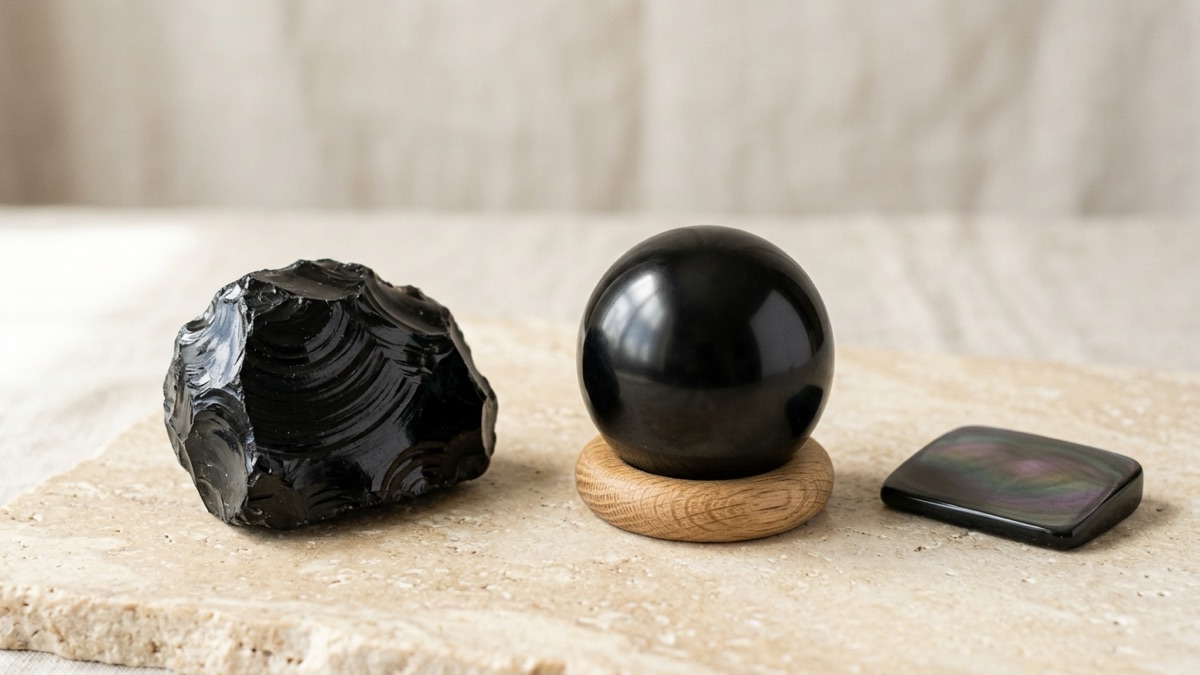
It is black, glassy, and sharp enough to make you wince. Obsidian looks precious, so it is natural to wonder what a chunk from a road trip or a polished sphere from a gift shop is worth. The honest answer is "not much" for most pieces, with a few clear exceptions.
Quick answer
Most obsidian is inexpensive. A 5.5 inch natural chunk sold at Bonhams for $6.38 in 2019, and as of September 2026 FossilEra listed polished obsidian pocket stones from $4. Value rises with strong rainbow or fire sheen, large flawless pieces, a fine polish and, above all, skilled carving, which has sold for thousands.
Key takeaways
- Obsidian is natural volcanic glass. It forms wherever silica-rich lava cools too fast for crystals to grow, and plain black pieces are cheap.
- As of September 2026, FossilEra's obsidian listings ran from $3 for tiny polished spheres to $695 for a large silver sheen sphere.
- Iridescent types add value: rainbow obsidian and the less familiar fire obsidian.
- Craftsmanship adds the most. Obsidian carvings have sold at Bonhams for $1,375 and $3,500.
- Collect only where it is allowed, never in national parks, and leave worked flakes and arrowheads where they lie.
Why is most obsidian so inexpensive?
Because in the right places there is a lot of it. The USGS describes obsidian as dense volcanic glass, usually rhyolitic and typically black, that forms when lava cools too fast for crystals to grow. It names whole flows of it, such as Obsidian Cliff in Yellowstone National Park and the Big Obsidian Flow at Newberry Crater, Oregon.
Where collecting is allowed, supply can be generous. The Modoc National Forest in California lets each permit holder take up to two 5-gallon buckets from its designated sites, for free. When a material is that plentiful, a plain piece sells for pocket change.
Obsidian is also a glass, not a mineral with a crystal structure. The Forest Service notes it breaks in smooth, curved (conchoidal) shapes with edges sharper than a razor blade. RockTumbler.com puts its hardness at about 5 to 6 and warns it chips and bruises easily, so it needs gentle handling. For identification tips, see our guide to obsidian.
How much is obsidian worth? Real prices
Dealer prices are what a seller was asking when we checked in September 2026. Auction prices are what a buyer paid, including the buyer's premium, on the date shown. None of them is an appraisal of your piece.
| What sold or was offered | Size | Price | Source and date |
|---|---|---|---|
| Natural black obsidian chunk, Mexico | 5.5 x 3.5 x 3 in | $6.38 | Bonhams, November 2019 |
| Polished black obsidian worry and pocket stones | about 1.5 to 1.8 in | $4 to $7 each | FossilEra, September 2026 |
| Snowflake obsidian sections, Utah | 2.35 to 3.2 in | $9 to $17 | FossilEra, September 2026 |
| Polished mahogany obsidian spheres | 1.6 to 2.65 in | $15 to $99 | FossilEra, September 2026 |
| Polished black obsidian sphere, Mexico | 7.25 in | $375 | FossilEra, September 2026 |
| Polished silver sheen obsidian sphere, Mexico | 8.6 in | $695 | FossilEra, September 2026 |
| Black obsidian carving of a water buffalo | 12 in long | $1,375 | Bonhams, November 2014 |
| Brown obsidian "Three Wise Monkeys" by carver Christopher Schmidt | 6 in long | $3,500 | Bonhams, May 2014 |
Read the table from top to bottom and you watch the price move from the stone to the work. The raw chunk and the monkeys are the same kind of glass. What changed is size, freedom from flaws, polishing and, at the top, a named carver's skill.
What makes obsidian worth more?
Sheen and color
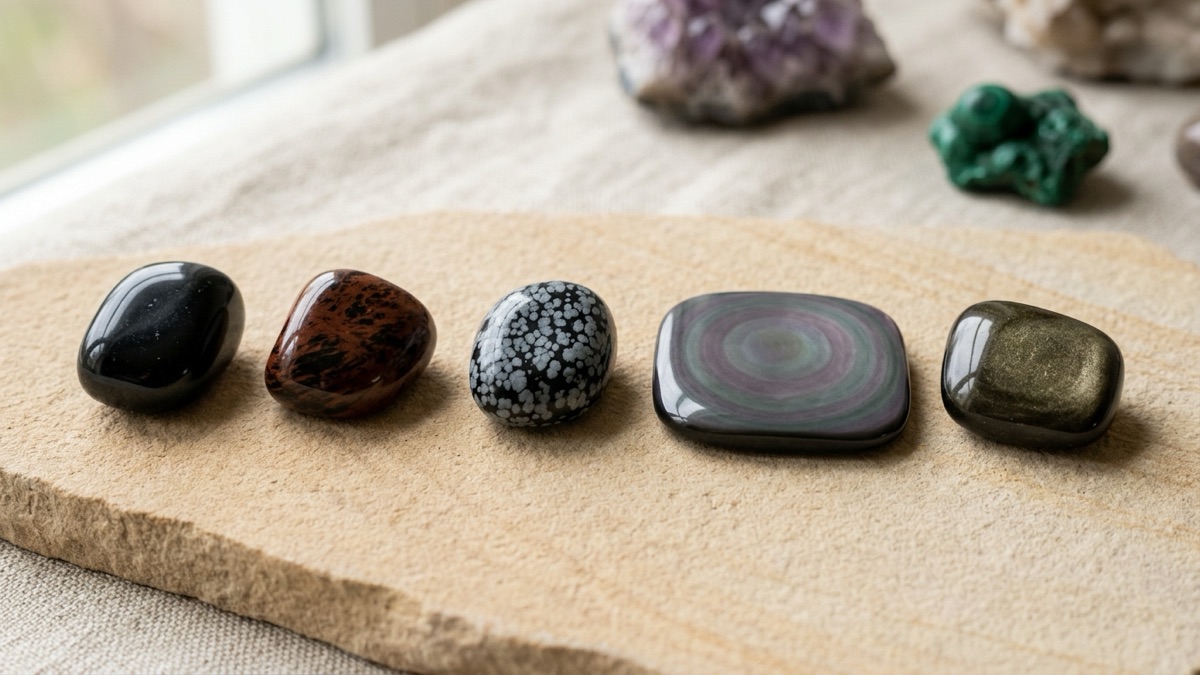
Plain black is the baseline. The Forest Service says black obsidian gets its color chiefly from the mineral magnetite, and that highly oxidized obsidian containing hematite takes on the reddish-brown "mahogany" look. As the table shows, both sell inexpensively.
Sheen is where obsidian starts to get interesting. The Modoc National Forest says its Warner Mountains obsidian has an iridescence formed by the mineral pyroxene, and that rainbow obsidian from its Rainbow and Middle Fork Davis Creek sites is sought after for its colorful sheen. FossilEra also lists gold and silver sheen obsidian, and its priciest obsidian listing when we checked was a large silver sheen sphere.
Fire obsidian
Fire obsidian is a less familiar type with flashes of color from thin layers just under the surface. Researchers at Caltech studied fire obsidian from Glass Buttes, Oregon, and found those layers, only about 300 to 700 nanometers thick, are packed with tiny magnetite crystals. The color comes from light interference, the same effect that paints a soap bubble.
Fun fact
In the Caltech study, the color in fire obsidian was not a pigment at all. It came from light bouncing between layers far thinner than a human hair.
Size and flawlessness
A big sphere needs a big block of glass without cracks, bubbles or crystal clusters, and those are harder to find than small pieces. That helps explain why the 7.25 and 8.6 inch spheres in the table are priced far above the small ones.
Polish and carving
Carving adds the most value in the table, because you are paying for a carver's skill as well as the stone. Bonhams sold a 6 inch brown obsidian carving by Christopher Schmidt, a carver trained in Germany's Idar-Oberstein tradition, for $3,500 in May 2014. A well-cut sphere or a crisp tumbled stone adds value too, though obsidian is soft enough to need care. Our guide to the best rocks for tumbling explains the extra steps.
Artifacts are a different matter
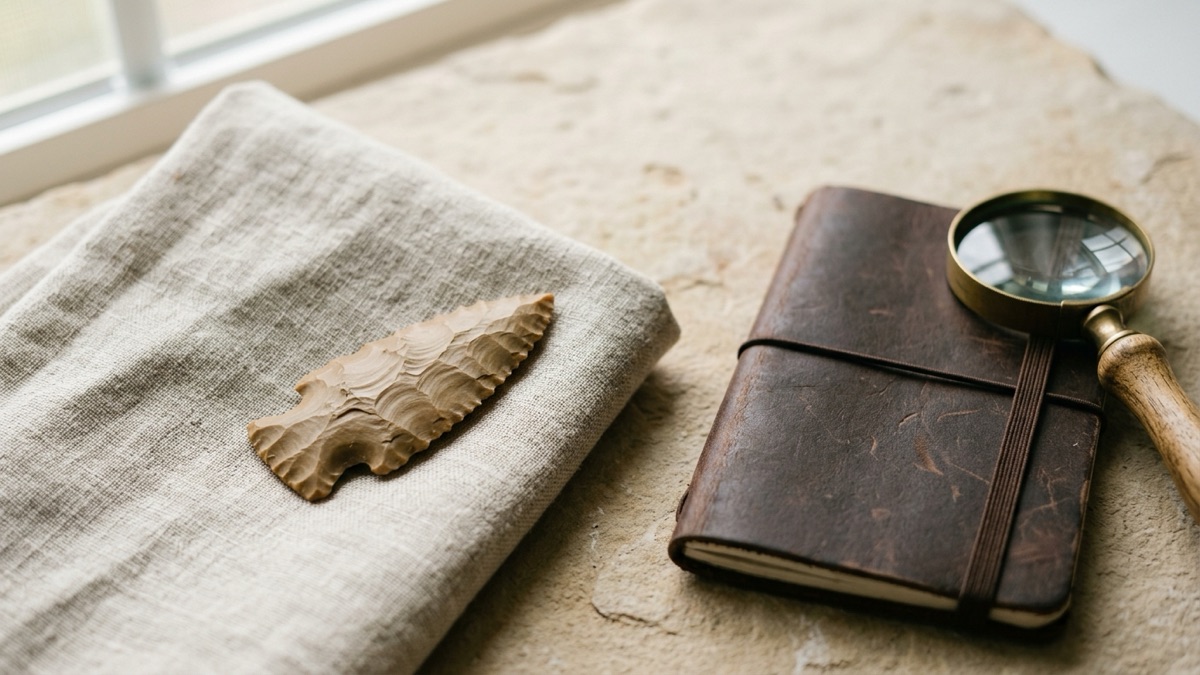
The Forest Service notes that many Native cultures made arrowheads and tools from obsidian. A chipped point or a pile of worked flakes is an archaeological artifact, not a lapidary stone. Leave artifacts where they lie on public land and never buy pieces of doubtful origin.
Where can you legally collect obsidian?
Here are the rules we checked in September 2026. Always read the manager's current page before you go.
| Place | Who manages it | The rule |
|---|---|---|
| Obsidian Cliff, Yellowstone | National Park Service | No collecting of any rocks or minerals |
| Four designated sites, Warner Mountains, California | Modoc National Forest (Forest Service) | Free personal-use permit, up to two 5-gallon buckets, hand tools only, no selling, trading or bartering |
| Other BLM public land | Bureau of Land Management | Reasonable amounts for noncommercial use, outside posted or developed sites |
| Private land | The owner | Permission first |
The Modoc permit covers the Middle Fork, Needles, Pink Lady and Rainbow sites on the Warner Mountain Ranger District. For the 2026 season it allowed up to three permits per person between July 1 and August 31, barred knapping on the forest, and required collectors to backfill every hole. The forest listed collections as closed for the 2026 season when we checked, so look for the next season's dates. Our guide to rock collecting rules covers other land types.
Heads up
Obsidian edges cut like glass because they are glass. Wear leather gloves and closed-toe shoes, as the Forest Service recommends at its sites, add safety glasses, carry pieces in a sturdy bag or bucket, and bring plenty of water.
How do you find out what your obsidian is worth?
- Make sure it is obsidian. Slag and bottle glass fool a lot of people. Our guide to rocks that look like glass shows how to tell them apart.
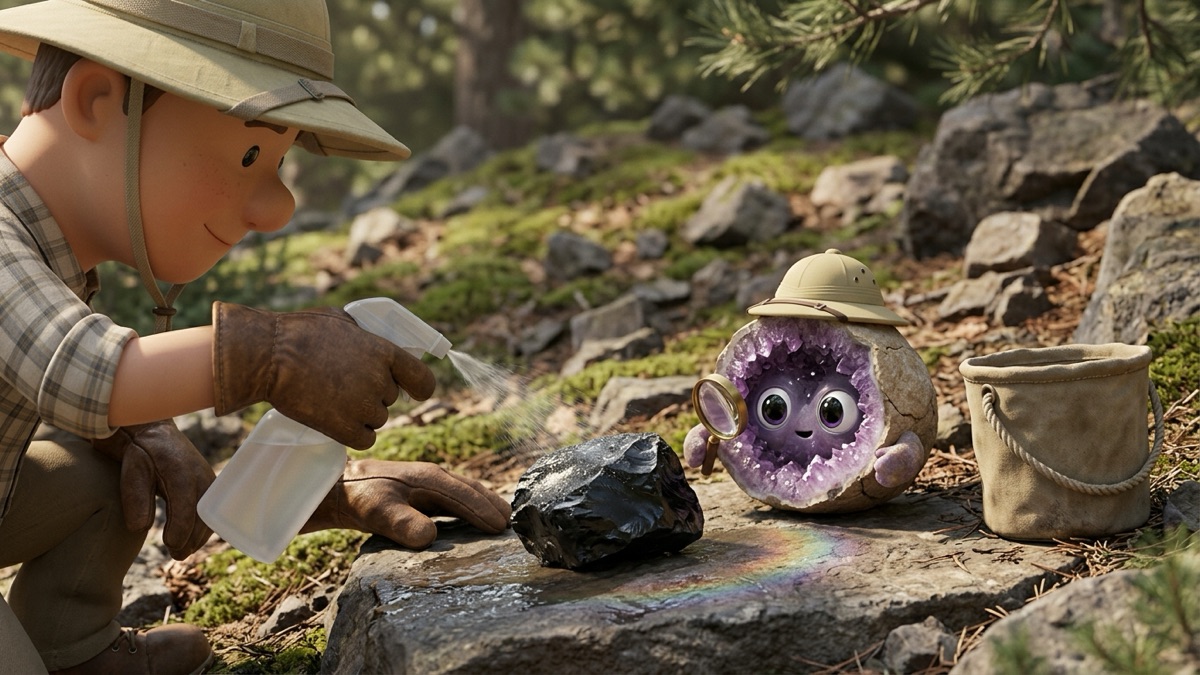
- Wet it and tilt it. The Forest Service suggests a spray bottle of water for spotting good material. Look for sheen, rainbow bands or fire.
- Check for flaws. Cracks, bubbles and chipped edges lower the value of any piece meant for polishing.
- Compare like with like. A raw chunk should be compared with raw chunks, and a carving is priced as art.
- Ask an expert when it counts. A specialist dealer can give a market opinion. For a written value, the American Society of Appraisers lists members under Gems and Jewelry and Personal Property.
Try it
Not sure whether you have obsidian, slag or glass? Answer a few questions in the free rock identifier to see likely candidates. It runs in your browser and never uploads a photo.
For how obsidian compares with other finds, see our hub on rocks worth money.
The takeaway
Obsidian is one of the most striking rocks you can hold, and one of the least expensive. Plain black glass sells for a few dollars. Strong rainbow or fire sheen, large flawless pieces and a good polish raise the price, and skilled carving turns it into art that can sell for thousands. Collect only where the rules allow it, leave artifacts alone, and compare with dated sales before you name a price. The RockhoundID app for Android suggests likely matches from a photo and tells you which test confirms them.
The pictures in this guide are AI-generated illustrations of what to look for; real specimens vary, so trust the tests over any picture. RockhoundID guides help you narrow down what you found. They suggest likely candidates, not certain identifications or appraisals. For anything valuable, rare or possibly from space, ask a museum, a university geology department or your state geological survey, and check the collecting rules for the land before you take anything home.
Questions rockhounds ask
How much is obsidian worth?
Usually very little in its raw form. A 5.5 inch natural chunk from Mexico sold at Bonhams for $6.38 in November 2019, and as of September 2026 FossilEra listed polished obsidian pocket stones from about $4. Large polished spheres and skilled carvings are where prices climb into the hundreds or thousands.
Is rainbow obsidian worth more than black obsidian?
Generally, yes, when the sheen is strong. The Modoc National Forest says rainbow obsidian from its Warner Mountains sites is sought after for its colorful sheen, which it attributes to the mineral pyroxene. Plain black obsidian is the most common kind.
What is fire obsidian?
Fire obsidian shows flashes of color from very thin layers just under the surface. A Caltech study of fire obsidian from Glass Buttes, Oregon, found the layers are packed with nanometer-sized magnetite crystals and that the color comes from light interference, like a soap bubble.
Where can I collect obsidian legally?
The Modoc National Forest in California issues a free personal-use permit for four designated obsidian sites in the Warner Mountains, with a limit of two 5-gallon buckets per permit and no selling. National parks, including Yellowstone's Obsidian Cliff, allow no collecting.
Where these facts come from
- USGS Volcano Hazards Program glossary: obsidian: www.usgs.gov/glossary/volcano-hazards-program-glossary
- USDA Forest Service, Modoc National Forest: Permits (obsidian collection, read September 2026): www.fs.usda.gov/r05/modoc/permits
- Caltech (Ma, Rossman and Miller, 2007): The origin of color in fire obsidian: authors.library.caltech.edu/records/h3v0y-wgy56
- FossilEra: Obsidian for sale (asking prices checked September 2026): www.fossilera.com/minerals-for-sale/obsidian
- Bonhams: Obsidian, Mexico (November 2019): www.bonhams.com/auction/25964/lot/3257/obsidian/
- Bonhams: Black obsidian carving of a water buffalo (November 2014): www.bonhams.com/auction/21819/lot/1120/black-obsidian-carving-of-a-water-buffalo
- Bonhams: Brown obsidian carving of the Three Wise Monkeys (May 2014): www.bonhams.com/auction/21649/lot/1020/brown-obsidian-carving-of-the-three-wise-
- RockTumbler.com: Best rocks for tumbling: rocktumbler.com/tips/rocks-for-tumbling/
- 36 CFR 2.1: Preservation of natural resources (National Park Service): www.ecfr.gov/current/title-36/chapter-I/part-2/section-2.1
- 43 CFR 8365.1-5: Property and resources (BLM): www.ecfr.gov/current/title-43/subtitle-B/chapter-II/subchapter-H/part-8360/subpa
- American Society of Appraisers: Find an appraiser: myaccount.appraisers.org/Directories/Find-An-Appraiser