Valuable Rocks in Your Backyard: What to Look For
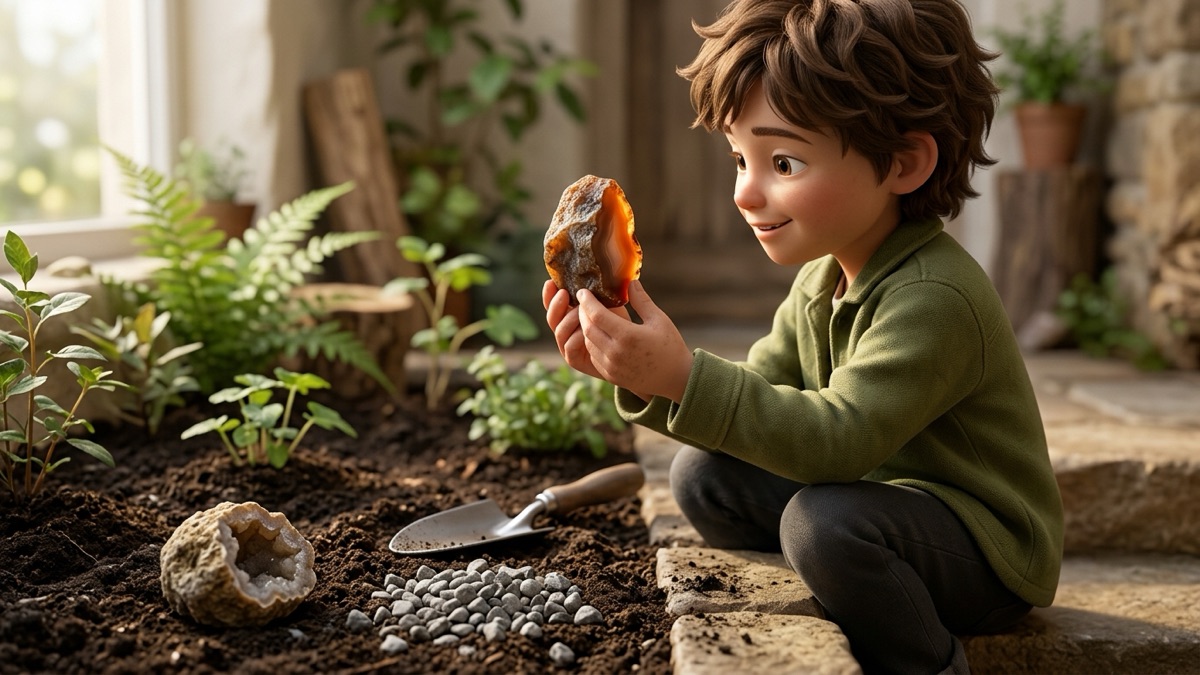
The kids dug something up in the garden, or a strange stone rolled out of the flower bed. It is heavier, shinier or more colorful than the rest, and now everybody wants to know if it is worth money. Here is what really turns up in yards, what could be worth something, and how to check before you celebrate.
Quick answer
Most backyard rocks are common gravel, fill or landscaping stone worth very little. The finds that can be interesting are agate, jasper, geodes, quartz crystals, fossils, petrified wood and, in gold country, gold. Meteorites are very rare. Rule out slag, pyrite, mica and glass first, then get anything promising identified in person.
Key takeaways
- Many yard rocks were trucked in as gravel, fill or landscaping stone, so an odd rock may come from somewhere else entirely.
- Agate, geodes, quartz crystals, fossils and petrified wood are the realistic "good" finds, and even those are usually worth more as keepsakes than as cash.
- Gold only turns up in gold-bearing regions, and backyard meteorites are extremely rare.
- Slag, pyrite, mica, glass and iron-oxide lumps fool more people than anything else.
- Scratch, streak, magnet and weight tests take minutes. An in-person identification comes before any talk of price.
Where did the rocks in your yard come from?
Not always from under your feet. Randy Korotev of Washington University in St. Louis (WUSTL) points out that glaciers, moving water, wind and, most of all, humans have moved a lot of unusual rocks far from where they formed. Driveway gravel, fill dirt, landscaping boulders and decorative stone all arrive by truck.
That cuts both ways. It explains why a yard can hold a colorful pebble that matches nothing nearby, and why a "weird" rock is so often just a stray piece of somebody's gravel order. The Mineralogical Society of America (MSA) gives a good rule of thumb for spotting finds: look for the odd rock that does not look like most of the rocks around it, and look into holes in rocks, where crystals like to grow. It also lists newly graveled areas among the places fresh rock turns up.
What could be valuable in your backyard?
Here are the realistic candidates, with the rarest last. "Valuable" here mostly means "worth a closer look," not "pay off the mortgage."
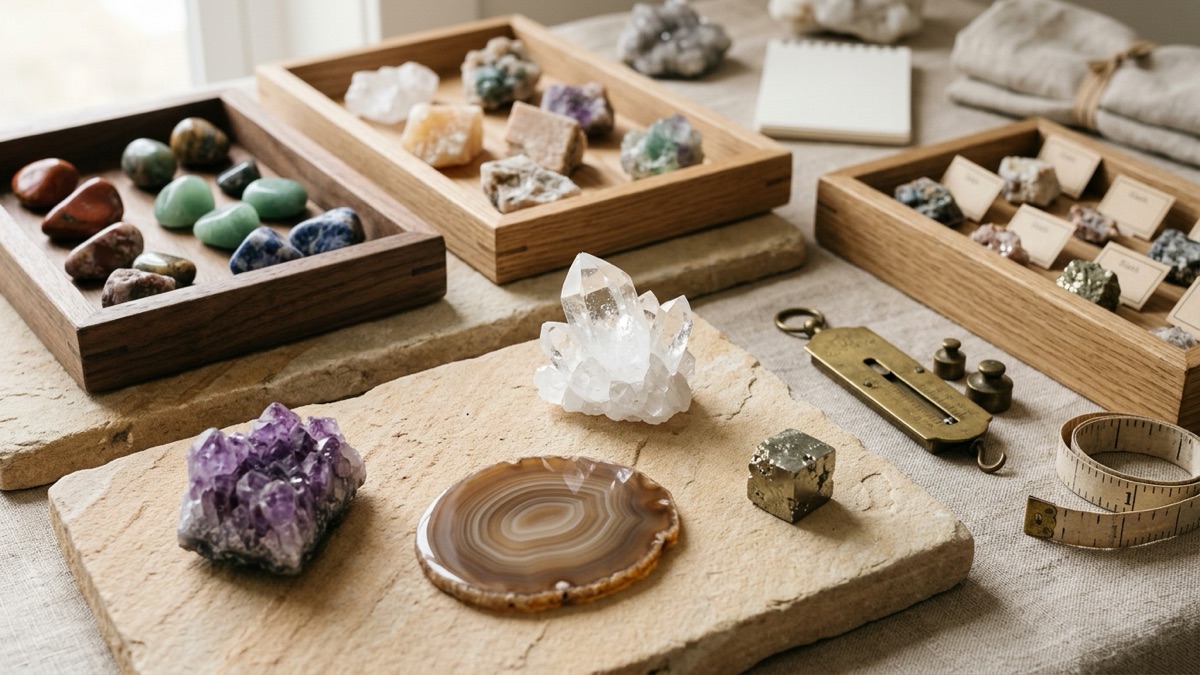
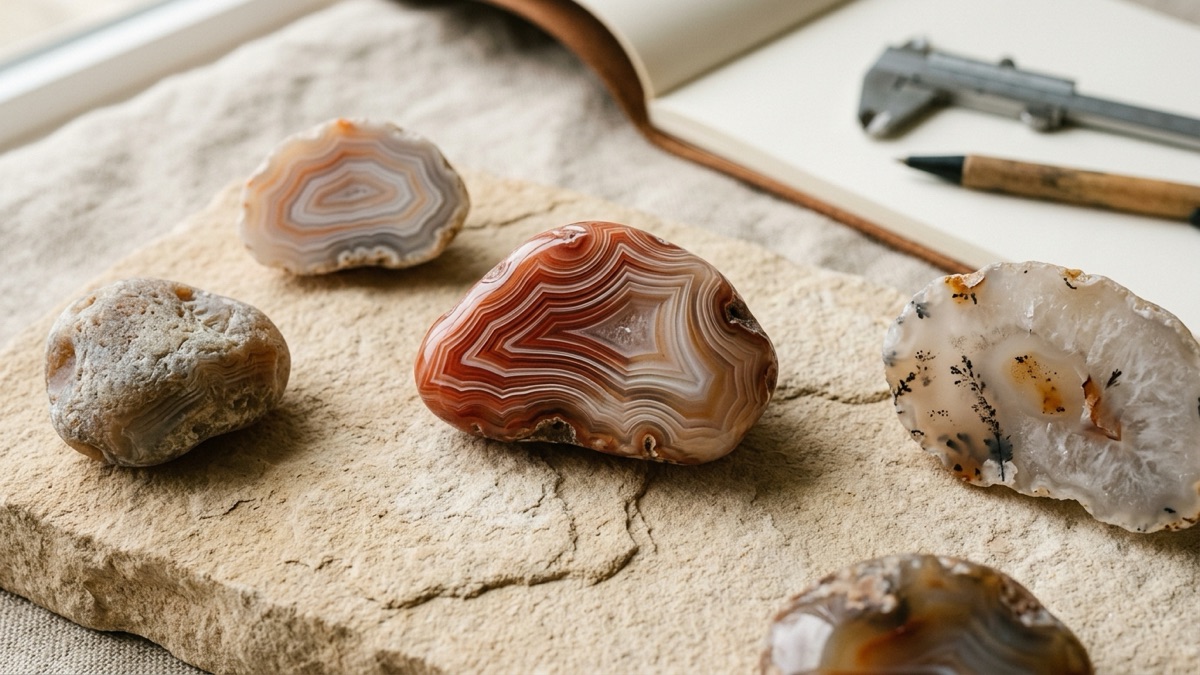
- Agate. A translucent, waxy form of quartz with curved bands. Hold a flashlight behind a thin edge: agate glows, while jasper stays dark. Lake Superior agate, reddened by iron, is Minnesota's official gemstone and ranges from pea size to more than 20 pounds, according to the Minnesota DNR. Pattern, color, size and damage decide what one is worth, as our guide to agate value explains.
- Jasper. Opaque chalcedony in brick red, brown, mustard or green, hard enough to scratch glass. It is common, so only striking patterns and colors draw real collector interest.
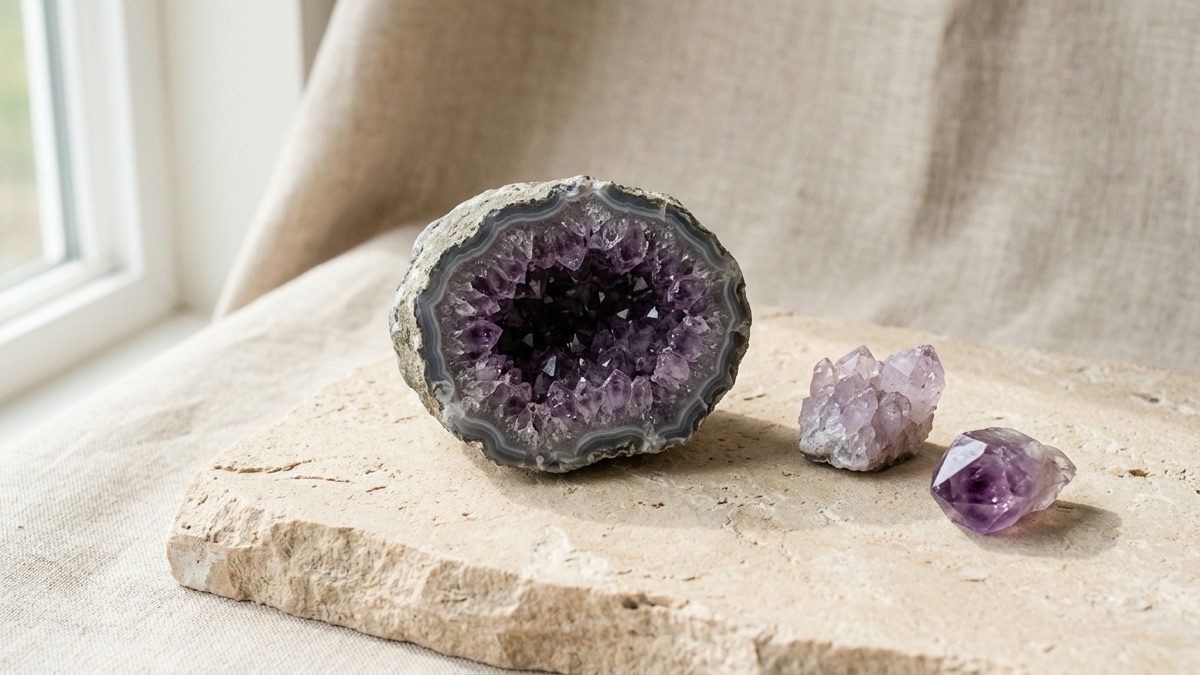
- Geodes. Lumpy, roughly round stones that are hollow inside and lined with crystals. In Iowa, where the geode is the state rock, the Iowa Geological Survey says they usually measure about 2 to 6 inches across (up to 30), with quartz dominating the insides and calcite common. Our geode guide shows how to open one.
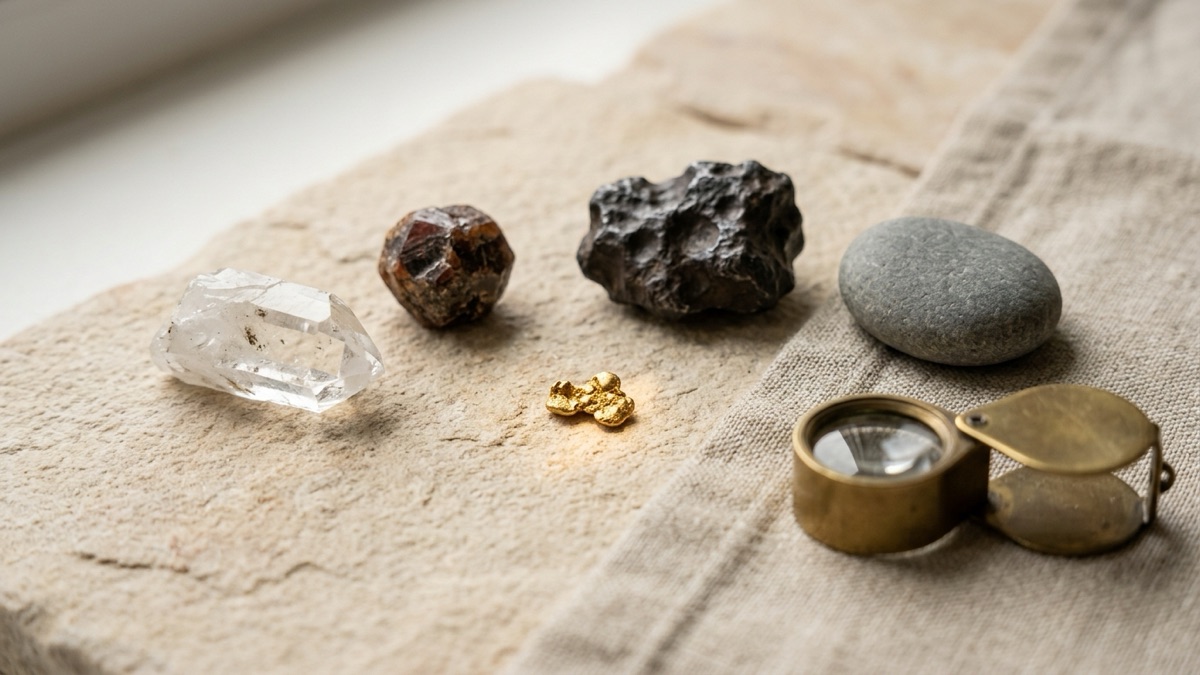
- Quartz crystals. Six-sided points, glassy and hard enough to scratch glass easily. Clear, sharp, undamaged points appeal to collectors; broken or milky chunks are everywhere.
- Fossils. Shells, coral, crinoid stems and plant prints turn up in sedimentary rocks such as limestone and shale, including gravel made from them. Most common fossils are more fascinating than valuable. Our fossil identification guide helps you name them.
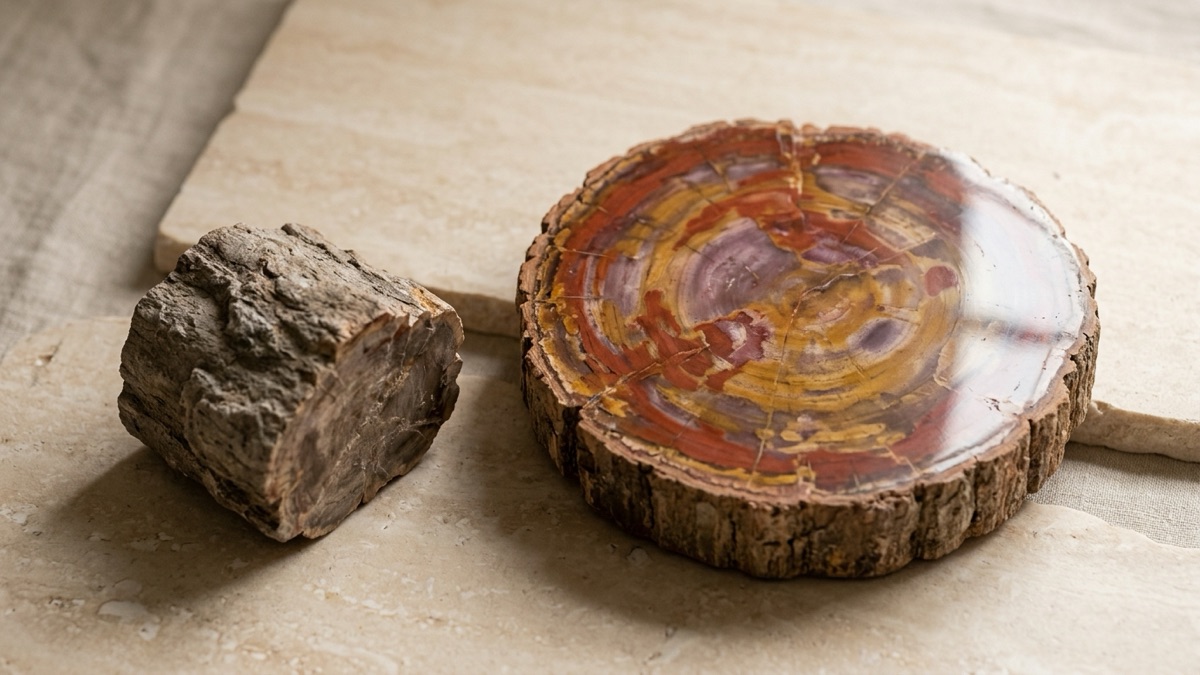
- Petrified wood. Stone that still shows growth rings and bark, mostly quartz, so it scratches glass. See how much petrified wood is worth.
- Gold. Only in gold-bearing regions. The USGS describes gold as soft (about the hardness of a penny), the most malleable metal and very heavy, which is why it settles in stream gravels with "black sands." In the United States it has historically come from places such as the southern Appalachians, California, Nevada, Colorado, Alaska and South Dakota.
- Meteorites. Rarest of all. WUSTL counts about 1,862 meteorites found in North America from 1900 through 2024, roughly 15 a year for the whole continent, and about two thirds of US finds come from arid parts of California, Nevada, Arizona, New Mexico, Texas and Kansas.
What do valuable rocks look like raw?
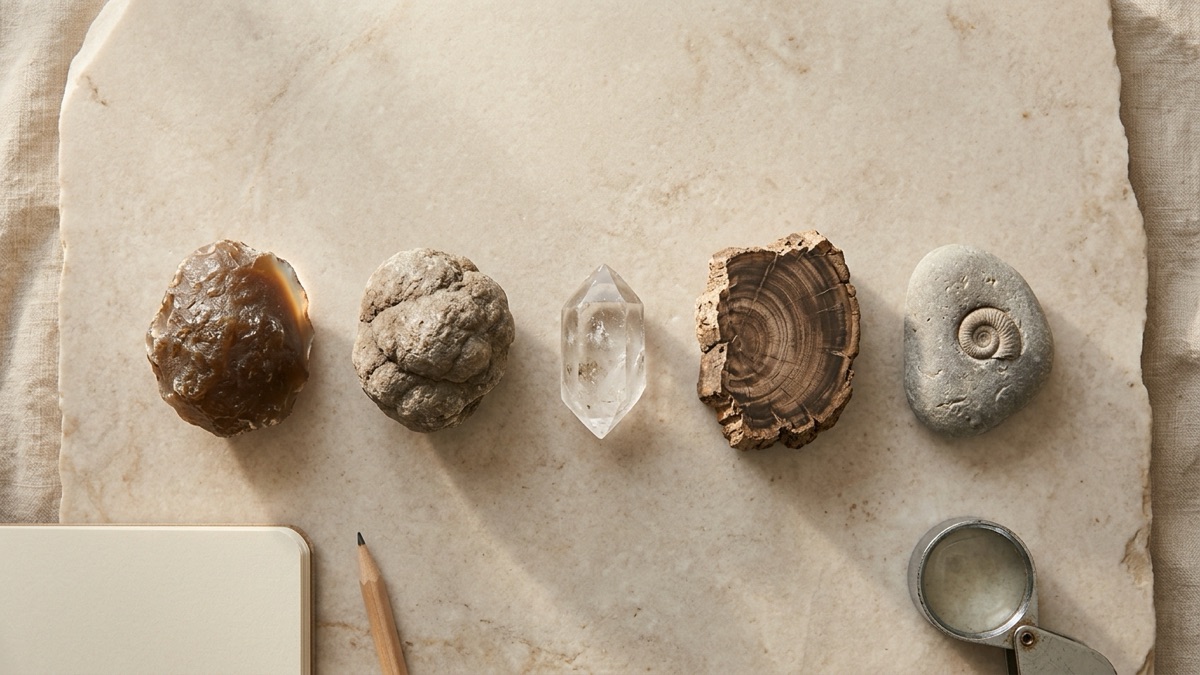
Plainer than you might expect. Most of the good stuff looks dull and dirty until it is cut, cracked or polished, so the clues are in shape, texture and simple tests rather than sparkle.
| Find | What it looks like raw | Quick test | Usually worth money? |
|---|---|---|---|
| Agate | Waxy, rounded nodule, often with a rough skin | Flashlight glows through a thin edge | Only fine pattern, color or size |
| Geode | Lumpy, roughly round ball; hollow ones feel light for their size | A broken one shows a crystal-lined hollow | Mostly keepsakes |
| Quartz crystal | Six-sided glassy point | Scratches glass easily (Mohs 7) | Only clear, sharp, undamaged points |
| Petrified wood | Stone with growth rings and bark texture | Scratches glass; rings on the end | Depends on color, pattern, size |
| Gold | Soft, bright yellow grains or flakes | Dents under a pin; very heavy | Yes, by weight, but rare in yards |
| Meteorite | Thin dark crust, heavy, attracts a magnet | Metal flecks on a cut face | Rarely found; needs a lab |
What do people mistake for valuable rocks?
These five account for most of the excitement and most of the disappointment. Each has a quick tell.
- Slag. Glassy, often bubbly lumps left over from smelting or furnaces, sometimes magnetic because of metallic iron. It is common in fill, gravel and near old industry. Glass plus gas bubbles means slag, even when a magnet sticks.
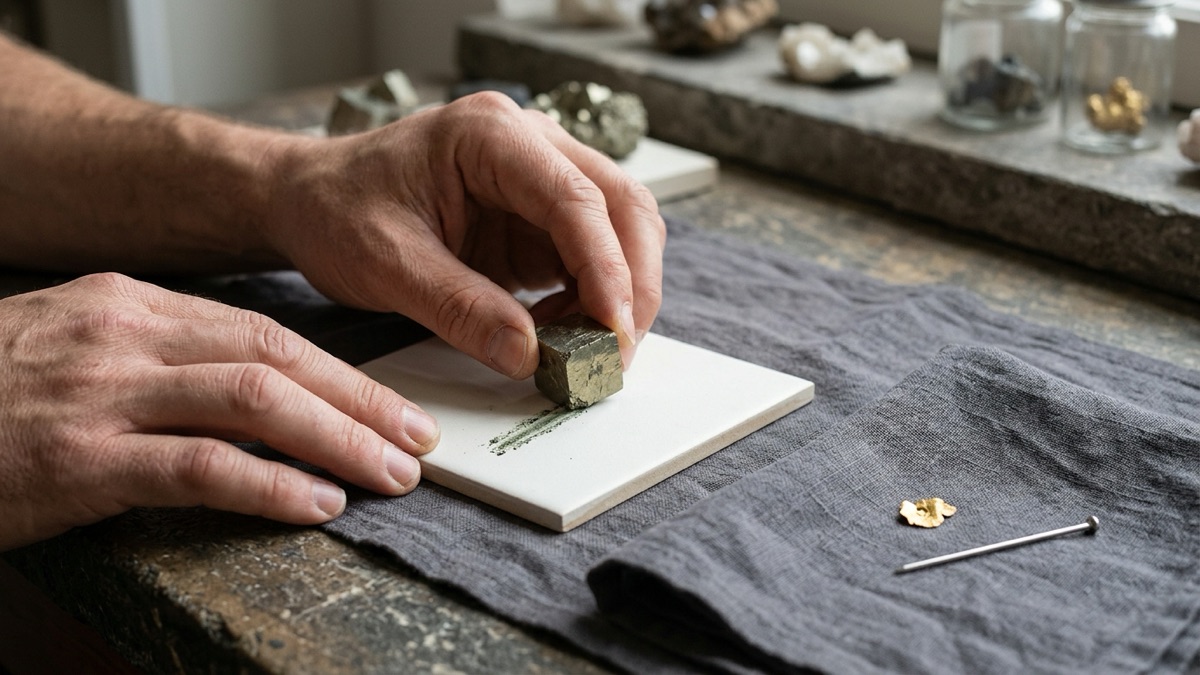
- Pyrite ("fool's gold"). Brassy cubes and grains that look like gold. Pyrite is hard (Mohs 6 to 6.5) and brittle and leaves a greenish-black streak; real gold is soft (2.5 to 3) and bends or dents. WUSTL's rule for would-be meteorites applies here too: if you think you can "see gold" in a rock, it is probably pyrite.
- Mica. Glittering silver or golden flakes in granite, schist and sand. Muscovite peels into thin, clear, flexible sheets that spring back, and mica flakes break under a pin where gold would dent.
- Glass. Bottle glass, sea glass and landscaping glass can pass for gems. Window glass is only about Mohs 5.5, so quartz scratches it, and glass breaks with smooth, curved (conchoidal) surfaces.
- Iron-oxide concretions. Heavy, dark, rusty lumps that people hope are meteorites. WUSTL says they are the most common meteor-wrong it sees. A streak test gives them away: hematite streaks rust-red and magnetite dark gray, while meteorites give no streak or a weak grayish one.
Fun fact
Korotev reports that by July 2022 he had seen lab analyses for 672 suspected meteorites from one commercial lab and more than 140 from other labs. Only 9 were meteorites. Backyard hopefuls are in very good company.
How do you check a backyard find before you get excited?
Give it ten minutes and a few household tools. Wear safety glasses whenever you scratch or tap rocks, and wash your hands after handling anything metallic-looking.
- Rinse it. Water and a soft brush only. Skip acid, wire brushes and polish, which can damage a good specimen.
- Look closely. A hand lens or phone camera zoom shows crystals, bands, bubbles or flakes.
- Scratch test. Try a steel nail (about Mohs 5 to 5.5) and a piece of glass (about 5.5). Scratching glass points toward quartz, agate, jasper or petrified wood. The free Mohs hardness scale explains the results.
- Streak test. Drag it across the back of an unglazed tile. Greenish black suggests pyrite, red-brown suggests hematite.
- Magnet and weight. A cheap fridge magnet and a heft in the hand separate slag, iron oxides and possible meteorites from ordinary stone.
- Write down where it was. Which bed, how deep, near what. If you ever sell or donate it, that note matters.
Try it
Put your results into the free rock identifier. It asks about color, luster, hardness, streak and a few special tests, then shows likely candidates from 66 common rocks, minerals and look-alikes. If a magnet sticks and you are dreaming of space, the meteorite checker gives an honest verdict.
Can you keep or sell what you find?
In your own yard, the rocks are generally yours. If you rent, the land belongs to your landlord, so ask before you dig or keep anything notable. Meteorites follow the same idea: the Bureau of Land Management (BLM) notes that courts have long held that a meteorite belongs to the owner of the land surface where it lands. Neighbors' yards, shared community areas and city parks all need a yes from whoever manages them.
If the hunt spills out beyond the fence, the rules change with the land manager. Our rock collecting rules guide covers them in depth.
Heads up
National parks prohibit collecting rocks, minerals and fossils entirely (36 CFR 2.1). On BLM land you may collect reasonable amounts of rocks and minerals for noncommercial use, and collecting to sell needs a contract or permit. Petrified wood from public land is capped at 25 pounds plus one piece a day and 250 pounds a year, for personal use only. Never collect vertebrate fossils or artifacts on public land, and in Iowa, the survey notes that most geode spots are on private land needing permission and that geode collecting is not allowed in state parks.
Who can tell you what your find is worth?
Two steps, in this order. First, get it identified in person: the USGS suggests your state geological survey, a natural science museum, a college geology department, a rock shop, a local gem and mineral club or vendors at a gem and mineral show. Photos alone are not enough, the USGS says, because rocks need to be examined from all sides.
Second, if it really is something special, ask a specialist dealer or a qualified appraiser about value. Our hub on rocks worth money walks through what drives value and who to ask.
The takeaway
Your backyard is far more likely to hold gravel, slag and pyrite than treasure, and that is fine: a good agate, a crystal-lined geode or a fossil shell is still a great find. Rule out the look-alikes, run the quick tests, write down where you found it, and get anything promising identified in person before you price it. The RockhoundID app for Android suggests likely matches from a photo and tells you which test confirms them.
The pictures in this guide are AI-generated illustrations of what to look for; real specimens vary, so trust the tests over any picture. RockhoundID guides help you narrow down what you found. They suggest likely candidates, not certain identifications or appraisals. For anything valuable, rare or possibly from space, ask a museum, a university geology department or your state geological survey, and check the collecting rules for the land before you take anything home.
Questions rockhounds ask
How do I know if a rock in my yard is valuable?
Start by ruling out the common look-alikes: slag, pyrite, mica, glass and iron-oxide lumps. Then run simple tests (scratch, streak, magnet, weight) and have anything promising identified in person by a state geological survey, museum, university or rock club before you ask anyone about value.
What does a valuable rock look like raw?
Usually not like much. Raw agate is a waxy, often rough-skinned nodule that glows at thin edges, a geode is a lumpy round ball, gold is soft bright yellow grains that dent, and quartz crystals are six-sided points. Shine and bright color alone mean little.
Is the shiny gold stuff in my rock real gold?
Probably not. Brassy cubes or grains are usually pyrite, which is hard, brittle and leaves a greenish-black streak, and glittering gold or silver flakes are often mica, which peels into thin sheets. Real gold is soft and dents under a pin instead of breaking.
Can I find a meteorite in my backyard?
It is possible but very unlikely. Washington University in St. Louis counts about 1,862 meteorites found in all of North America from 1900 through 2024, and about two thirds of US finds come from arid parts of six states. Most suspected backyard meteorites are slag or iron-oxide concretions.
Do I own the rocks I find in my yard?
If you own the land, the rocks on it are generally yours to keep. If you rent, the land belongs to someone else, so ask the owner. The BLM notes that courts have long held that meteorites belong to the owner of the land surface.
Where these facts come from
- Washington University in St. Louis (Randy Korotev): Some meteorite realities: sites.wustl.edu/meteoritesite/items/some-meteorite-realities/
- Washington University in St. Louis: Metal, iron and nickel: sites.wustl.edu/meteoritesite/items/metal-iron-nickel/
- Washington University in St. Louis: Slag: sites.wustl.edu/meteoritesite/items/slag/
- Mineralogical Society of America: Mineral collecting: www.minsocam.org/MSA/collectors_corner/MineralCollecting.htm
- Minnesota DNR: Lake Superior agate: www.dnr.state.mn.us/snapshots/rocks_minerals/lakesuperioragate.html
- Iowa Geological Survey, University of Iowa: Iowa geodes: iowageologicalsurvey.uiowa.edu/iowa-geology/popular-interest/iowa-geodes
- USGS General Interest Publication: Gold: pubs.usgs.gov/gip/prospect1/goldgip.html
- University of Auckland: Quartz: rocksminerals.flexiblelearning.auckland.ac.nz/minerals/quartz.html
- Handbook of Mineralogy: Pyrite: www.handbookofmineralogy.org/pdfs/pyrite.pdf
- Handbook of Mineralogy: Muscovite: www.handbookofmineralogy.org/pdfs/muscovite.pdf
- National Park Service, Petrified Forest: Petrified wood: www.nps.gov/pefo/learn/nature/petrified-wood.htm
- USGS FAQ: Can you identify my rock or mineral?: www.usgs.gov/faqs/can-you-identify-my-rock-or-mineral
- BLM Instruction Memorandum 2012-182: Collection of Meteorites on Public Land: www.blm.gov/policy/im-2012-182
- 43 CFR 8365.1-5: Property and resources (BLM): www.ecfr.gov/current/title-43/subtitle-B/chapter-II/subchapter-H/part-8360/subpa
- 43 CFR 3622.4: Petrified wood collection rules: www.ecfr.gov/current/title-43/subtitle-B/chapter-II/subchapter-C/part-3620/subpa
- 36 CFR 2.1: Preservation of natural resources (National Park Service): www.ecfr.gov/current/title-36/chapter-I/part-2/section-2.1