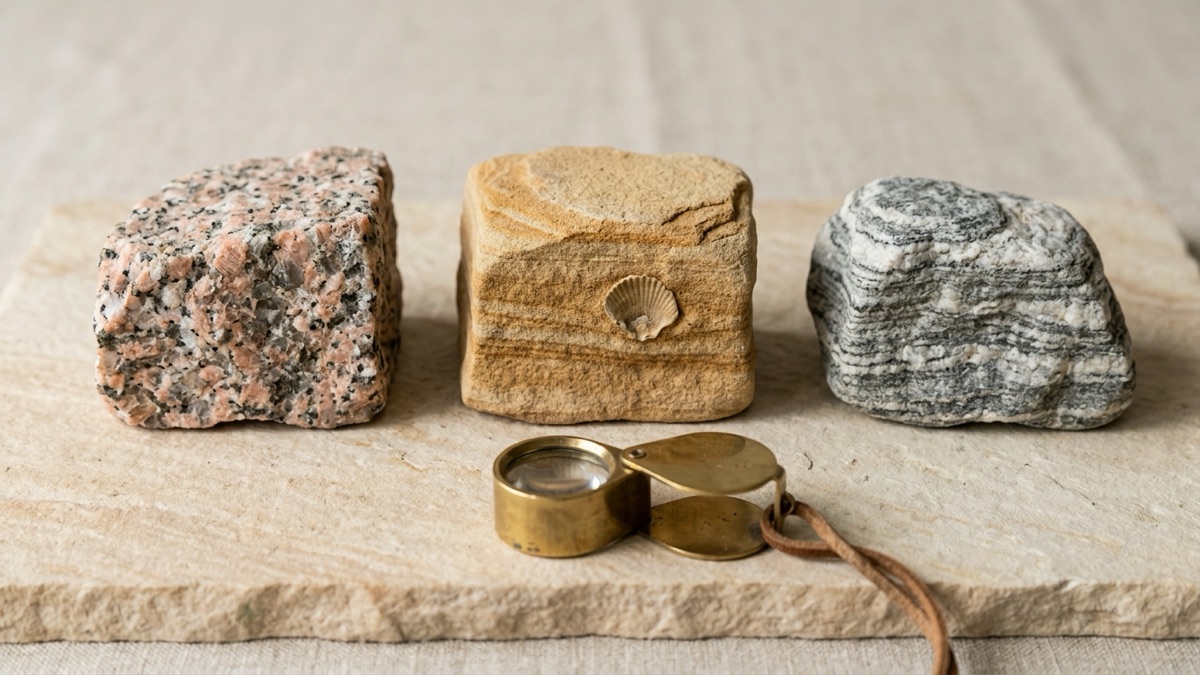
Rocks That Look Like Glass: Quartz, Obsidian or Slag?
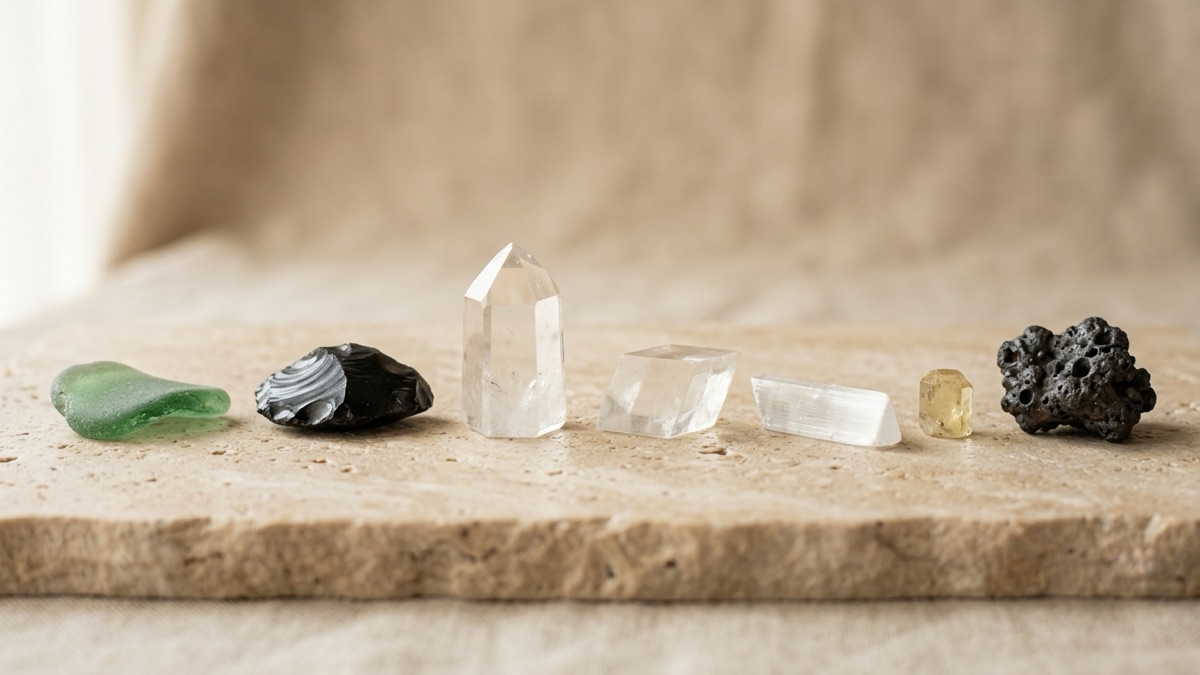
It glints like a broken bottle, but you found it in a creek, a gravel driveway or a desert wash. Is it a crystal, volcanic glass, or somebody's old jam jar? The good news: five quick tests sort almost every glassy find.
Quick answer
A rock that looks like glass is often quartz, obsidian, calcite, selenite or man-made glass. Try to scratch a glass jar: quartz and topaz scratch it easily; glass, obsidian and the soft minerals do not. Then check for round gas bubbles (glass or slag), a double image (calcite) and a fingernail scratch (selenite).
Key takeaways
- "Glassy" describes luster, the way a surface shines. Many different minerals share it, so it is only a starting point.
- A glass jar is your best tester: at about Mohs 5.5, anything that scratches it is harder than glass, and glass itself cannot scratch quartz.
- Curved, shell-like breaks do not prove anything: glass and quartz both break that way.
- Round gas bubbles mean glass, and glassy plus bubbly usually means slag.
- A double image, a fingernail scratch or a chip that dissolves in water each point to one mineral: calcite, selenite or halite.
What does "glassy" actually mean?
Geologists call a glass-like shine vitreous luster: bright, and reflecting light the way window glass does. The University of Auckland lists it alongside metallic, pearly, silky, greasy and earthy lusters, and notes that luster has to be judged in person, because photos flatten it.
The other thing that makes a rock "look like glass" is how it breaks. Conchoidal fracture means smooth, curved, bowl-shaped surfaces, and Auckland describes it as common in glass. A McGill University mineralogy course text makes the key point: window glass breaks with this concentric pattern, and so does quartz. So a curved, shiny break tells you "glass or quartz family", not which one.
Fun fact
The Chrysler Museum of Art notes that the name "rock crystal", for clear quartz, goes back to the Greek word for ice. Ancient writers believed it was water frozen so hard it could never melt again.
Which rocks look like glass?
Here are nine common glassy finds, with the one test that separates each. Hardness is on the Mohs scale; window glass is about 5.5.
| Glassy find | Mohs | Natural? | The tell | Best test |
|---|---|---|---|---|
| Quartz (rock crystal) | 7 | Yes | Six-sided crystals, no cleavage | Scratches glass easily |
| Topaz | 8 | Yes | Heavy for a clear crystal, one flat cleavage | Scratches quartz |
| Obsidian | no set value | Yes | Black to brown, razor edges, no grains | Lens: glass all the way through |
| Calcite | 3 | Yes | Breaks into slanted boxes | Double image; copper scratches it |
| Fluorite | 4 | Yes | Cubes, eight-sided pieces | Knife scratches it, copper does not |
| Selenite (gypsum) | 1.5 to 2 | Yes | Flat blades that bend | Fingernail scratches it |
| Halite | 2 to 2.5 | Yes | Cubes, stepped faces | Dissolves in water |
| Beach glass | about 5.5 | No | Frosted, rounded bottle colors | Will not scratch quartz |
| Slag glass | varies | No | Glassy, bubbly, rough | Bubbles; may pull a magnet |
Quartz
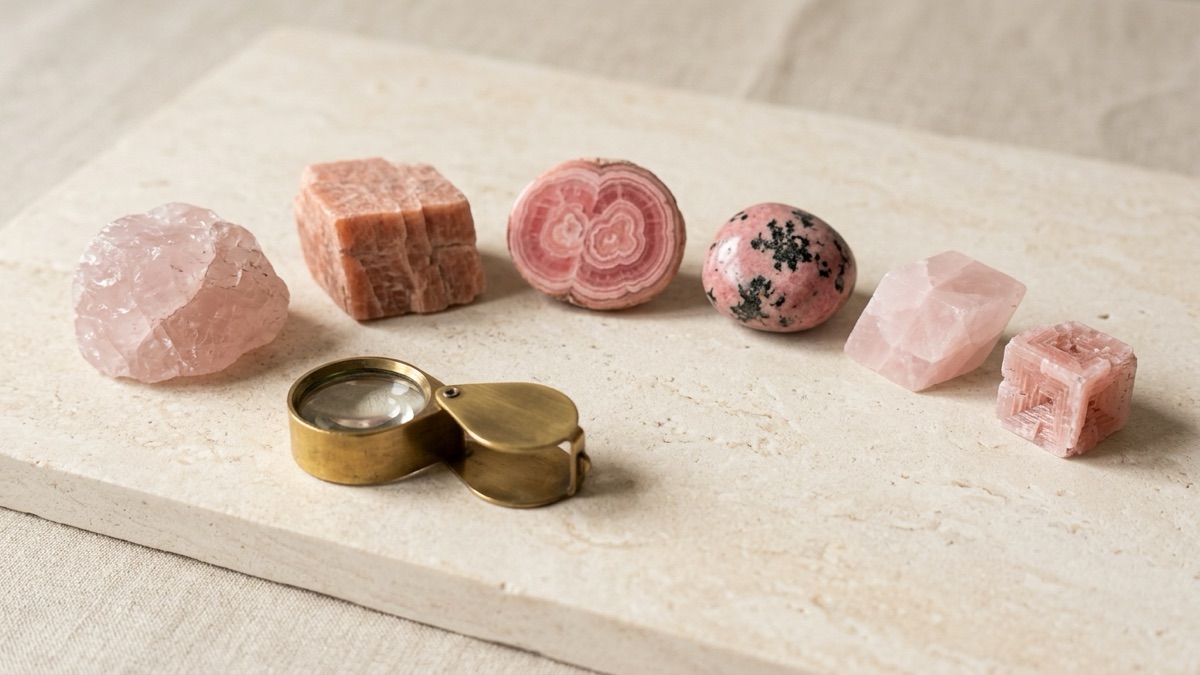
Clear quartz, often called rock crystal, is the classic "is it glass?" find. The University of Auckland describes its crystals as six-sided prisms capped with a six-sided pyramid. It has no cleavage, so a broken piece shows only curved fractures. At Mohs 7 it scratches glass easily. Our quartz rock guide covers its many forms. If your glassy find is hazy pink, it may be rose quartz, and our guide to pink rocks and minerals shows how to tell it from pink calcite and feldspar.
Topaz
Topaz is harder still (Mohs 8) and noticeably heavy for a clear stone, with a specific gravity of 3.5 to 3.6 against quartz's 2.65. It has one perfect cleavage, so it can split along a single flat plane. The BLM notes that topaz crystals at Topaz Mountain, Utah, are naturally amber colored but become colorless after long exposure to sunlight, so sun-bleached finds there can look like chips of glass.
Obsidian
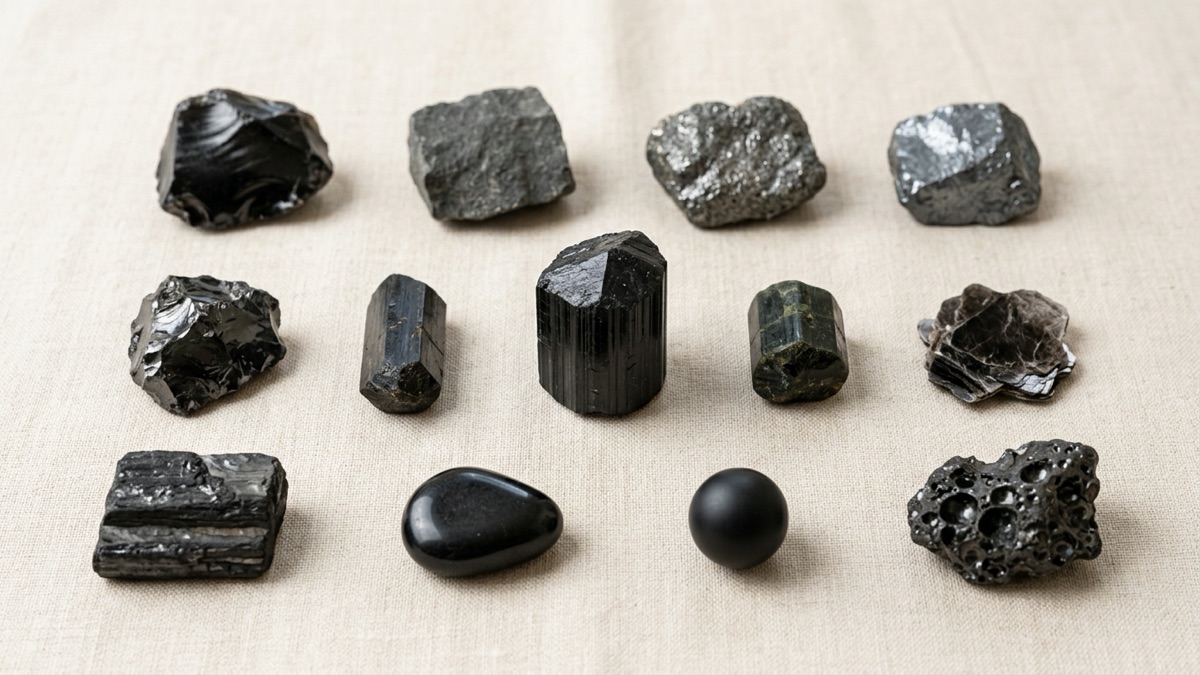
Obsidian is the real "natural glass". The USGS describes it as dense volcanic glass that forms when lava cools too fast for crystals to grow, usually black and usually rhyolitic in composition. It has no grains at all, even under a lens, and it breaks into razor-sharp curved flakes. Being glass, it will not scratch quartz. Our obsidian guide goes deeper.
Calcite
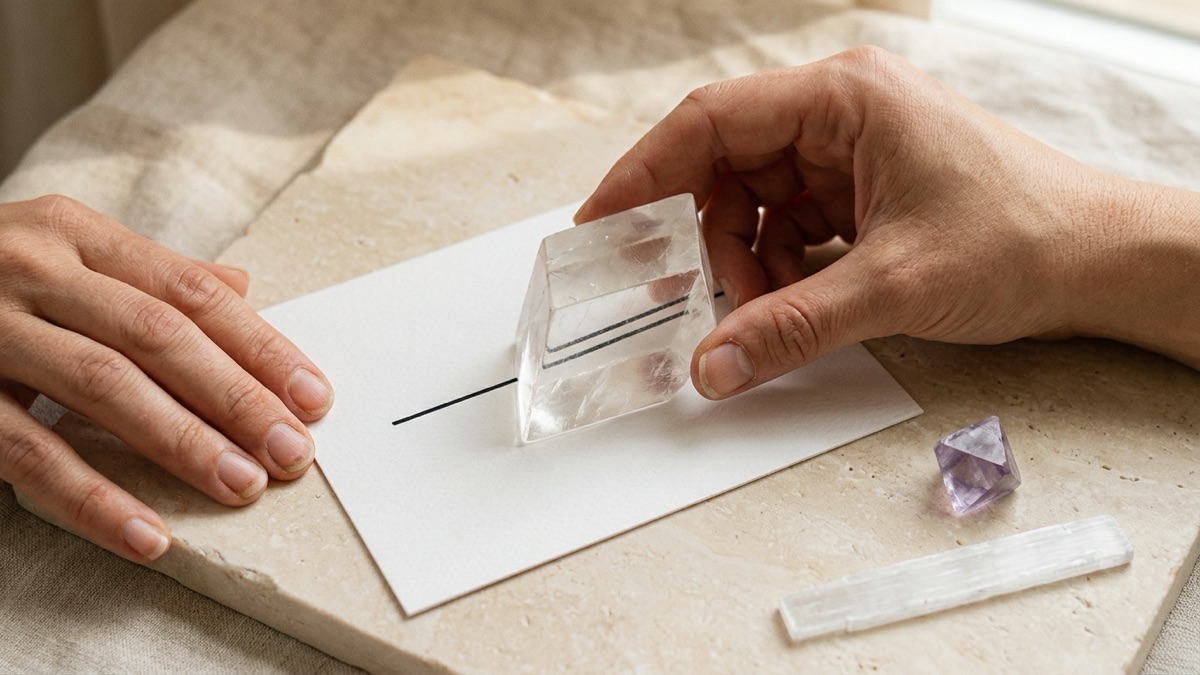
Clear calcite (collectors call the transparent kind Iceland spar) looks like glass until you set it on a printed line. Auckland explains that calcite has two refractive indices, so you see a double image through a clear crystal. It also breaks into slanted boxes, a copper coin scratches it and vinegar makes it fizz.
Fluorite
Fluorite grows as glassy cubes and octahedra and splits along four directions into eight-sided pieces. It is colorless as well as purple, green, blue and more. At Mohs 4, a steel knife scratches it and copper does not, and many specimens glow under an ultraviolet lamp.
Selenite (gypsum)
Selenite is the clear, bladed form of gypsum. A fingernail scratches it. The Handbook of Mineralogy calls it flexible but inelastic: a thin flake bends and stays bent, where mica would spring back. Auckland adds that gypsum feels noticeably warmer in the hand than quartz, because it conducts heat poorly.
Halite
Halite is rock salt: glassy cubes, sometimes with stepped, hollow "hopper" faces. It breaks into smaller cubes, and a small chip dissolves in a glass of water.
Beach glass
Beach glass (or sea glass) is broken bottle and jar glass that waves and sand have rounded and frosted. It is man-made, about as hard as window glass, and may show tiny round bubbles. If you like collecting it, see our guide to tumbling sea glass.
Slag glass
Slag is the glassy by-product of smelting and other high-temperature industry. Washington University in St. Louis sums it up as "glassy and vesicular = slag": vesicles are gas bubbles. Slag often has a rough outside, sometimes flow lines or flat faces from cooling in a container, and it can pull a magnet because of leftover metal. It is also used as road fill and landscaping gravel, which is why it turns up in driveways.
Is it glass or quartz? Five tests
Run these in order. The first one settles most cases.
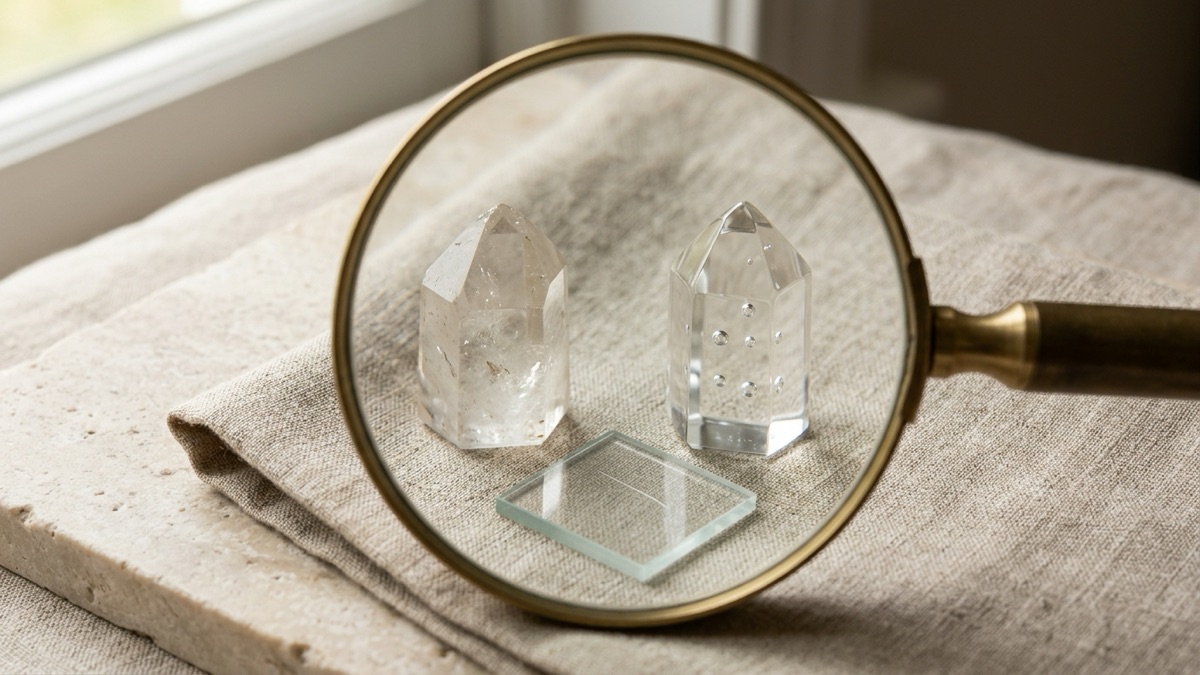
- Scratch test. Press a sharp corner of your find firmly across a glass jar, then rub the mark with your thumb. A groove that stays means it is harder than about 5.5: quartz or topaz. Then test the other way, as the Mineralogical Society of America recommends: glass cannot scratch real quartz. Our Mohs hardness test guide shows the technique.
- Bubble check. Look inside with a 10x hand lens. Perfectly round gas bubbles, alone or in strings, and swirly flow lines are classic signs of glass. GIA's lab found both in a glass "crystal" imitating tourmaline.
- Shape check. Real quartz crystals have six sides and a pointed, six-faced tip. Shape alone is not proof, though: in that same GIA case, the glass had convincing six-sided, crystal-like shapes.
- Cleavage check. A curved break fits glass, obsidian or quartz. Flat breaks point to a mineral with cleavage: slanted boxes (calcite), eight-sided pieces (fluorite), cubes (halite), bendy blades (selenite) or a single flat plane (topaz).
- Temperature hint. Minerals that conduct heat well feel cool; Auckland uses the idea to separate warm-feeling gypsum from cooler quartz. Collectors often say glass warms up faster in the hand than quartz, but room temperature and your own hands affect it, so treat it as a hint, never a verdict.
Try it
Pick "Quartz" and "Window glass" in the free Mohs hardness scale scratch simulator and see which one leaves the groove, then try calcite and fluorite against the steel knife before you test your real find.
How do you tell the soft glassy minerals apart?
If your find fails the glass test, it is one of the soft ones, or glass itself. A few household tests split them quickly:
| Test | What it tells you |
|---|---|
| Fingernail scratches it | Selenite (gypsum) or halite |
| Drop a chip in water | Halite dissolves; selenite does not |
| Copper scratches it, fingernail does not | Calcite |
| Vinegar fizz | Calcite |
| Knife scratches it, copper does not | Fluorite |
| Double image through it | Calcite |
| Round bubbles inside | Man-made glass or slag |
Where do glassy rocks turn up?
Quartz is everywhere: in veins, in granite, in river gravels and inside geodes. Clear topaz is famous at Topaz Mountain in Utah, managed by the BLM. The BLM says to search the washes and slopes on the south side of the mountain, and warns that the area is remote with no water or services, so bring food, plenty of water and tools. Ask the BLM office about closures and mining claims before you dig.
On other BLM land, you may collect reasonable amounts for personal, noncommercial use unless an area is posted closed, and no explosives or motorized digging equipment. Collecting of any kind is prohibited in national parks, which includes the famous Obsidian Cliff in Yellowstone. Beaches, state parks and national forests set their own rules, so check the managing agency's page before you pocket anything, sea glass included.
Heads up
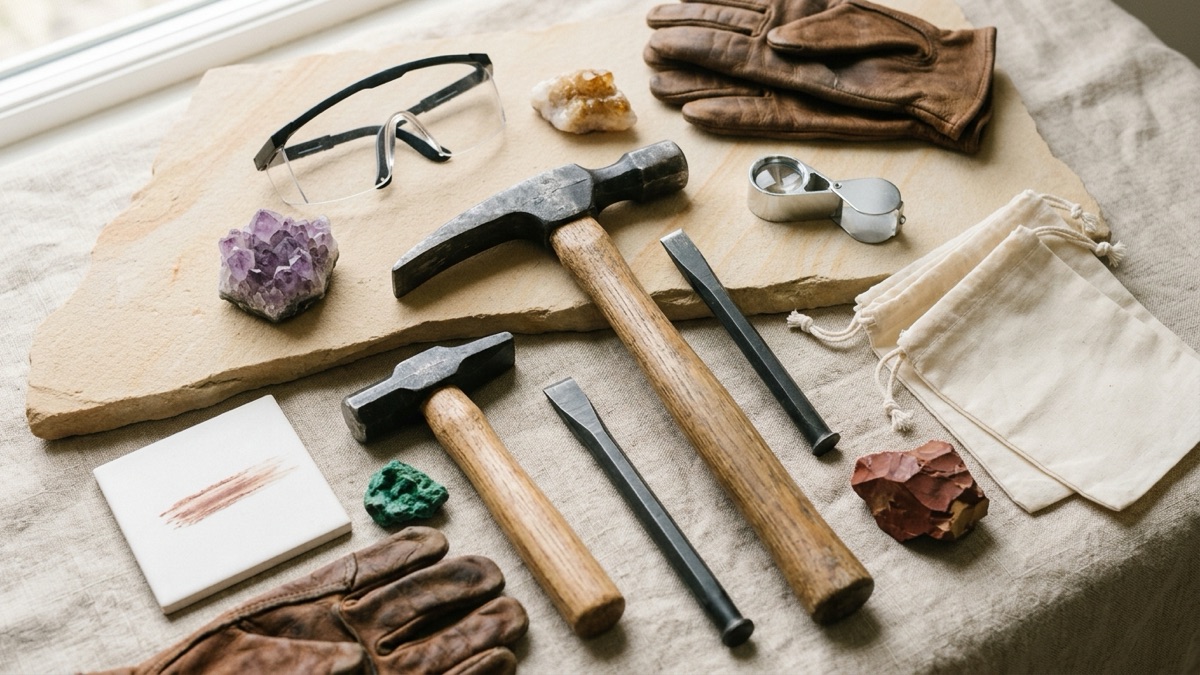
Obsidian and slag edges can be razor sharp: handle them with gloves and wear safety glasses when you scratch or chip anything. Stay out of old mines and away from active rail lines, and never taste an unknown mineral to test for salt.
Glassy natural glass can also form in rarer ways, such as from meteorite impacts. If you think you have found some, our guide to meteorite impact glass explains what it looks like, and the rock identification by color hub covers the other clear and white finds.
The RockhoundID app, coming soon, will suggest likely matches from a photo and tell you which test confirms them.
The takeaway
A glassy look is where the question starts, not where it ends. Scratch a glass jar first: quartz and topaz win, everything else loses. Then let bubbles, cleavage, a double image, a fingernail or a glass of water tell you which of the rest you are holding. If a clear crystal still puzzles you after that, a rock club or your state geological survey will enjoy a look.
The pictures in this guide are AI-generated illustrations of what to look for; real specimens vary, so trust the tests over any picture. RockhoundID guides help you narrow down what you found. They suggest likely candidates, not certain identifications or appraisals. For anything valuable, rare or possibly from space, ask a museum, a university geology department or your state geological survey, and check the collecting rules for the land before you take anything home.
Questions rockhounds ask
How can I tell if a clear rock is quartz or glass?
Try to scratch a glass jar with a sharp edge of your find. Quartz, at Mohs 7, scratches glass easily, while glass will not scratch quartz. Then look with a hand lens: perfectly round gas bubbles and swirly flow lines point to man-made glass.
Is obsidian a rock or glass?
Both. Obsidian is natural volcanic glass that forms when lava cools too fast for crystals to grow. It is usually black, breaks with razor-sharp curved edges and shows no grains or crystals, even under a lens.
Why does my clear crystal make a double image?
That is double refraction, and in a clear crystal it is the classic sign of calcite. Set the crystal on a printed line and you will see two lines. Calcite is also soft enough for a copper coin to scratch it, and it fizzes in vinegar.
Is sea glass a rock?
No. Sea glass, or beach glass, is man-made glass from broken bottles and jars that waves and sand have rounded and frosted. It is about Mohs 5.5, so it cannot scratch quartz, and it may show tiny round bubbles.
What is the glassy, bubbly rock I found in gravel or near train tracks?
Most likely slag, a glassy by-product of smelting and other high-temperature industry. Washington University in St. Louis sums it up as glassy and vesicular means slag. Slag can attract a magnet because it may hold leftover metal.
Where these facts come from
- University of Auckland: Lustre: rocksminerals.flexiblelearning.auckland.ac.nz/minerals/lustre.html
- University of Auckland: Cleavage and fracture: rocksminerals.flexiblelearning.auckland.ac.nz/minerals/fracture.html
- University of Auckland, minerals: Quartz: rocksminerals.flexiblelearning.auckland.ac.nz/minerals/quartz.html
- University of Auckland, minerals: Calcite: rocksminerals.flexiblelearning.auckland.ac.nz/minerals/calcite.html
- University of Auckland, minerals: Gypsum: rocksminerals.flexiblelearning.auckland.ac.nz/minerals/gypsum.html
- University of Auckland, minerals: Topaz: rocksminerals.flexiblelearning.auckland.ac.nz/minerals/topaz.html
- McGill University, Earth and Planetary Sciences: mineral properties course text: www.eps.mcgill.ca/~jeannep/eps/186-210a/TextMineralProperties.doc
- Handbook of Mineralogy: Gypsum: www.handbookofmineralogy.org/pdfs/gypsum.pdf
- Handbook of Mineralogy: Halite: www.handbookofmineralogy.org/pdfs/halite.pdf
- Handbook of Mineralogy: Fluorite: www.handbookofmineralogy.org/pdfs/fluorite.pdf
- GIA, Gems & Gemology lab note: artificial glass imitating a Paraiba tourmaline: www.gia.edu/gems-gemology/winter-2020-labnotes-glass-imitating-tourmaline
- Chrysler Museum of Art: Liquid visions, colorless glass and rock crystal quartz: chrysler.org/liquid-visions-colorless-glass-and-rock-crystal-quartz/
- USGS Volcano Hazards Program glossary (obsidian): www.usgs.gov/glossary/volcano-hazards-program-glossary
- USGS Volcano Watch: obsidian: www.usgs.gov/news/volcano-watch-obsidian-a-scarce-commodity-hawaii
- Washington University in St. Louis meteorite site: Slag: sites.wustl.edu/meteoritesite/items/slag/
- BLM: Topaz Mountain, Utah: www.blm.gov/visit/topaz-mountain
- Mineralogical Society of America, Mineral Identification Key: hardness: www.minsocam.org/MSA/collectors_corner/id/mineral_id_keyi4.htm
- eCFR: 43 CFR 8365.1-5 (BLM rockhounding rule): www.ecfr.gov/current/title-43/subtitle-B/chapter-II/subchapter-H/part-8360/subpa
- eCFR: 36 CFR 2.1 (national parks): www.ecfr.gov/current/title-36/chapter-I/part-2/section-2.1