The Most Valuable Minerals: 10 That Collectors Prize
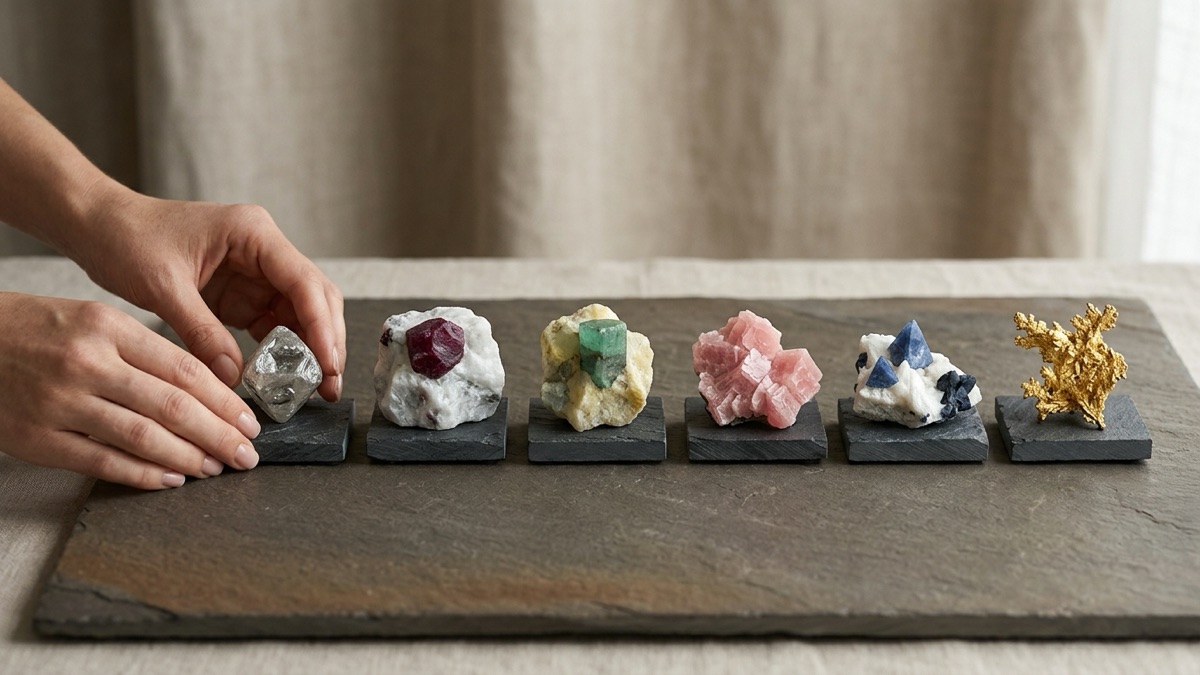
Every rockhound has wondered it while turning over a sparkly find: what are the most valuable minerals on Earth, and could this be one of them? The list is shorter and stranger than you might think. It is also less about the name than about the quality of one particular stone.
Quick answer
The minerals collectors pay most for are gem-quality diamond, ruby and emerald, rare gem species such as red beryl and alexandrite, gold, and fine crystal specimens such as rhodochrosite and benitoite. The name alone is not enough: color, clarity, size, treatment and a documented locality set the price, and ordinary examples of the same minerals sell cheaply.
Key takeaways
- Value comes from quality first. The same mineral can sell for a few dollars or for millions depending on color, clarity, size and treatment.
- Gem diamond holds the top auction prices; Sotheby's calls the 59.60 carat Pink Star the world auction record for any diamond or jewel.
- Rare collector species such as red beryl and benitoite can sell for thousands of dollars in fine quality, and far less in ordinary pieces.
- Natural gold specimens can sell for more than their metal value when they are attractive crystals.
- Get anything promising identified before you talk price, and use a qualified appraiser for a written value.
What makes a mineral valuable?
Three things, all at once: rarity, quality and demand. Rarity alone is not enough, because thousands of mineral species are rare but dull, tiny or unwanted. What collectors chase is rarity in beautiful, durable form.
Size multiplies value when the quality holds. GIA says larger diamonds of the same quality are worth more per carat, and that fine-quality rubies over one carat are very rare, with prices rising significantly as size increases. Treatment matters too. When Sotheby's offered the 55.22 carat Estrela de Fura ruby in June 2023, its catalog listed reports from five gem labs, each stating the stone showed no indications of heating.
The 10 most valuable minerals at a glance
Prices below are past sale results with their dates, checked as of September 2026. Each is one piece on one day, not a price for your stone.
| Mineral | Mohs hardness | Best-known source | A dated price example |
|---|---|---|---|
| Diamond | 10 | Worldwide | Graff Pink, 24.78 ct: $46.16 million, Sotheby's, November 2010 |
| Ruby (corundum) | 9 | Mozambique, among others | $1,266,901 per carat for a 25.59 ct ruby ring, May 2015 (GIA) |
| Emerald (beryl) | 7.5 to 8 | Muzo and Chivor, Colombia | $280,000 per carat, Elizabeth Taylor's pendant, 2011 (GIA) |
| Red beryl | 7.5 to 8 | Wah Wah Mountains, Utah | Pair of cut stones, about 2.33 ct: $47,812.50, Bonhams, June 2021 |
| Alexandrite (chrysoberyl) | 8.5 | Ural Mountains, Russia | No dated sale checked |
| Jadeite | 6 to 7 | Kachin State, Myanmar | No dated sale checked |
| Paraiba tourmaline | 7 to 7.5 | Paraiba, Brazil | No dated sale checked |
| Gold | 2.5 to 3 | Worldwide | $3,300 per troy ounce, 2025 average (USGS estimate) |
| Rhodochrosite | 3.5 to 4 | Sweet Home Mine, Colorado | 3 in crystal cluster: $4,462.50, Bonhams, 2022 |
| Benitoite | 6 to 6.5 | San Benito County, California | 7 in specimen: $2,422.50, Bonhams, September 2021 |
The 10 minerals collectors prize most
1. Diamond
Diamond is the hardest mineral (Mohs 10), and gem diamonds hold the highest auction prices of any stone. Sotheby's calls the 59.60 carat, fancy vivid pink Pink Star, sold in Hong Kong in 2017, the world auction record for any diamond or jewel. Its catalog note adds that the 24.78 carat Graff Pink sold at Sotheby's Geneva in November 2010 for US$46.16 million. Some famous diamonds never sell at all: the 45.52 carat, grayish-blue Hope Diamond belongs to the Smithsonian. Our guide to diamond hardness explains why even diamonds can chip.
2. Ruby (and sapphire)
Ruby is red corundum, and GIA calls it the most valuable variety of that mineral. Fine rubies are a pure, vibrant red to slightly purplish red, and GIA reports that on May 12, 2015, a 25.59 carat ruby ring sold for $1,266,901 per carat, then an auction record for a colored gemstone. Sapphire is the same mineral in other colors. See sapphire and ruby hardness for why corundum is a 9.
3. Emerald
Emerald is green beryl. GIA says the most desirable colors are bluish green to pure green with vivid saturation, and that inclusions (the trade calls them the "jardin," or garden) are expected. The Handbook of Mineralogy names Colombia's Muzo and Chivor districts for exceptional green crystals. GIA cites Elizabeth Taylor's emerald pendant, sold in 2011 for $6,578,500, or $280,000 per carat. Crystals count too: a Muzo emerald crystal in matrix, 4 inches across, sold for $12,000 at Bonhams in December 2007. Read emerald hardness before you wear one every day.
4. Red beryl
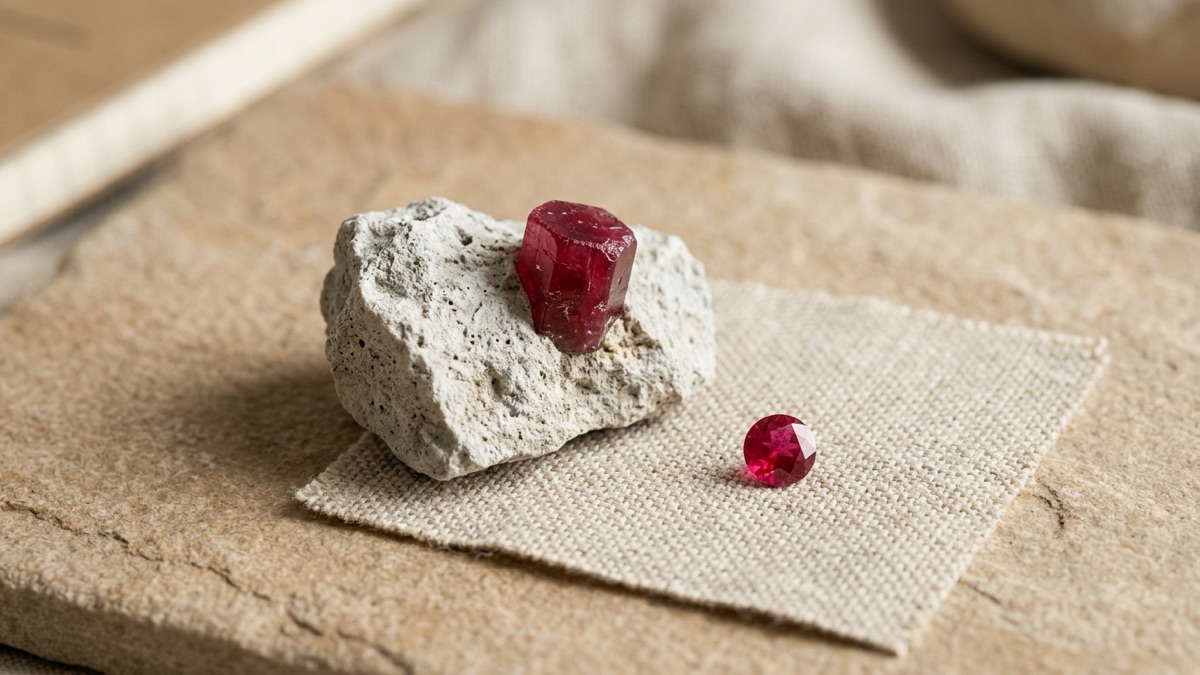
This is the rarity collectors whisper about. The Handbook of Mineralogy lists fine red crystals from the Wah Wah Mountains of Beaver County, Utah, and Bonhams catalogs describe that deposit as depleted and closed. Look at how quality changes the price: a well-matched pair of emerald-cut stones, about 2.33 carats in all, sold at Bonhams for $47,812.50 in June 2021, while a single 3.02 carat stone with open fissures sold for $7,650 in May 2022. A 1.2 cm crystal in its host rock brought $1,500 in May 2016.
5. Alexandrite
Alexandrite is a very rare color-change variety of chrysoberyl, Mohs 8.5. GIA describes it as bluish green in daylight and purplish red in incandescent light, first found in Russia's Ural Mountains in the 1830s. Today it comes from Sri Lanka, East Africa and Brazil, but GIA says fine material is exceptionally rare and valuable, and that larger, higher-quality gems rise in price dramatically.
6. Jadeite
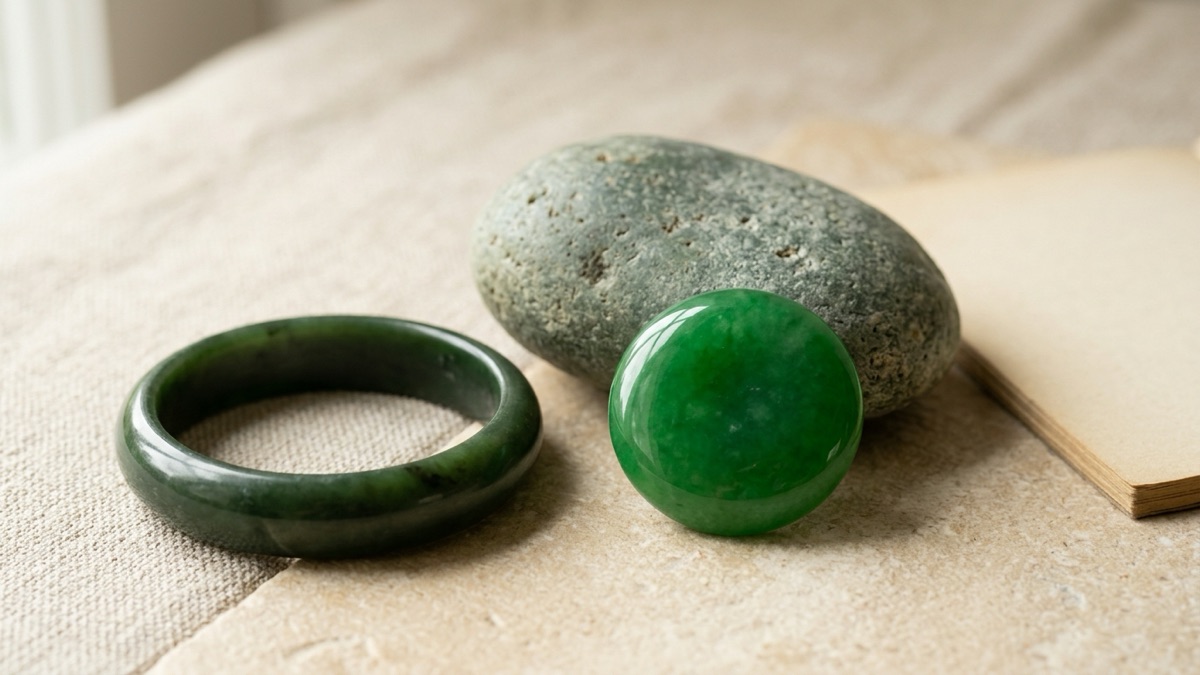
Jadeite is one of the minerals sold as jade. GIA calls the finest "imperial jade," almost transparent with a vibrant emerald-green color, and says semi-transparent clarity and fine texture increase jade's value dramatically. The Handbook of Mineralogy lists the Tawmaw area of Kachin State, northern Myanmar, among the best-known localities and notes that massive jadeite is very tough.
7. Paraiba tourmaline
Tourmaline comes in every color, but GIA singles out the vivid blue to green stones from Brazil's Paraiba region, colored by copper. The Handbook of Mineralogy lists Sao Jose da Batalha, Paraiba, among its localities. GIA also notes that how much size adds to value varies from one tourmaline variety to another.
8. Gold
Unlike most minerals, gold has a public daily market price. The USGS estimated the average 2025 price at about $3,300 per troy ounce, a record annual high, up from $2,388 in 2024. Natural specimens can beat their metal value. A 6.16 gram crystallized gold specimen sold for $535.50 at Bonhams in May 2022. At the USGS average of $1,802 per ounce for 2022, that much pure gold was worth roughly $360, and the Handbook of Mineralogy notes that natural gold commonly contains silver and copper, so the metal was worth less still. Our guide to gold, silver and platinum hardness shows how to tell gold from pyrite.
9. Rhodochrosite
Rose-red rhodochrosite is soft (Mohs 3.5 to 4), so collectors prize it mainly as crystal specimens rather than jewelry. The Handbook of Mineralogy names the Sweet Home mine near Alma, Colorado, for fine large crystals. A 3 inch cluster of strawberry-red Sweet Home crystals, the largest about 2 cm, sold for $4,462.50 in a Bonhams online sale in February and March 2022. Two small Colorado specimens sold together for $152.50 in December 2010.
10. Benitoite
Benitoite is named for San Benito County, California, and the Handbook of Mineralogy describes sapphire-blue triangular crystals growing in white natrolite veins. At a Bonhams sale ending in September 2021, a 3.5 inch specimen sold for $637.50 and a 7 inch piece covered with many blue crystals sold for $2,422.50.
Fun fact
Benitoite glows blue under shortwave ultraviolet light, according to the Handbook of Mineralogy, so a plain-looking specimen can light up under a UV lamp.
Why do the same minerals often sell for so little?
Because quality, not the name, carries the price. The rhodochrosite and red beryl results above show gaps of up to about thirty times between an ordinary piece and a fine one. Cloudy, cracked, tiny or poorly documented material sells cheaply, even when the mineral name sounds exciting. A pale, fractured beryl is still beryl, and it is priced like it.
Tip
A lab report is not a price. GIA says its lab tests whether a stone is natural and discloses any treatments. That tells you what you have; a dealer or appraiser tells you what it may sell for.
Can you find valuable minerals yourself?
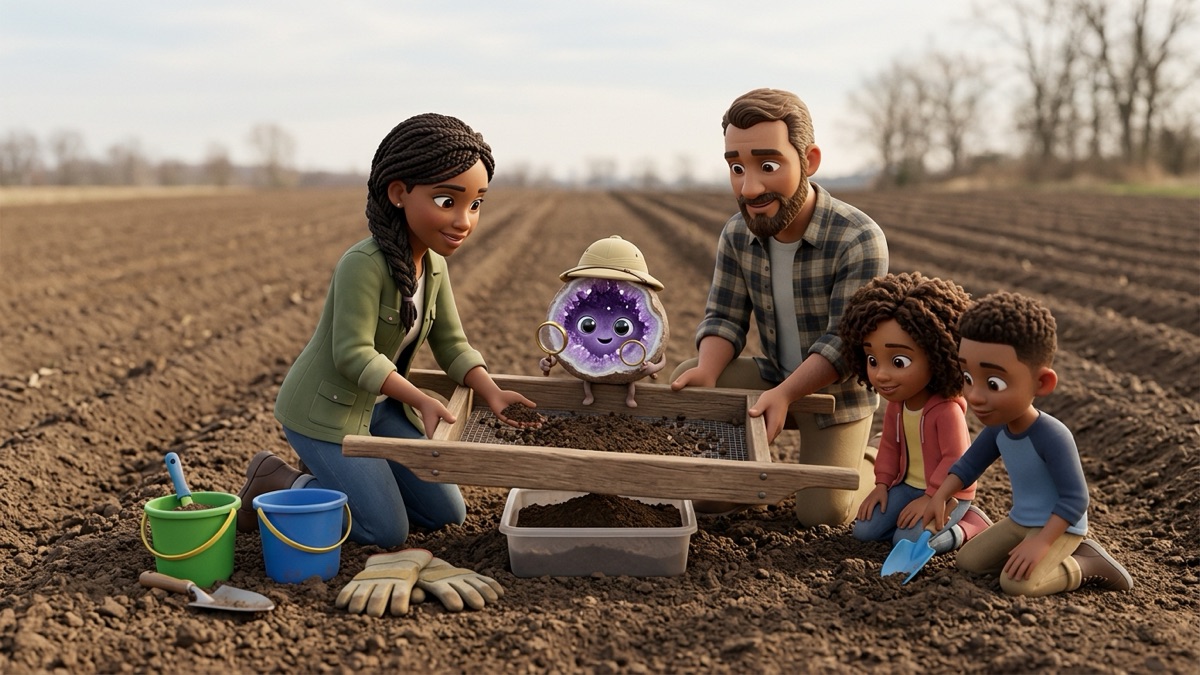
Sometimes, at places that allow it. At Crater of Diamonds State Park in Arkansas, visitors search a 37-acre plowed field, and the park says any rock or mineral you find is yours to keep. As of September 2026, the park listed admission to the search area at $15 for adults, $7 for children 6 to 12, and free under 6, and it bans battery-operated or motor-driven mining tools. The park highlights the 40.23 carat Uncle Sam, the largest diamond ever unearthed in the United States.
Heads up
National parks allow no collecting of rocks or minerals. On BLM land you may collect reasonable amounts for noncommercial use, outside posted and developed sites. Private land and fee-dig mines need permission or a ticket. Check the rules on the manager's own page before you go.
How do you get a valuable mineral identified and appraised?
Identification comes first, value second. For a cut gem, a gem lab report confirms what it is and whether it was treated. For a rough find, a state geological survey, a museum, a university or a gem and mineral club can often identify it. Then a specialist dealer or an auction house can tell you what similar pieces have sold for, and a qualified appraiser can write a value for insurance or an estate. The American Society of Appraisers lists members under Gems and Jewelry and Personal Property. Our guide to gemstone identification covers the tests that come first.
Try it
Hardness rules out a lot of hopeful guesses. Look up your candidates on the free Mohs hardness scale, or answer a few questions in the rock identifier. Both run in your browser and never upload a photo.
For the full picture on what makes any find valuable, start with our hub on rocks worth money.
The takeaway
The most valuable minerals are not just rare names; they are rare, beautiful, well-documented examples of those names. A flawless pink diamond, a clean pair of red beryls or a sharp cluster of Sweet Home rhodochrosite commands serious money, while cloudy, cracked or ordinary pieces of the same minerals sell for little. Identify first, compare with dated sales, and get a qualified opinion before you name a price. The RockhoundID app for Android suggests likely matches from a photo and tells you which test confirms them.
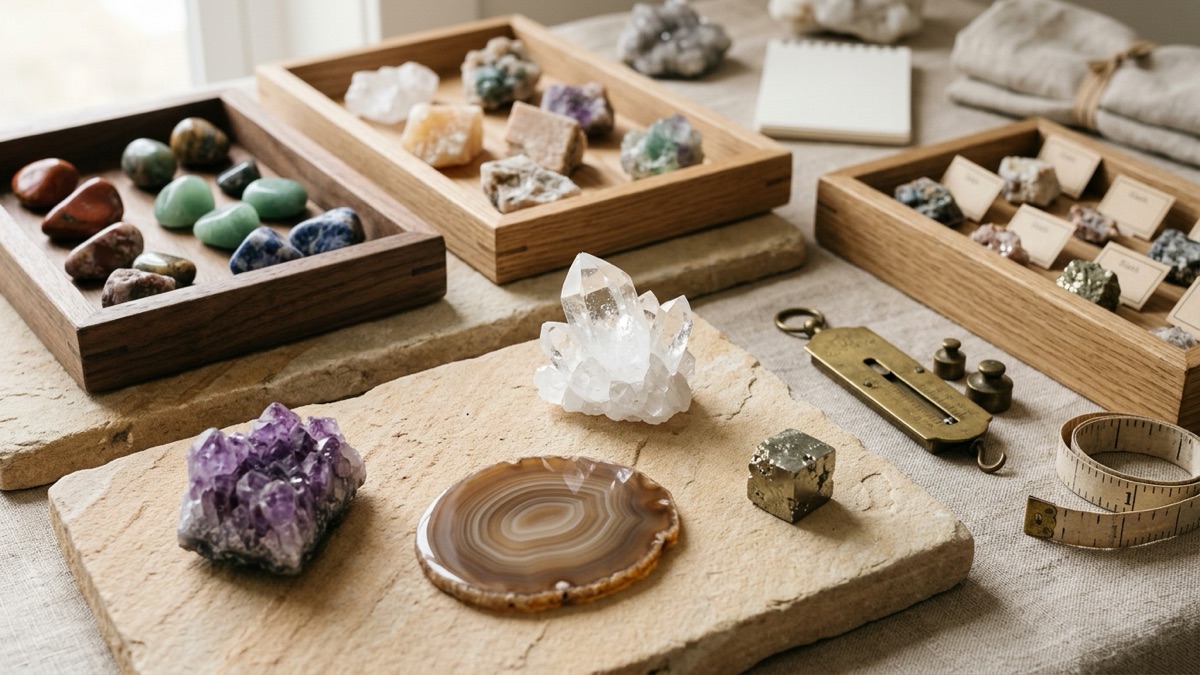
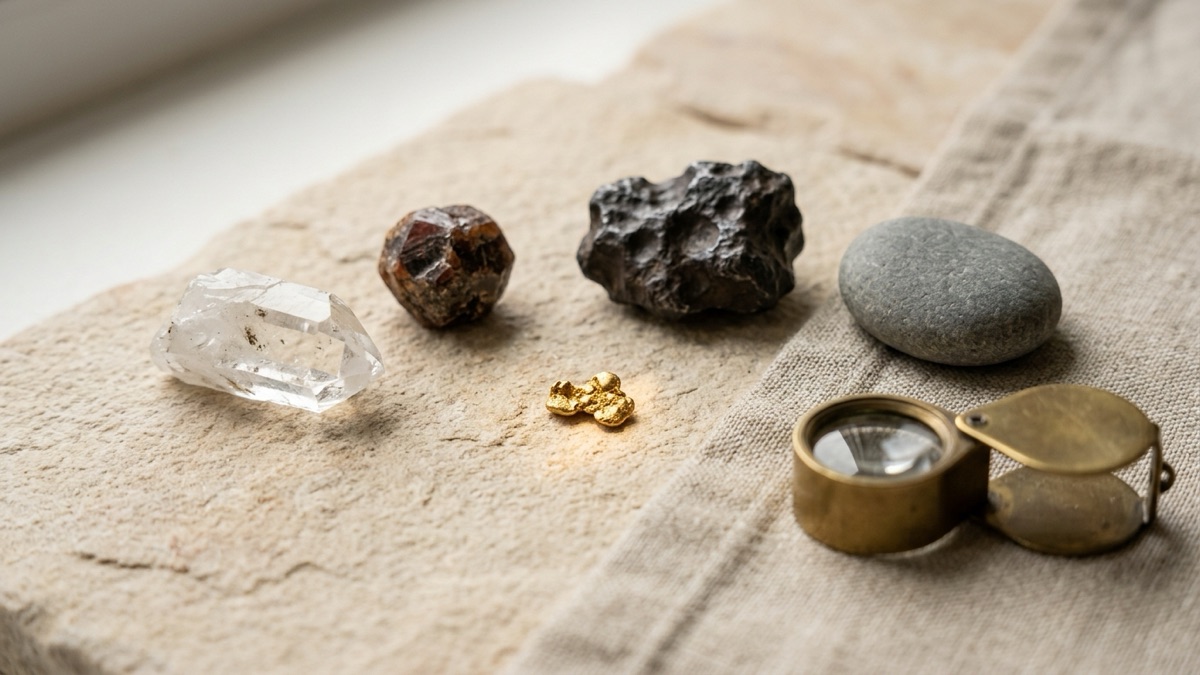
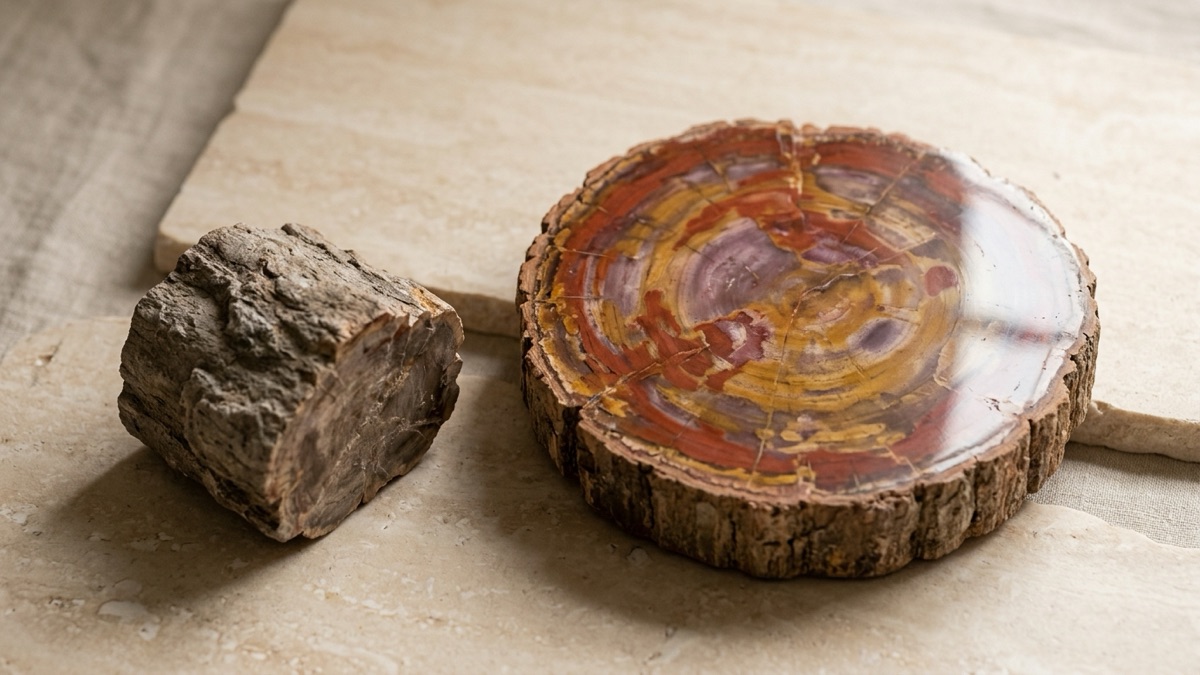
The pictures in this guide are AI-generated illustrations of what to look for; real specimens vary, so trust the tests over any picture. RockhoundID guides help you narrow down what you found. They suggest likely candidates, not certain identifications or appraisals. For anything valuable, rare or possibly from space, ask a museum, a university geology department or your state geological survey, and check the collecting rules for the land before you take anything home.
Questions rockhounds ask
What is the most valuable mineral in the world?
By auction price, gem diamond sits at the top. Sotheby's lists the 59.60 carat Pink Star, sold in Hong Kong in 2017, as the world auction record for any diamond or jewel. Fine ruby and emerald follow, and rare collector species such as red beryl can sell for very high prices per carat.
What are the rarest minerals collectors look for?
Collectors prize minerals that are rare in gem or crystal quality, not just rare as a species. Red beryl from Utah's Wah Wah Mountains, a deposit Bonhams describes as depleted, and alexandrite, which GIA calls very rare in fine quality, are classic examples. Benitoite and copper-bearing Paraiba tourmaline are also prized.
Is a gold nugget worth more than its weight in gold?
Often, yes, when it is an attractive natural specimen. A 6.16 gram crystallized gold specimen sold for $535.50 at Bonhams in May 2022, more than the roughly $360 its weight in pure gold was worth at that year's average price reported by the USGS.
Can I find a valuable mineral myself?
Sometimes, at places that allow it. At Crater of Diamonds State Park in Arkansas, visitors search a plowed field and keep what they find. Elsewhere, check the land manager's rules: national parks allow no collecting, and BLM land allows reasonable amounts for personal use.
Where can I get a gemstone or mineral valued?
Get it identified first. A gem lab such as GIA tests whether a stone is natural and discloses treatments. For a written value for insurance or an estate, hire a qualified appraiser who knows that material, and ask a specialist dealer or auction house what similar pieces sell for.
Where these facts come from
- GIA: Diamond: www.gia.edu/diamond
- GIA: Ruby: www.gia.edu/ruby
- GIA: Emerald: www.gia.edu/emerald
- GIA: Alexandrite: www.gia.edu/alexandrite
- GIA: Jade: www.gia.edu/jade
- GIA: Tourmaline: www.gia.edu/tourmaline
- GIA: Gem lab services: www.gia.edu/gem-lab
- Smithsonian Institution: The Hope Diamond: www.si.edu/spotlight/hope-diamond
- Sotheby's: The Pink Star, lot 1801 (Hong Kong, 2017), catalogue note: www.sothebys.com/en/auctions/ecatalogue/2017/the-pink-star-hk0770/lot.1801.html
- Sotheby's: Estrela de FURA 55.22, Magnificent Jewels (June 2023): www.sothebys.com/en/buy/auction/2023/magnificent-jewels-2/ruby-ring
- Handbook of Mineralogy: Beryl: www.handbookofmineralogy.org/pdfs/beryl.pdf
- Handbook of Mineralogy: Rhodochrosite: www.handbookofmineralogy.org/pdfs/rhodochrosite.pdf
- Handbook of Mineralogy: Benitoite: www.handbookofmineralogy.org/pdfs/benitoite.pdf
- Handbook of Mineralogy: Jadeite: www.handbookofmineralogy.org/pdfs/jadeite.pdf
- Handbook of Mineralogy: Gold: www.handbookofmineralogy.org/pdfs/gold.pdf
- Handbook of Mineralogy: Elbaite (tourmaline): www.handbookofmineralogy.org/pdfs/elbaite.pdf
- USGS Mineral Commodity Summaries 2026: Gold: pubs.usgs.gov/periodicals/mcs2026/mcs2026-gold.pdf
- Bonhams: Emerald in matrix, Muzo (December 2007): www.bonhams.com/auction/15418/lot/1206/emerald-in-matrix/
- Bonhams: Red beryl, a rare pair of red emeralds (June 2021): www.bonhams.com/auction/26600/lot/3005/red-beryl-a-rare-pair-of-red-emeralds/
- Bonhams: Red beryl, 3.02 carats (May 2022): www.bonhams.com/auction/27482/lot/3006/red-beryl/
- Bonhams: Red beryl in matrix (May 2016): www.bonhams.com/auction/23397/lot/1022/red-beryl-in-matrix/
- Bonhams: Crystallized gold specimen (May 2022): www.bonhams.com/auction/27482/lot/3247/crystallized-gold-specimen/
- Bonhams: Rhodochrosite, Sweet Home Mine (February to March 2022): www.bonhams.com/auction/27292/lot/111/rhodochrosite/
- Bonhams: Two rhodochrosite specimens (December 2010): www.bonhams.com/auction/18406/lot/1285/two-rhodochrosite-specimens/
- Bonhams: Benitoite on matrix, 3.5 inches (September 2021): www.bonhams.com/auction/27149/lot/38/benitoite-on-matrix/
- Bonhams: Benitoite on matrix, 7 inches (September 2021): www.bonhams.com/auction/27149/lot/37/benitoite-on-matrix/
- Arkansas State Parks: Crater of Diamonds State Park: www.arkansas.com/state-parks/parks/crater-diamonds-state-park
- 43 CFR 8365.1-5: Property and resources (BLM): www.ecfr.gov/current/title-43/subtitle-B/chapter-II/subchapter-H/part-8360/subpa
- 36 CFR 2.1: Preservation of natural resources (National Park Service): www.ecfr.gov/current/title-36/chapter-I/part-2/section-2.1
- American Society of Appraisers: Find an appraiser: myaccount.appraisers.org/Directories/Find-An-Appraiser