How Much Is a Geode Worth? Size, Crystals and Origin
You cracked one open, or you are eyeing one at a rock shop, and the sparkle inside looks like money. Sometimes it is. Geodes run from pocket-change gifts to museum centerpieces, and the difference is not luck; it is a short list of things you can see.
Quick answer
Geodes range from a few dollars to five figures. As of September 2026, FossilEra listed an unopened 3 to 4 inch Moroccan geode at $5, Keokuk pairs at $22 to $27, and a 48 inch Uruguayan amethyst geode on a stand at $26,100. Bonhams sold a 17.7 inch amethyst geode with stalactite eyes for $7,012.50 in December 2021.
Key takeaways
- Most geodes are common and cheap. Quartz and calcite interiors from Iowa, Missouri, Utah or Morocco sell for a few dollars to a few tens of dollars.
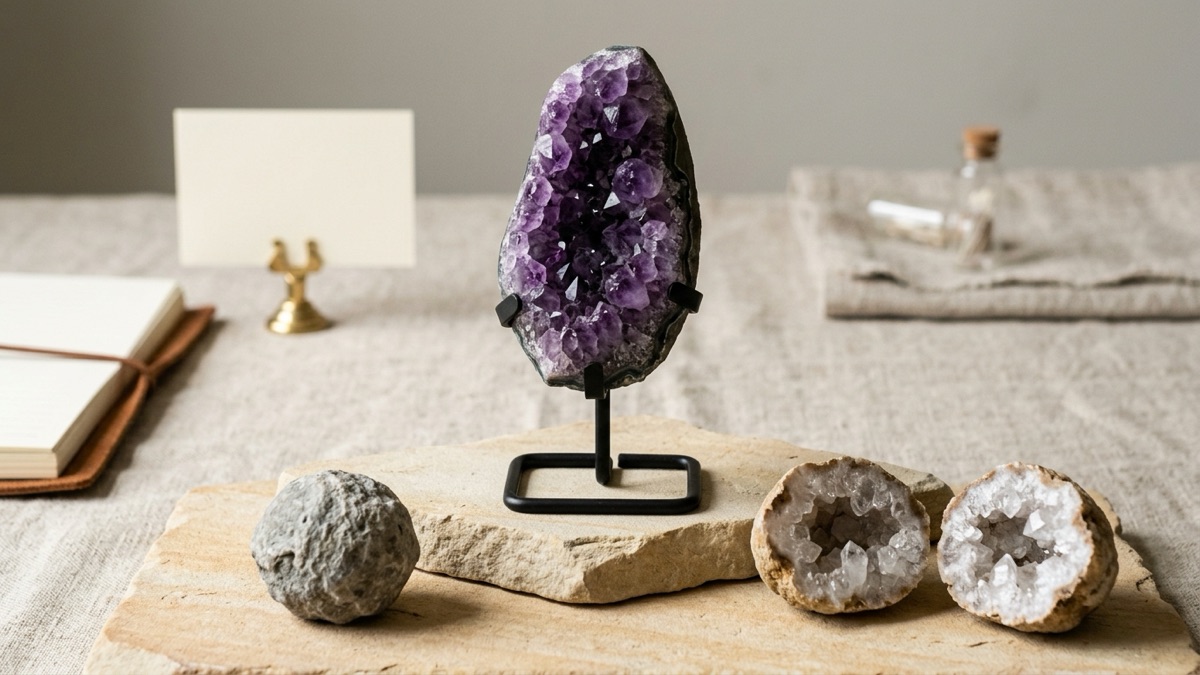
- Amethyst geodes from Uruguay and Brazil carry the market. Small halves sell for hundreds, tall cathedrals on stands for thousands.
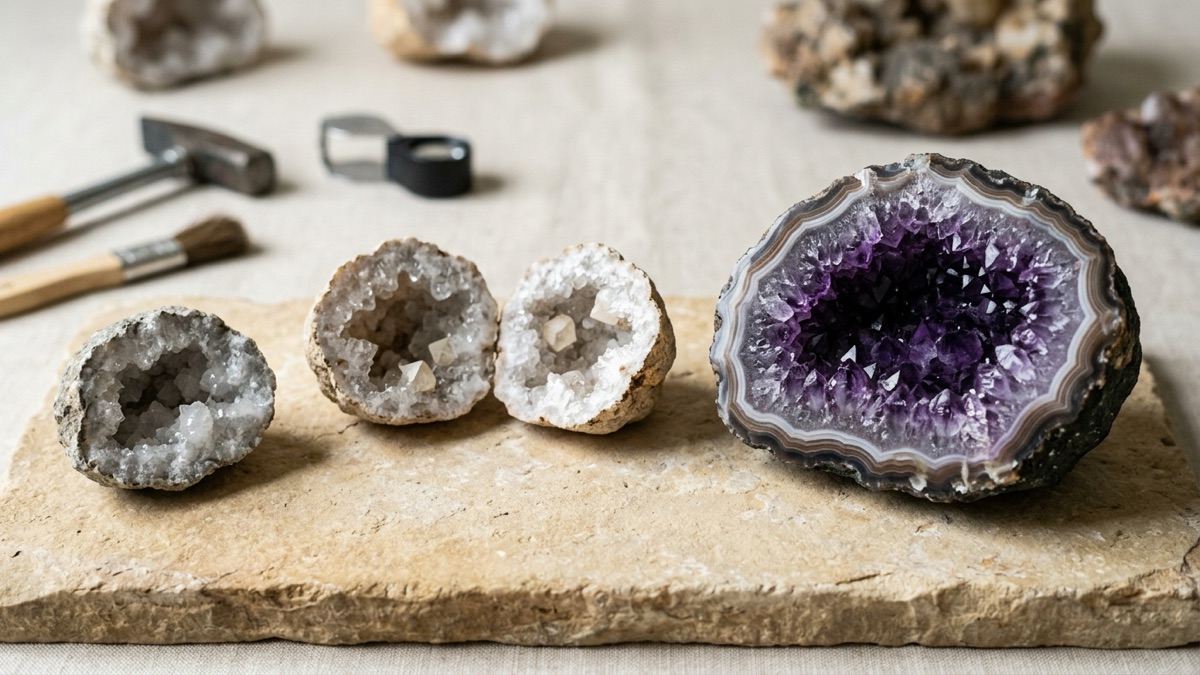
- Size, crystal type, color depth, unusual formations, clean opening, matched halves and a good stand all add value; dye, damage and glue take it away.
- Dugway, Utah is free BLM digging with no permit; Keokuk geodes are mostly on private land; national parks and Iowa state parks are closed to collecting.
- Only an in-person look can value a geode. No photo, quiz or app can.
What is a geode?
A geode is a rounded rock with a hollow, crystal-lined center. The Iowa Geological Survey describes Iowa's as roughly spherical and lumpy outside, usually 2 to 6 inches across (up to 30 inches), with quartz dominating the interiors and calcite common alongside 17 other identified minerals. In Utah, the state geological survey says Dugway geodes formed when gas cavities in a rhyolite lava flow, erupted 6 to 8 million years ago, were filled by groundwater minerals; most are hollow and 2 to 3 inches across, and you recognize them by their round shape and light weight.
The giant amethyst geodes come from a third kind of setting. The Natural History Museum in London explains that more than 100 million years ago, lava flows covered what is now southern Brazil and Uruguay; gas bubbles in the cooling basalt became cavities, and silica-rich water slowly lined them with agate bands and quartz crystals over tens of millions of years. When those crystals are purple, the result is the amethyst cathedral you see in shop windows. Our geodes guide covers how to tell a geode from a plain round rock before you swing the hammer.
What do geodes cost right now?
Here is the market from dealer listings checked in September 2026 and dated auction results. Dealer figures are asking prices; Bonhams figures include the buyer's premium.
| Type | Example | Price and date |
|---|---|---|
| Unopened geode | 3 to 4 inch quartz geode, Morocco | $5 (FossilEra, as of September 2026) |
| Keokuk geode pair | 2.3 to 2.6 inch Keokuk geodes with calcite crystals, matched halves | $22 to $27 (FossilEra, as of September 2026) |
| Uruguayan amethyst, small | Split amethyst geode about 6 x 4 inches plus two extra halves, Artigas, Uruguay | $573.75 for four pieces (Bonhams, October 2020) |
| Amethyst geode, mid size | 10.1 inch dark purple amethyst geode, Uruguay | $695 (FossilEra, as of September 2026) |
| Dugway or septarian bookends | 6.4 to 7.5 inch crystal-filled bookend pairs, Utah | $895 (FossilEra, as of September 2026) |
| Amethyst geode with rare features | 17.7 inch amethyst and agate geode with four stalactite "eyes," Artigas, Uruguay, on a base | $7,012.50 (Bonhams, December 2021) |
| Amethyst cathedral | 14.2 inch dark purple amethyst geode with metal stand, Uruguay | $3,555 (FossilEra, as of September 2026) |
| Amethyst cathedral, large | 48 inch egg-shaped amethyst geode with metal stand | $26,100 (FossilEra, as of September 2026) |
Two lessons hide in that table. First, a common geode is a common geode: pairs of nicely opened Keokuk geodes with calcite sell for under $30, and the smallest amethyst listing was $4. Second, the expensive pieces are not just big. The Bonhams geode that brought $7,012.50 was 17.7 inches, only a little taller than the $3,555 cathedral and a fraction of the 48 inch one, but it had something rare: dark-cored stalactite formations in the amethyst that collectors call eyes.
What makes one geode worth more than another?
Crystal type and color
Amethyst outsells clear quartz, and clear quartz outsells calcite. Within amethyst, darker purple sells higher. FossilEra, which sells both, says Uruguayan material generally exceeds Brazilian in value because its color is deeper. Our guide to how much amethyst is worth covers color grades in detail.
Size
Bigger costs more when everything else is equal, and the tallest cathedrals are priced accordingly. But a small geode with rare features can outsell a big plain one, as the Bonhams "eyes" geode shows.
Unusual formations
Stalactite eyes, calcite crystals perched on amethyst, agate banding around the rim, and companion minerals all add interest. The Iowa survey's list of 17 extra minerals in Keokuk geodes is why collectors keep cracking them: a rare interior can appear in a common geode.
The opening
A geode broken into jagged pieces is worth far less than one opened cleanly in two matched halves or sawn and polished on the rim. Sharp, undamaged crystal tips matter; scuffed, chipped or dusty interiors do not sell.
Presentation
Cathedrals on custom metal stands, bookend pairs with polished faces and pieces with a flat sawn base sell for more than loose halves. Bonhams noted the sawn base and custom-fitted base on its $7,012.50 lot.
Treatments and repairs
GIA lists chalcedony and quartz among materials that are routinely dyed, and some amethyst is heated to make citrine. Brightly colored blue, pink or neon green geodes in gift shops are dyed and priced as decorations. Glued crystals, reconstructed rims and painted color all lower value and should be disclosed.
Tip
Hold a suspected dyed geode under a lens. Dye concentrates in cracks and along crystal boundaries, and colors that do not occur in quartz (bright teal, hot pink) are the giveaway.
Where do geodes come from?
Locality is part of the price, and it also decides whether you can collect your own.
- Keokuk, Iowa (and adjacent Missouri and Illinois). The Iowa Geological Survey says most geodes come from the lower Warsaw Formation, of Mississippian age, within about 35 miles of Keokuk in Lee, Henry and Van Buren counties. Iowa made the geode its state rock in 1967.
- Dugway Geode Beds, Utah. Managed by the BLM Fillmore Field Office. The Utah Geological Survey says collecting is free with no permits and there are no current mining claims. The BLM describes geodes 2 to 4 inches across with clear, amethyst and rose quartz inside, and warns that tunneling is unsafe and not permitted. Our rockhounding in Utah guide has the directions.
- Wiley Well District Geode Beds, California. A BLM rockhounding area managed by the El Centro Field Office, listed on the BLM rockhounding page. Check the area's own page before you go.
- Artigas, Uruguay and Rio Grande do Sul, Brazil. The source of the amethyst cathedrals and of both Bonhams lots above. Commercial mines, not a place for casual collecting.
- Morocco and Chihuahua, Mexico. FossilEra's cheap unopened geodes come from Morocco; it also sells "coconut" geodes mined underground in Chihuahua.
Thundereggs, the agate-filled nodules of Oregon, are cousins rather than true geodes; our guide to thunder eggs explains the difference and where to dig them.
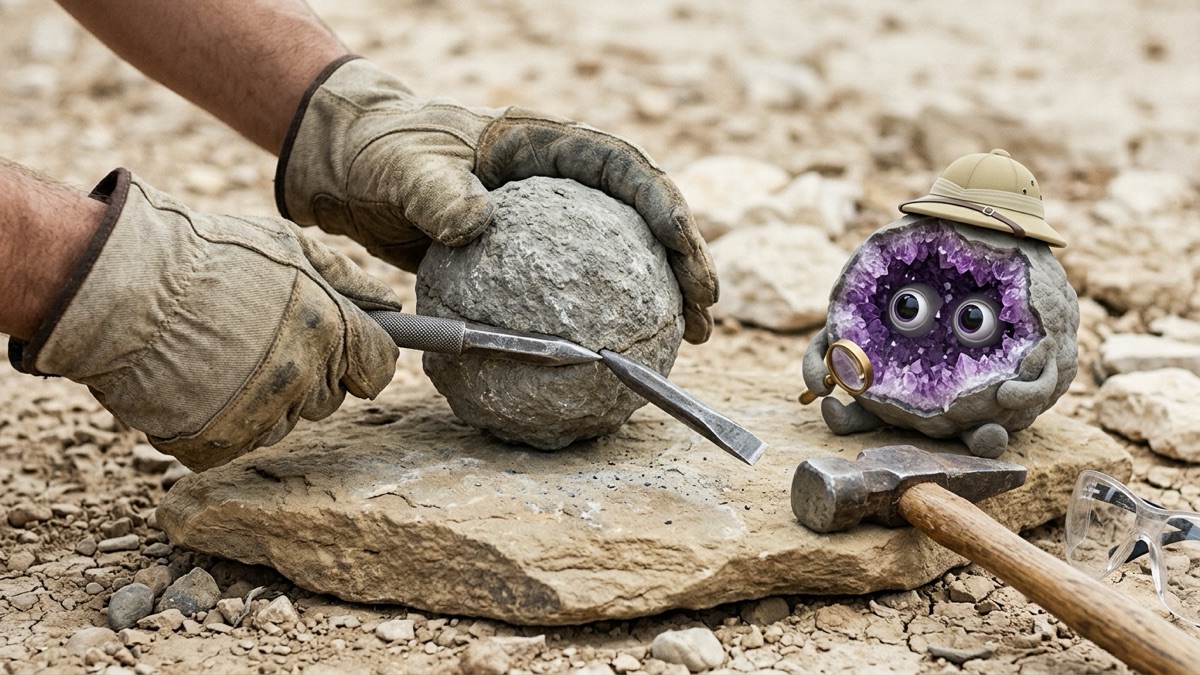
Can you collect geodes legally?
- BLM land: you may collect reasonable amounts of rocks and mineral specimens for noncommercial use with hand tools, outside developed sites and posted closures (43 CFR 8365.1-5). The Dugway beds are open; the BLM says tunneling is not permitted and the soft digging material can collapse.
- National forests: rules vary. Gifford Pinchot National Forest in Washington, for example, requires a free use permit from the ranger district for small amounts of agate, jasper, geodes and petrified wood.
- Iowa: the state survey says most geode localities are on private land, so get permission first, and geode collecting is not permitted in state parks.
- National parks: no collecting at all (36 CFR 2.1).
- Private land: the owner's permission, every time.
Heads up
Wear safety glasses when you crack a geode, and never dig under an overhang or into a bank. Our guide to where to find geodes lists sites with their land managers and current rules.
How do you find out what your geode is worth?
- Confirm it is a geode and note the interior: quartz, amethyst, calcite, anything unusual.
- Open it well, or leave it closed for a dealer to open. A clean split adds value; a shattered geode loses most of it.
- Clean gently. Water and a soft brush. No acid, no wire brush, no varnish.
- Judge it honestly. Size, crystal quality, color depth, damage, and whether the halves match.
- Compare with dated sales of the same type and size, not the tallest cathedral you can find online.
- Ask a specialist. A mineral dealer or a gem and mineral club will give a market opinion; for insurance or an estate, hire a qualified appraiser. The American Society of Appraisers lists members under Gems and Jewelry and Personal Property.
Try it
Not sure whether that round rock is a geode, a concretion or a plain cobble? Answer a few questions in the free rock identifier to see likely candidates. It runs in your browser and never uploads a photo.
For how geodes sit next to other finds, see our hub on rocks worth money.
The takeaway
Most geodes are worth a few dollars and a good afternoon. Value climbs with amethyst, deep color, size, rare formations, a clean opening and a good stand, and it climbs fastest when those things arrive together. Know whose land you are digging on, open your geode with care, and get an in-person opinion before you name a price. The RockhoundID app for Android suggests likely matches from a photo and tells you which test confirms them.
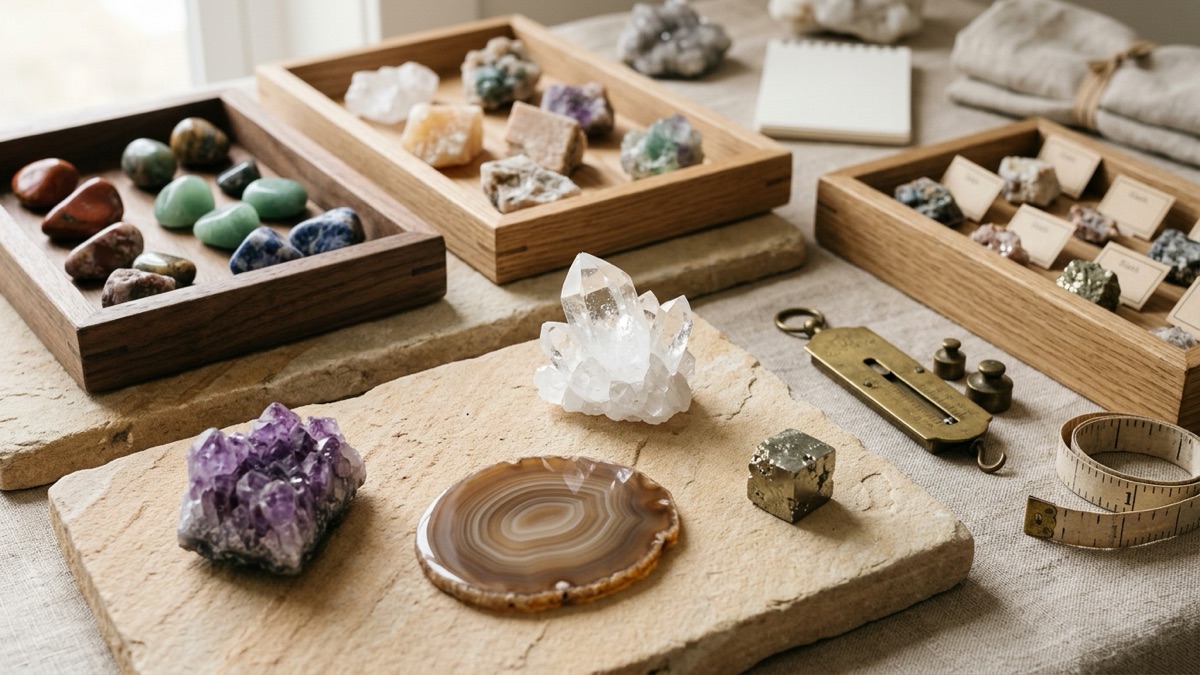
The pictures in this guide are AI-generated illustrations of what to look for; real specimens vary, so trust the tests over any picture. RockhoundID guides help you narrow down what you found. They suggest likely candidates, not certain identifications or appraisals. For anything valuable, rare or possibly from space, ask a museum, a university geology department or your state geological survey, and check the collecting rules for the land before you take anything home.
Questions rockhounds ask
How much is a geode worth?
As of September 2026, FossilEra listed an unopened 3 to 4 inch Moroccan quartz geode at $5, pairs of Keokuk geodes with calcite at $22 to $27, and a 48 inch Uruguayan amethyst geode on a stand at $26,100. Size, crystal type, color depth, condition and presentation decide where a piece lands.
How much is an amethyst geode worth?
Small Uruguayan amethyst geode halves sold at Bonhams for $573.75 for a set of four pieces in October 2020, and a 17.7 inch geode with stalactite eye formations sold for $7,012.50 in December 2021. As of September 2026, FossilEra's tall cathedral geodes on stands listed from about $3,500 to $26,100.
Are unopened geodes worth more?
Usually less, because nobody knows what is inside. Dealers sell unopened Moroccan geodes for a few dollars each as a fun gamble. Value appears once a geode is opened cleanly and shows sharp, undamaged crystals, ideally as a matched pair of halves.
Can I collect geodes on public land?
Often, yes. The BLM Dugway Geode Beds in Utah are free to dig with no permit, though tunneling is banned. Some national forests require a free use permit. National parks allow no collecting, Iowa state parks ban geode collecting, and most Keokuk sites are on private land where you need permission.
Where these facts come from
- FossilEra: Geodes for sale (asking prices checked September 2026): www.fossilera.com/minerals-for-sale/geodes
- FossilEra: Amethyst geodes and crystals for sale (asking prices checked September 2026): www.fossilera.com/minerals-for-sale/amethyst-geodes
- FossilEra: Keokuk geodes for sale (asking prices checked September 2026): fossilera.com/fossils-for-sale/keokuk-quartz-geodes
- Bonhams: Amethyst geode split and two additional geode halves, Artigas, Uruguay (October 2020): www.bonhams.com/auction/26150/lot/1054/amethyst-geode-split-and-two-additional-g
- Bonhams: Large amethyst and agate geode with stalactite eye formations, Artigas, Uruguay (December 2021): www.bonhams.com/auction/26880/lot/2267/large-and-impressive-amethyst-and-agate-g
- Iowa Geological Survey (University of Iowa): Iowa geodes: iowageologicalsurvey.uiowa.edu/iowa-geology/popular-interest/iowa-geodes
- Utah Geological Survey: Dugway Geode Beds: geology.utah.gov/popular/rocks-minerals/rock-mineral-collecting-sites/dugway-geo
- BLM: Dugway Geode Beds (Fillmore Field Office): www.blm.gov/visit/dugway-geode-beds
- BLM: Rockhounding: www.blm.gov/programs/recreation/rockhounding
- Natural History Museum, London: The Jubilee agate, a royal piece of quartz (June 2022): www.nhm.ac.uk/discover/news/2022/june/jubilee-agate--a-royal-piece-of-quartz.htm
- GIA: An introduction to gem treatments (dyeing and heating): www.gia.edu/gem-treatment
- Gifford Pinchot National Forest: Minerals and rocks permits: www.fs.usda.gov/r06/giffordpinchot/permits/minerals-rocks
- 43 CFR 8365.1-5: Property and resources (BLM): www.ecfr.gov/current/title-43/subtitle-B/chapter-II/subchapter-H/part-8360/subpa
- 36 CFR 2.1: Preservation of natural resources (National Park Service): www.ecfr.gov/current/title-36/chapter-I/part-2/section-2.1
- American Society of Appraisers: Find an appraiser: myaccount.appraisers.org/Directories/Find-An-Appraiser