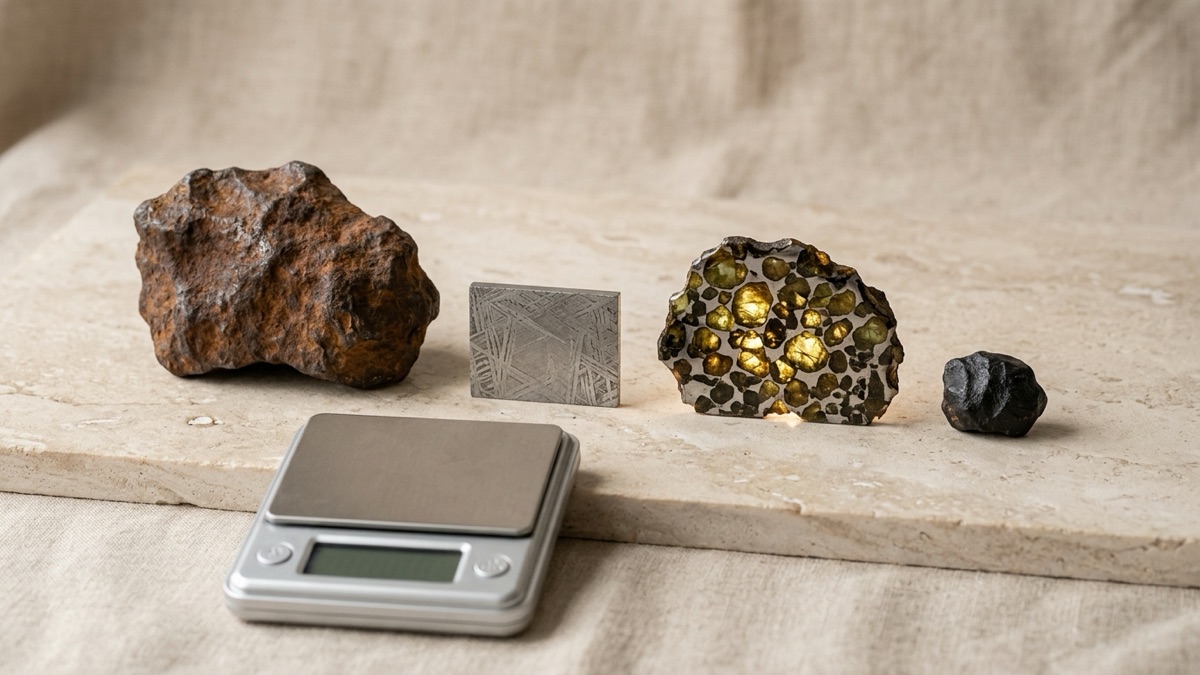
Meteorite or Meteor-Wrong? 9 Look-Alikes Explained
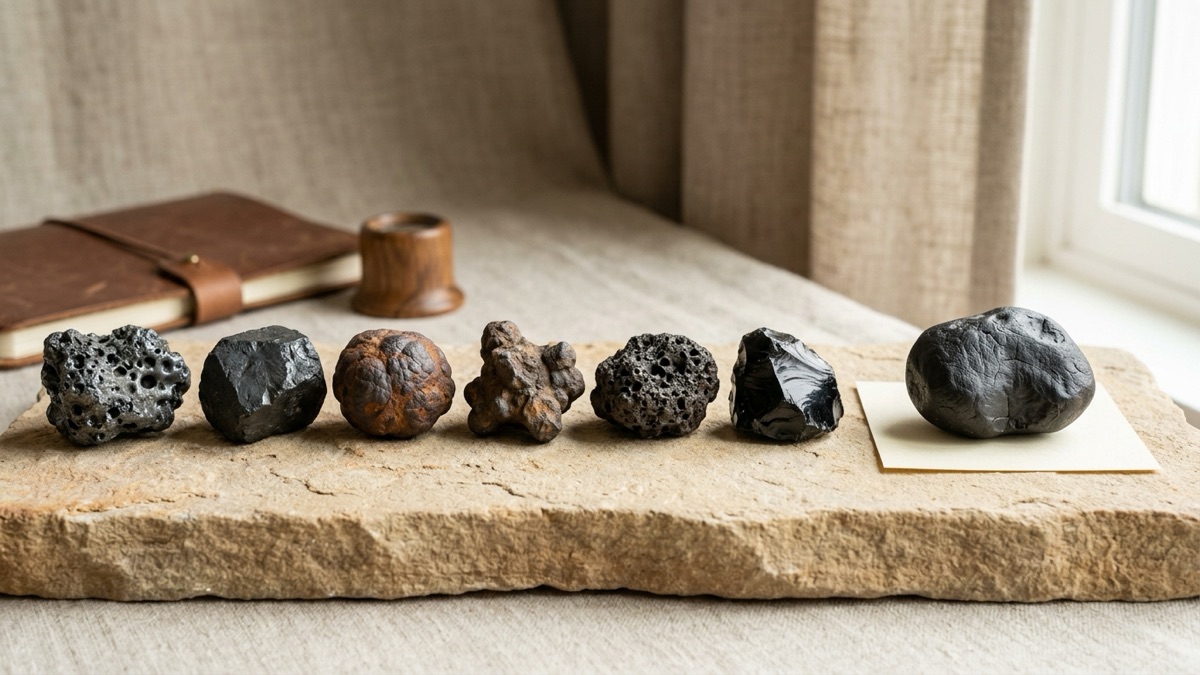
You searched for meteorite identification pictures, found one that looks just like your rock, and your heart rate went up. Hold that thought. Meteorite experts see the same handful of Earth rocks and factory leftovers again and again, and each one has a simple test that gives it away.
Quick answer
Most rocks people think are meteorites are meteor-wrongs: slag, magnetite, hematite, iron-oxide concretions, lava rock, desert-varnished rocks, lava bombs, man-made metal and volcanic glass. A few tests expose them fast: look for a thin fusion crust, try a cheap magnet, check the streak, and look for bubbles and metal flecks on a cut face.
Key takeaways
- Iron-oxide concretions are the most common meteor-wrong sent to Washington University in St. Louis, and industrial slag is second.
- Glassy plus bubbly means slag. A rock full of holes is almost never a meteorite.
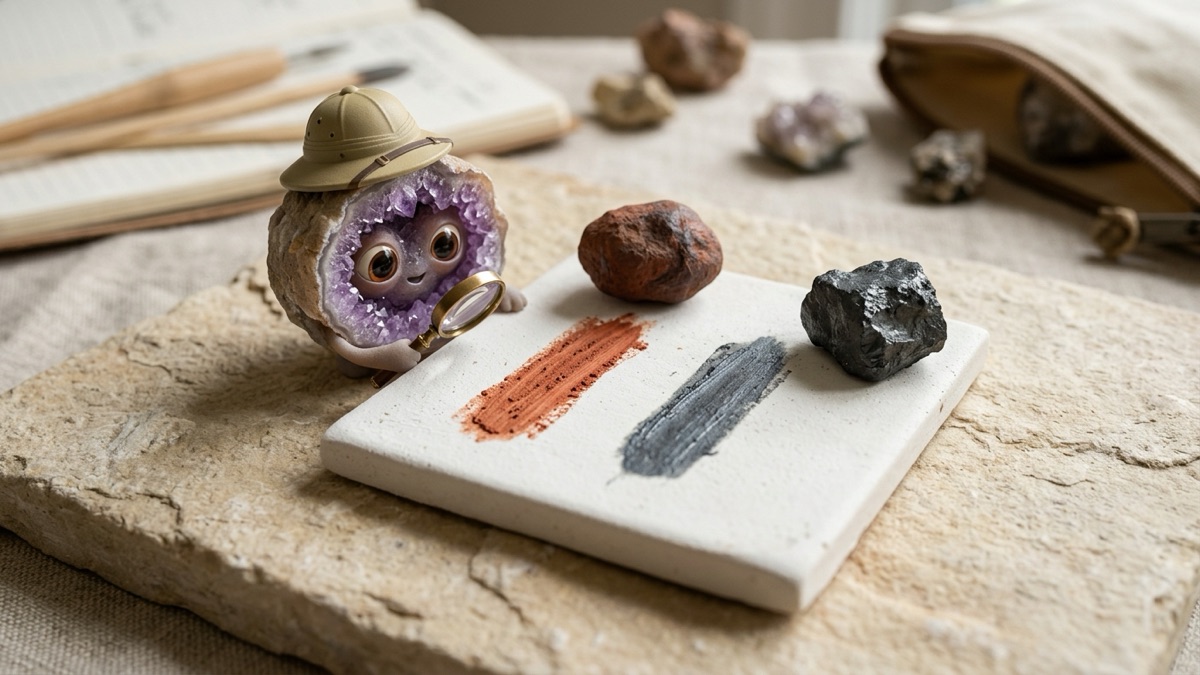
- A red-brown streak means hematite and a dark gray one means magnetite. Meteorites leave little or no streak.
- A rock that attracts a magnet but shows no shiny metal inside is not a meteorite.
- Pictures can rule a rock out, but they cannot confirm a meteorite. That takes a lab.
Why do so many rocks get mistaken for meteorites?
Because "it looks like one" is a weak test. Randy Korotev, the Washington University in St. Louis geochemist behind one of the web's most useful meteorite sites, says he receives photos of dozens of meteor-wrongs every week. His word for them, meteorwrong, is a play on words for Earth rocks and man-made objects that someone thought came from space.
Pictures make it harder, not easier. Korotev writes that it is often not possible to tell whether a rock is a meteorite just from its appearance, particularly in a photograph, and that photo apps and image searches are nearly always wrong when they suggest a rock is a meteorite. Some genuine meteorites look like plain Earth rocks, while plenty of Earth rocks look dramatic.
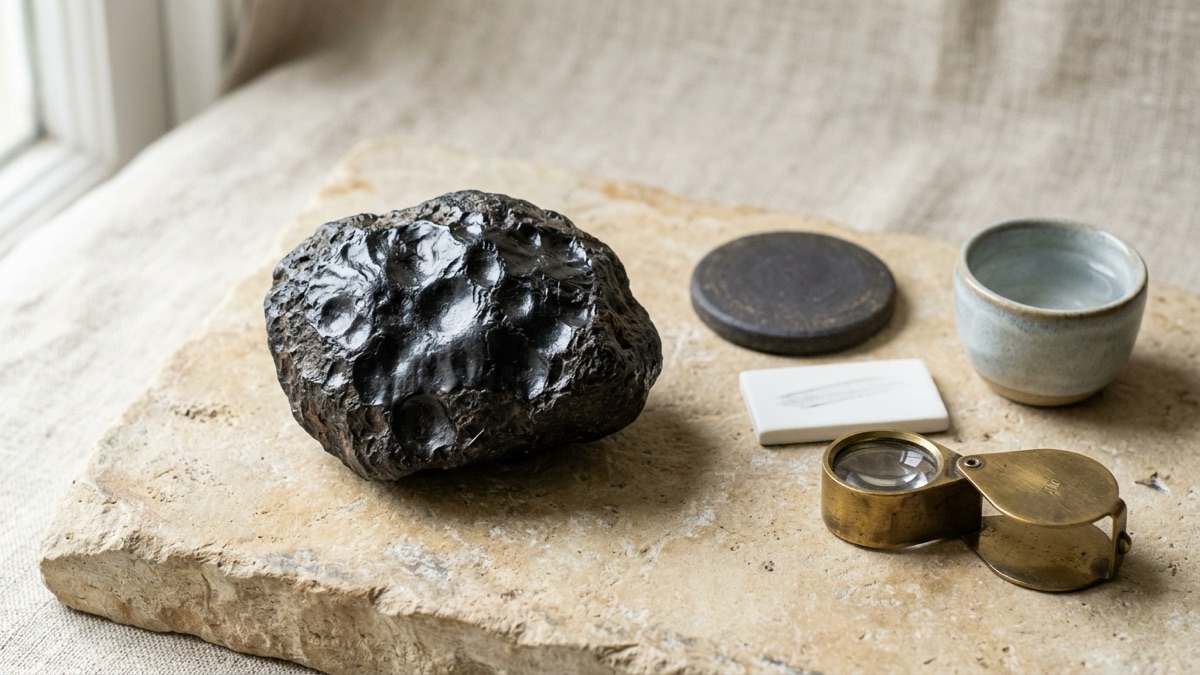
So instead of matching pictures, match tests. A real meteorite almost always has a thin, dark fusion crust (the melted skin from its trip through the air), is darker on the outside than the inside, rarely has bubbles, and in most cases attracts a cheap magnet and shows metal flecks on a cut face. Our hub on how to identify a meteorite walks through all eight checks.
What are the 9 most common meteor-wrongs?
| Look-alike | Why it fools people | The test that exposes it |
|---|---|---|
| 1. Slag | Odd shapes, dark, often magnetic | Glassy and full of gas bubbles |
| 2. Magnetite | Black, heavy, strongly magnetic | Dark gray streak, no metal inside |
| 3. Hematite | Heavy, metallic gray or rusty | Red to red-brown streak |
| 4. Iron-oxide concretions | Heavy, bizarre shapes | Red or yellow-brown streak, too heavy |
| 5. Basalt and scoria | Dark, glassy top skin | Bubbles, same color inside and out |
| 6. Varnished or polished rocks | Shiny dark skin | Chip and wet it: same color inside |
| 7. Lava bombs | Fell from the sky, crusty surface | Bubbles inside, no metal flecks |
| 8. Man-made metal | Metallic, magnetic, rusty | Flat sides, right angles, holes, or it bends |
| 9. Obsidian and glass | Black, shiny, looks melted | Glassy with shell-shaped fractures |
1. Slag
Why it fools people: Slag, the glassy leftover of smelting ore and other high-heat industry, catches the eye with its strange shapes, and it often attracts a magnet because it holds bits of iron that never got separated. Korotev notes that it turns up in road construction and landscaping gravel, and Arizona State University adds railroad fill, so it lands in "the middle of nowhere" more often than you would expect.
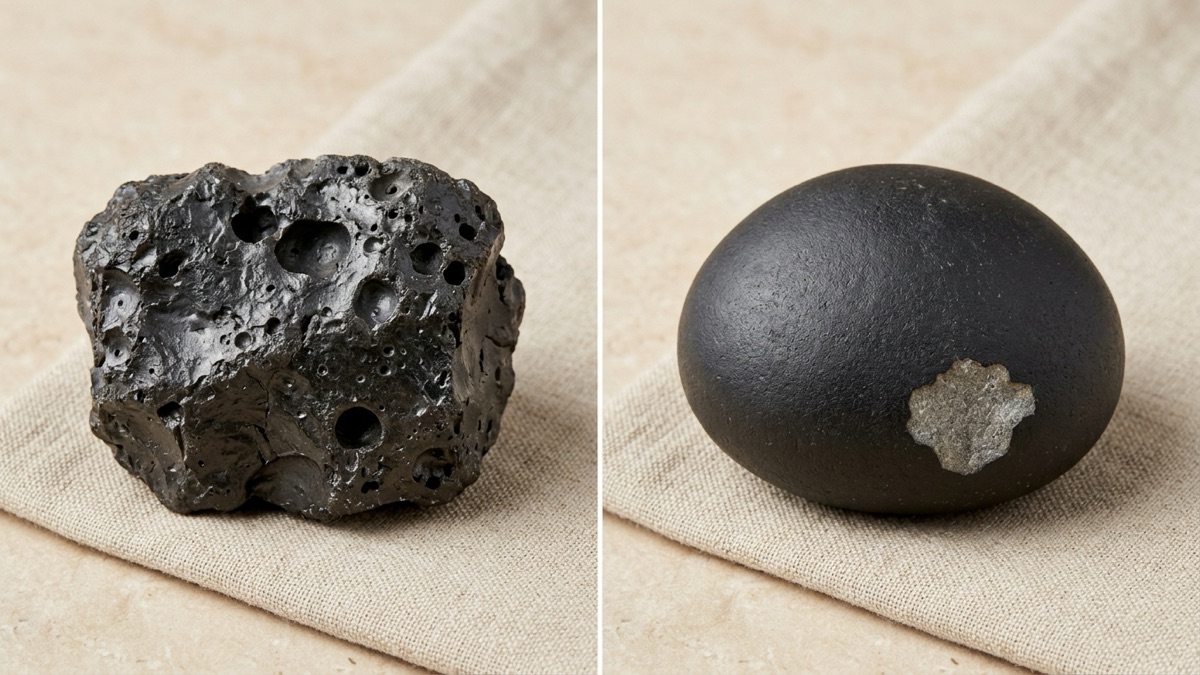
The test: Look for glass and gas bubbles. Korotev's rule is short: glassy and vesicular (full of gas holes) means slag. Slag often has a very rough exterior, flow marks in the glass, or flat surfaces from cooling in a container, none of which fit a meteorite.
Fun fact
Korotev writes that quite a few rocks people describe as "it wasn't there yesterday" look like slag, and that nearly every rock described that way was just the right size for throwing.
2. Magnetite
Why it fools people: Magnetite is a black iron oxide mineral that is heavy (specific gravity about 5.2) and strongly magnetic, so it passes the two tests most people try first. Rocks rich in it are often gray to blackish.
The test: Do a streak test on the unglazed back of a white tile: magnetite leaves a dark gray streak. Then look inside. Magnetite is an oxide, not metal, so a magnetite rock shows no shiny metal grains on a broken face, and a magnetic rock with no metal inside is not a meteorite. Our guide to magnetic rocks covers the other rocks that pull.
3. Hematite
Why it fools people: Hematite is heavy and can be steel-gray, silvery or rusty. A sawn surface can look shiny and metallic, especially when wet.
The test: Streak it. Hematite leaves a rust-red to red-brown streak, which Korotev says is almost as easy to make as chalk on a sidewalk. Two more giveaways from his pages: cutting hematite turns the saw's wash water bright rusty red, and a steel file picks up reddish powder. Pure hematite also does not attract a magnet. The streak test guide shows the technique.
4. Iron-oxide concretions
Why it fools people: These are the most common meteor-wrong of all, according to Korotev. Iron-oxide concretions and nodules form when iron oxide precipitates out of iron-rich water, often in sedimentary rock, and they come in strange shapes that look like nothing else in the field. They are also heavier than any stony meteorite, and some have a shiny surface that suggests a fusion crust.
The test: Streak and weight. Hematite-rich concretions leave a red streak, and the Cascadia Meteorite Laboratory at Portland State University notes that limonite leaves a yellow-brown to mustard streak. Korotev puts rocks made mostly of hematite or magnetite at a specific gravity of about 4.5 to 5, heavier than any stony meteorite. Concentric rings or layers inside rule out a meteorite too.
5. Basalt and scoria
Why it fools people: Basalt is a dark volcanic rock, and where lava was exposed to air it can cool into a glassy, shiny top skin that resembles a fusion crust. Scoria is the frothy, bubble-filled version.
The test: Look for vesicles (gas holes). Korotev points out that vesicular basalt is very common on Earth, while fewer than 1 in 1,000 meteorites have interior vesicles. A lava skin usually shows the outlines of broken bubbles and is flatter than a meteorite's crust, and the rock is the same color inside and out.
6. Desert-varnished and polished rocks
Why it fools people: A dark, shiny coating is exactly what people imagine a fusion crust looks like. Desert varnish, a thin coating that forms on rocks in arid places, is reddish to black, and waves and sand can polish a dark rock like basalt until it gleams.
The test: Chip a corner and wet it. Korotev notes that a polished basalt is the same color and shade inside as outside, unlike a meteorite with a fusion crust. Desert varnish is only about a micrometer thick and not glassy, and on small desert rocks it usually coats only the exposed top, not the buried bottom.
7. Lava bombs
Why it fools people: A lava bomb really did fall from the sky. The USGS defines volcanic bombs as lava fragments thrown out while still partly molten during an explosive eruption, larger than 64 mm across. A breadcrust bomb has a cracked, checkered crust, a little like the fine cracks on some fusion crusts.
The test: Break one open. The USGS explains that breadcrust cracks form as gas bubbles keep growing inside the hot interior, so bombs are usually bubbly inside, with no metal flecks. And they turn up in volcanic country, among plenty of other lava rock.
8. Man-made metal
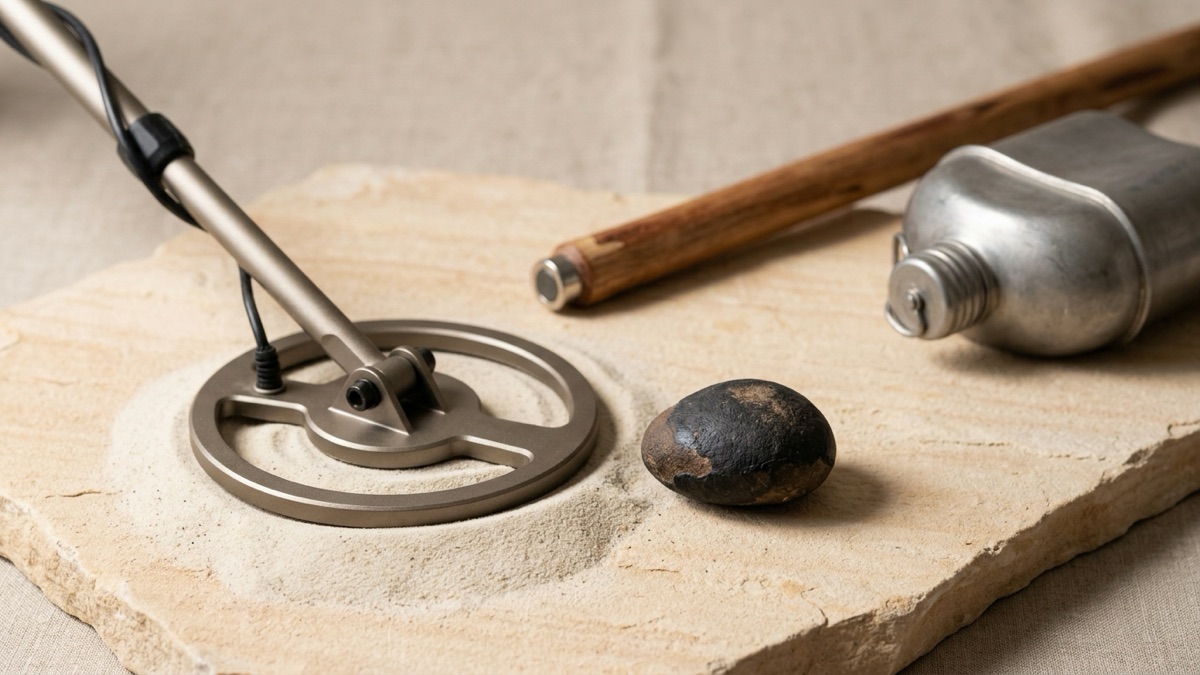
Why it fools people: Rusty, lumpy, heavy and magnetic sounds like an iron meteorite. Korotev notes that humans have been making and losing metal things for thousands of years, and many of the objects people send him were found with metal detectors, including a hex nut from a fairground.
The test: Look at the shape first. Flat sides, right angles, straight lines, symmetry, scrape marks or holes on a cut face point to a casting, a machine part or poured metal. A metallic lump that ignores a magnet (often melted aluminum) is not a meteorite, and an iron meteorite will not bend or break unless it is very rusty. For anything that passes, only a lab analysis for nickel, chromium and manganese can separate an iron meteorite from man-made iron. Our meteorite metal detector guide explains why a detector cannot do it.
9. Obsidian and other glass
Why it fools people: Black, shiny and obviously melted, obsidian (dense volcanic glass that forms when lava cools too fast for crystals to grow) looks like something that went through fire.
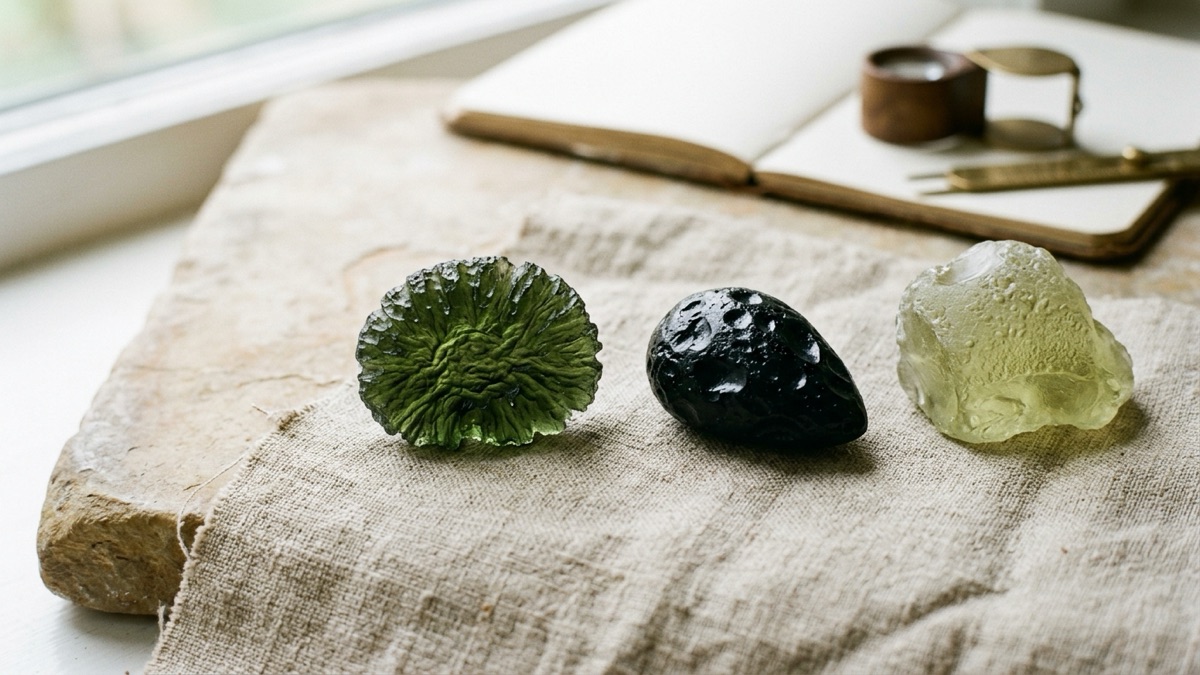
The test: Korotev's rule: if it is glass or glassy, it is not a meteorite. Some meteorites contain a little glass, but none are solid glass. Shell-shaped (conchoidal) fractures and translucent edges point to obsidian or man-made glass, since no transparent or translucent meteorite has been found, and brightly colored glass is man-made. Impact glass is a different story, covered in our guide to meteorite impact glass.
How do you check your own rock?
Work from the outside in. Look for a thin, dark crust that is darker than a wet, chipped spot. Try a cheap ceramic fridge magnet, not a rare-earth one. Streak it on an unglazed tile. Then saw or break off a corner and look for shiny metal flecks and bubbles.
Heads up
Skip the shortcuts that ruin a real meteorite: no wire brush, acid, other chemicals or blow torch. Wear safety glasses when you chip or break any rock.
If your rock still passes, take good photos before you contact anyone. The Cascadia Meteorite Laboratory suggests sharp, close shots that still show the whole sample, a medium-colored background such as cardboard for dark rocks, and natural light without glare.
Try it
Answer nine quick questions in the free meteorite checker. It gives an honest verdict and names the look-alikes your answers point to. If the verdict says "Earth rock," the rock identifier can help you figure out which one.
The takeaway
Most meteor-wrongs fail one simple test: slag shows glass and bubbles, hematite and magnetite give themselves away on a streak plate, and a magnetic rock with no metal inside is an Earth rock. Test before you trust a picture. The RockhoundID app for Android suggests likely matches from a photo and tells you which quick test confirms them. And if your rock turns out to be a meteor-wrong, you have still learned exactly what it is.
The pictures in this guide are AI-generated illustrations of what to look for; real specimens vary, so trust the tests over any picture. RockhoundID guides help you narrow down what you found. They suggest likely candidates, not certain identifications or appraisals. For anything valuable, rare or possibly from space, ask a museum, a university geology department or your state geological survey, and check the collecting rules for the land before you take anything home.
Questions rockhounds ask
What is a meteor-wrong?
A meteor-wrong is an Earth rock or a man-made object that someone thinks is a meteorite. The most common ones are iron-oxide concretions, industrial slag, magnetite, hematite and dark volcanic rocks such as basalt.
What rock is most often mistaken for a meteorite?
Iron-oxide concretions and nodules, according to Washington University in St. Louis, which receives photos of dozens of meteor-wrongs every week. Industrial slag is the second most common. Both are heavy and oddly shaped, and slag often attracts a magnet.
If my rock is magnetic, is it a meteorite?
Not necessarily. Magnetite, many slags and man-made iron all attract a magnet. Break or saw the rock: a meteorite shows shiny metal grains inside, while a magnetic rock with no metal inside is not a meteorite.
Can I identify a meteorite from pictures?
Not reliably. Meteorite experts say appearance alone, especially in a photograph, often cannot settle it, and some real meteorites look like ordinary rocks. Pictures are useful for ruling rocks out and for asking an expert, but confirmation takes lab work.
How do I tell slag from a meteorite?
Slag is usually glassy and full of gas bubbles, often with a rough surface, flow marks or flat faces. Meteorites are rarely bubbly and are covered by a thin, smooth fusion crust. Glassy plus bubbly almost always means slag.
Where these facts come from
- Washington University in St. Louis (Randy Korotev): Some meteorite realities: sites.wustl.edu/meteoritesite/items/some-meteorite-realities/
- Washington University in St. Louis: Meteorwrongs: sites.wustl.edu/meteoritesite/items/meteowrongs/
- Washington University in St. Louis: Glassy and vesicular = slag: sites.wustl.edu/meteoritesite/items/glassy-vesicular/
- Washington University in St. Louis: Iron-oxide concretions and nodules: sites.wustl.edu/meteoritesite/items/concretions/
- Washington University in St. Louis: Streak: sites.wustl.edu/meteoritesite/items/streak/
- Washington University in St. Louis: Magnetic attraction: sites.wustl.edu/meteoritesite/items/magnetic_attraction/
- Washington University in St. Louis: Vesicles, vugs and amygdules: sites.wustl.edu/meteoritesite/items/vesicles-in-meteorites/
- Washington University in St. Louis: Terrestrial rinds, coatings and crusts: sites.wustl.edu/meteoritesite/items/rinds-and-coatings/
- Washington University in St. Louis: Polished rocks: sites.wustl.edu/meteoritesite/items/polished-rocks/
- Washington University in St. Louis: Man-made metal things: sites.wustl.edu/meteoritesite/items/man-made_metal_things/
- Washington University in St. Louis: Glass: sites.wustl.edu/meteoritesite/items/glass/
- Washington University in St. Louis: Density and specific gravity: sites.wustl.edu/meteoritesite/items/density-specific-gravity/
- Washington University in St. Louis: What to do if you think you have found a meteorite: sites.wustl.edu/meteoritesite/items/what_to_do/
- Arizona State University, Buseck Center for Meteorite Studies: Meteorite ID and meteorwrongs: meteorites.asu.edu/meteorite-id
- Cascadia Meteorite Laboratory, Portland State University: Meteor-wrongs: meteorites.pdx.edu/meteor_wrong.htm
- Cascadia Meteorite Laboratory: Think you have a meteorite?: meteorites.pdx.edu/possible-met.htm
- USGS Volcano Hazards Program glossary (volcanic bomb, breadcrust bomb, scoria): www.usgs.gov/glossary/volcano-hazards-program-glossary