
How to Tell If Amber Is Real: Salt Water, UV and More
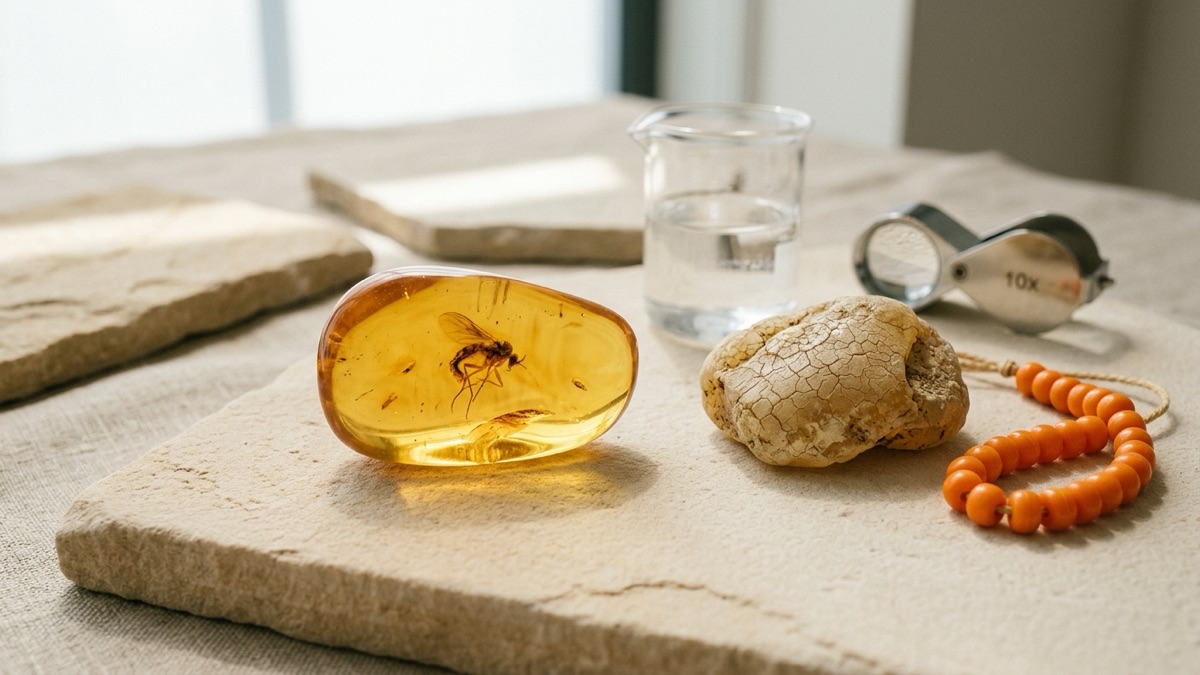
A honey-colored necklace from a flea market, a "Baltic amber" bracelet from a website, a lump with an insect inside that seems too good to be true. Amber has been faked for as long as it has been loved, and today the fakes are plastic, young resin and glued-together scraps. Seven tests, from gentlest to harshest, will sort most of them.
Quick answer
Real amber is light enough to float in strong salt water, feels warm, builds static when rubbed, and glows chalky blue-green under long-wave UV. Plastic sinks or glows brown, glass is cold and heavy, and copal turns sticky under a drop of acetone. Only a lab's infrared spectrum proves amber, not copal, and detects heat treatment.
Key takeaways
- Amber is fossil tree resin with a hardness of only 2 to 2.5 and a specific gravity of about 1.05 to 1.10 (USGS), so it is soft, light and warm.
- The four common fakes are plastic, copal (young resin), pressed or composite amber, and glass. Each fails a different test.
- Do the harmless tests first: weight, warmth, static, salt water, UV light and a loupe. Save acetone and the hot needle for cheap pieces and hidden spots.
- Heated amber with glittery "sun spangle" discs is real amber that has been treated (GIA).
- Amber versus copal, and natural versus treated, are lab calls made with infrared spectroscopy.
What is amber, and what gets sold as amber?
USGS describes amber as hard fossil resin of ancient trees, a mixture of hydrocarbons with no crystal structure, mined or collected from seashores, and transparent to semitransparent in yellow to dark brown, sometimes orange, red, whitish, greenish, blue or violet. The University of California Museum of Paleontology explains the timeline: fresh resin hardens by polymerization into copal, and copal oxidizes and polymerizes for millions of years before it becomes amber. GIA puts amber's formation at tens of millions of years ago. Most amber on the market comes from the Baltic Sea region (UCMP).
The look-alikes:
| Sold as amber | What it is | Best home tell |
|---|---|---|
| Plastic | Bakelite, polyester and other resins; GIA says plastic is a convincing but not durable imitation | Brown under long-wave UV; acrid smell if heated; often too uniform |
| Copal | Young natural resin, not yet amber | Sticky under acetone; smokes and strings on a hot needle; crazed surface |
| Pressed or reconstructed amber | Amber powder or fragments fused together | Heavier than natural amber (GIA measured 1.13 to 1.14 for pressed powder) |
| Composite | Real amber core inside artificial resin; GIA examined one with a fake insect | Patchy UV glow; scratches easily where the resin is |
| Glass | Glass in amber colors | Cold, heavy, hard, may show bubbles |
Real amber can also be dyed any color (USGS) or heated. Treated amber is still amber, but it should be sold as treated. Our gemstone identification guide explains the difference between imitations, synthetics and treatments for all gems.
Test 1: Does it float in salt water?
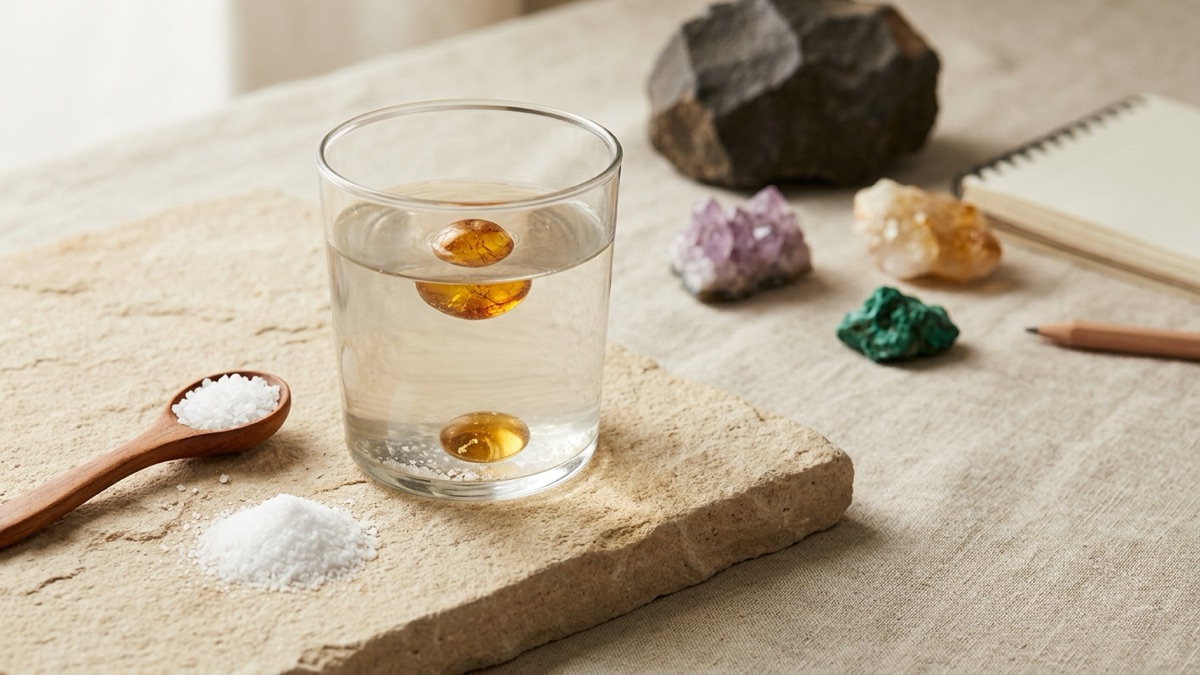
This is the classic, and it is harmless. The Getty Museum's amber handbook gives amber a specific gravity of 1.04 to 1.10, only slightly heavier than water, and notes that clear Baltic amber sinks in fresh water but floats in salt water. White opaque Baltic amber, full of microscopic bubbles, floats even in fresh water.
Stir table salt into a glass of warm water until no more dissolves, let it settle, and drop the loose piece in (no cord, no metal). Amber floats. Glass sinks. So do the heavier plastics.
Two honest limits. Copal floats too; The Australian Gemmologist reports a copal specimen at 1.063 that floated in salt solution. And GIA measured plastic amber imitations at about 1.16 to 1.17 in a 2022 study, only a little heavier than amber, so a very strong brine can float some plastic. Floating is a good sign, not a verdict.
Test 2: Is it warm, light and a little electric?
Amber is a poor conductor of heat, so it feels warm in the cold and cool in the heat (Getty), and it is noticeably light for its size. Glass feels cold and heavy. Weight in the hand is one of the seven checks in our rock identification method, and it works on gems.
Then rub the piece briskly on wool for half a minute and hold it over tiny scraps of tissue paper. Rubbed amber becomes negatively charged and attracts light particles such as straw, fluff or dried leaves (Getty). The Greek word for amber, elektron, gave electricity its name, and amber was used in the earliest experiments on it. Some plastics build static too, so count this as a clue, not proof.
Test 3: What does it do under UV light?
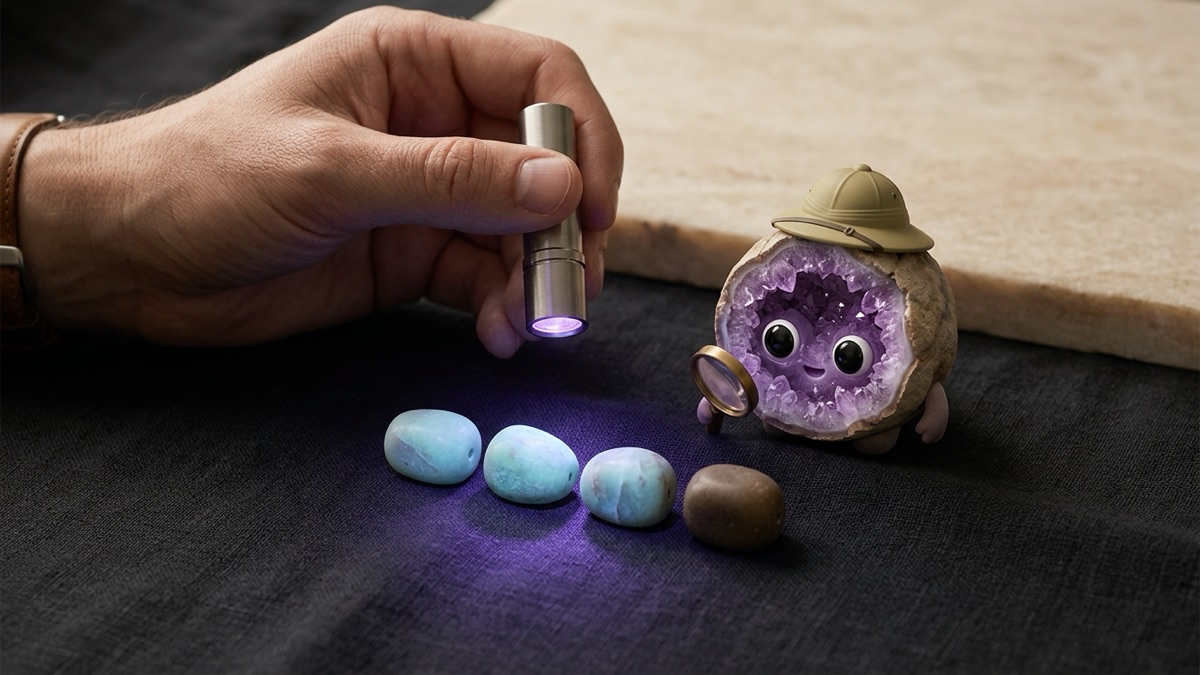
An inexpensive long-wave UV flashlight is one of the best amber tools you can own. In a GIA study of a rosary strung with both amber and plastic beads, the amber showed a moderate to strong chalky greenish blue and yellow fluorescence under long-wave UV, while the plastic appeared brown. GIA called that reaction very useful for telling the two apart. In a composite piece GIA examined, the amber core glowed blue-white while the artificial resin around it glowed yellowish green, so an uneven glow can reveal a composite.
The limit: copal can glow a bright chalky blue too (The Australian Gemmologist), so UV separates amber from plastic, not amber from copal.
Heads up
Point UV lights at the stone, never at eyes, and do not stare at the beam. Do the test in a dark room so faint glows show.
Test 4: What does a 10x loupe show?
- Round gas bubbles and swirl marks are what GIA saw in the plastic beads. Natural amber bubbles exist, but swirls that look like stirred syrup point to plastic.
- Curved reddish-brown flow lines are natural amber's own signature; GIA used them to identify the real core of a composite.
- Flat, glittery discs ("sun spangles") mean the amber was heated. GIA describes heating in hot oil, which darkens amber, clears it and can produce spangled, glittery inclusions. Hydrothermally treated amber shows dense flat or disk-shaped bubbles (GIA, 2019). Both are real amber, treated.
- An insect that is perfectly posed, perfectly whole and dead center is a red flag. GIA's composite piece held two insects, one natural and one artificial. Real inclusions are often partial, twisted or caught mid-struggle, and our fossil identification guide explains why real fossils are rarely tidy.
- A finely crazed, cracked surface is typical of copal, not amber (The Australian Gemmologist).
Test 5: Does a drop of acetone make it sticky?
This one damages fakes and can dull treated surfaces, so it goes on the back of a cheap piece only. Put a single drop of acetone (nail polish remover) on a hidden spot for a few seconds and touch it with a fingertip. Copal turns sticky, as The Australian Gemmologist reports; amber does not. Wipe it off and ventilate.
Test 6: Can you scratch it? (Carefully)
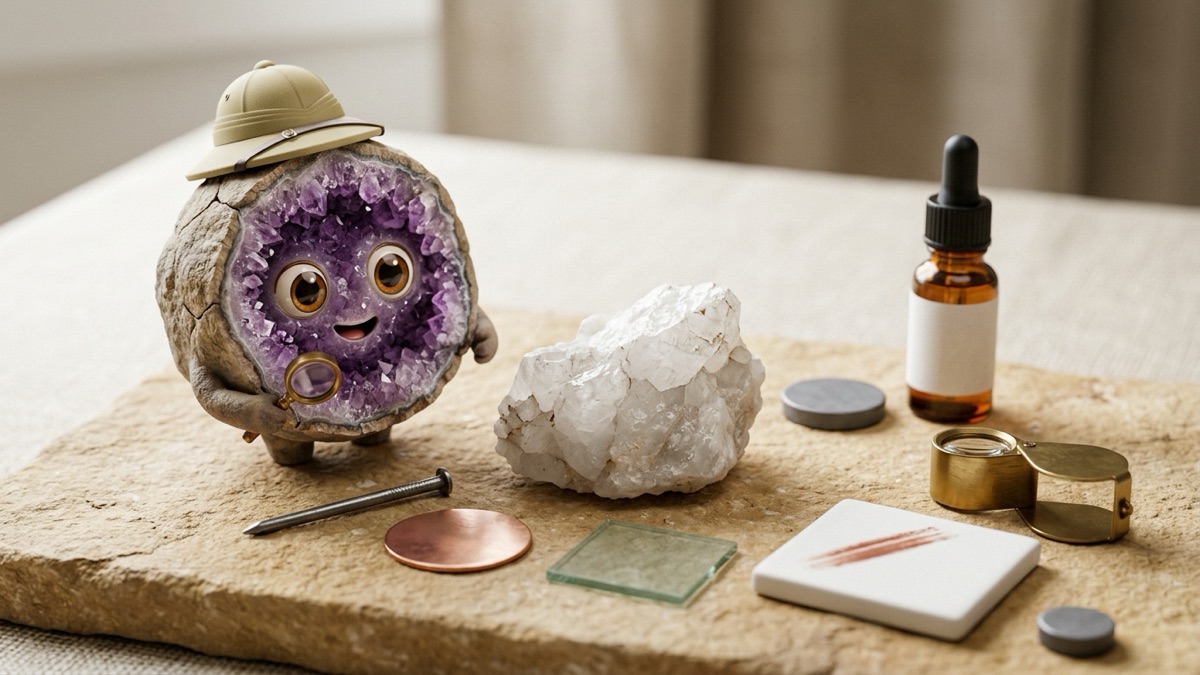
Amber rates 2 to 2.5 on the Mohs scale (USGS), so a fingernail can mark it, and a copper coin certainly can. That is useful in reverse: anything that shrugs off a steel point is not amber. Glass, at about 5.5, is far harder. Test a hidden spot with a light touch, or skip it on beads you like.
Try it
The free Mohs hardness scale lists amber alongside the organic gems and shows what a fingernail, a coin and a knife will and will not scratch. For the method, see our Mohs hardness test guide.
Test 7: The hot needle, last and least
Heat a pin, touch it briefly to a hidden spot, and sniff. Plastic burns with a strong, acrid chemical odor (GIA describes exactly that reaction on a plastic imitation). Copal gives an immediate wisp of smoke, and the needle pulls up a fine, hair-like strand of resin (The Australian Gemmologist). Amber tends to burn rather than melt (Getty), without the sharp chemical smell of plastic.
This test leaves a permanent mark, the fumes are unpleasant, and treated amber can be damaged by heat. It is for a cheap bead when everything else disagrees, never for the family necklace.
What can only a lab tell?
Home tests separate amber from plastic and glass with confidence, and flag copal. They cannot prove amber rather than copal, and they cannot detect every treatment. A gemologist can:
- Measure refractive index. In GIA's rosary study the amber beads read 1.53 and the Bakelite beads about 1.64.
- Measure specific gravity exactly. GIA's 2022 study separated natural root amber (1.044 to 1.107), amber pressed from fragments (1.075 to 1.077), amber pressed from powder (1.133 to 1.137) and plastic (1.161 to 1.167).
- Run infrared spectroscopy (FTIR). This is the decisive test. Baltic amber shows a characteristic spectrum, plastics show strong polymer peaks, and The Australian Gemmologist used FTIR and Raman spectra to confirm copal.
- Spot treatments such as hot-oil heating and hydrothermal bubbles under the microscope.
A GIA colored stone report states whether a stone is natural and lists any detectable treatments. For an expensive piece, a lab report is cheaper than a mistake, and our guide to real vs fake turquoise makes the same point about another much-imitated gem.
The RockhoundID app for Android suggests likely matches from a photo and tells you which test confirms them, but no photo can smell a hot needle.
The takeaway
Start gentle: weight, warmth, static, salt water and UV cost nothing and harm nothing. Add the loupe for swirls, spangles and suspicious insects. Use acetone and the hot needle only on hidden spots of pieces you can afford to mark. If it floats, glows chalky blue-green and shows natural flow lines, you are probably holding real amber; if it needs to be amber rather than copal for the price you are paying, let a lab's infrared spectrum have the last word.
The pictures in this guide are AI-generated illustrations of what to look for; real specimens vary, so trust the tests over any picture. RockhoundID guides help you narrow down what you found. They suggest likely candidates, not certain identifications or appraisals. For anything valuable, rare or possibly from space, ask a museum, a university geology department or your state geological survey, and check the collecting rules for the land before you take anything home.
Questions rockhounds ask
Does real amber float in salt water?
Usually, yes. Amber's specific gravity is about 1.05 to 1.10, so clear amber sinks in fresh water but floats in strong salt water, as the Getty Museum notes. Glass and heavy plastics sink. Copal floats too, and GIA measured some plastic imitations at about 1.16, close enough that a very strong brine may float them, so treat floating as a good sign rather than proof.
What does real amber look like under UV light?
In a GIA study, amber beads glowed a moderate to strong chalky greenish blue and yellow under long-wave UV while the plastic beads beside them looked brown. Copal can glow a chalky blue too, so UV separates amber from plastic well but not from copal.
Is the hot needle test safe for amber?
It leaves a permanent mark and makes fumes, so use it last, on a hidden spot, and never on a piece you value. Plastic burns with a sharp acrid smell. Copal smokes at once and pulls up a hair-like strand on the needle, according to The Australian Gemmologist. Amber tends to burn rather than melt.
What is the difference between amber and copal?
Age and chemistry. Resin hardens into copal first, and only after millions of years of oxidation and polymerization does copal become amber, as the UC Museum of Paleontology explains. Copal goes sticky under a drop of acetone, often has a finely crazed surface, and a lab separates the two with infrared spectroscopy.
Can a lab tell if amber has been treated?
Yes. GIA describes heat treatment in hot oil that darkens amber and creates spangled, glittery inclusions, and hydrothermal treatment that adds flat, disk-shaped bubbles. A GIA colored stone report states whether a stone is natural and lists any detectable treatments.
Where these facts come from
- USGS: Gemstones (organic gemstones): pubs.usgs.gov/gip/gemstones/organic.html
- J. Paul Getty Museum, Ancient Carved Ambers: The properties of amber (Faya Causey): www.getty.edu/publications/ambers/intro/6/
- University of California Museum of Paleontology: Amber: ucmp.berkeley.edu/paleo/fossils/amber.html
- GIA: An introduction to gem treatments: www.gia.edu/gem-treatment
- GIA: An introduction to simulants or imitation gem materials: www.gia.edu/gem-imitation
- GIA Gems & Gemology, Spring 2017: Plastic amber imitation rosary: www.gia.edu/gems-gemology/spring-2017-gemnews-plastic-amber-imitation-rosary
- GIA Gems & Gemology, Winter 2013: Composite amber: gia.edu/gems-gemology/wn13-gni-composite-amber
- GIA Gems & Gemology, Winter 2022: Identification of natural, reconstructed and imitation root amber: gia.edu/gems-gemology/winter-2022-gemnews-identification-of-natural-reconstructe
- GIA Gems & Gemology, Fall 2019: Hydrothermally treated amber: gia.edu/gems-gemology/fall-2019-hydrothermally-treated-amber
- GIA Gems & Gemology, Spring 2018 Lab Notes: New plastic imitation opal from Kyocera (hot point reaction of plastic): gia.edu/gems-gemology/spring-2018-labnotes-new-plastic-imitation-opal-from-kyoce
- The Australian Gemmologist (Gemmological Association of Australia): Is it copal or amber?: www.gem.org.au/ag-article/is-it-copal-or-amber/
- GIA: Colored stone reports and services: www.gia.edu/gem-lab-service/colored-stone-analysis-report-service
Read next
identification
How to Identify Rocks: 7 Simple Tests and a Free Tool
identification
Rock Identification Chart: Match Your Find in 5 Steps
identification
Crystal Identification: Chart and 4 Quick Tests at Home
identification
Real vs Fake Opal: How to Spot Synthetics and Doublets
identification
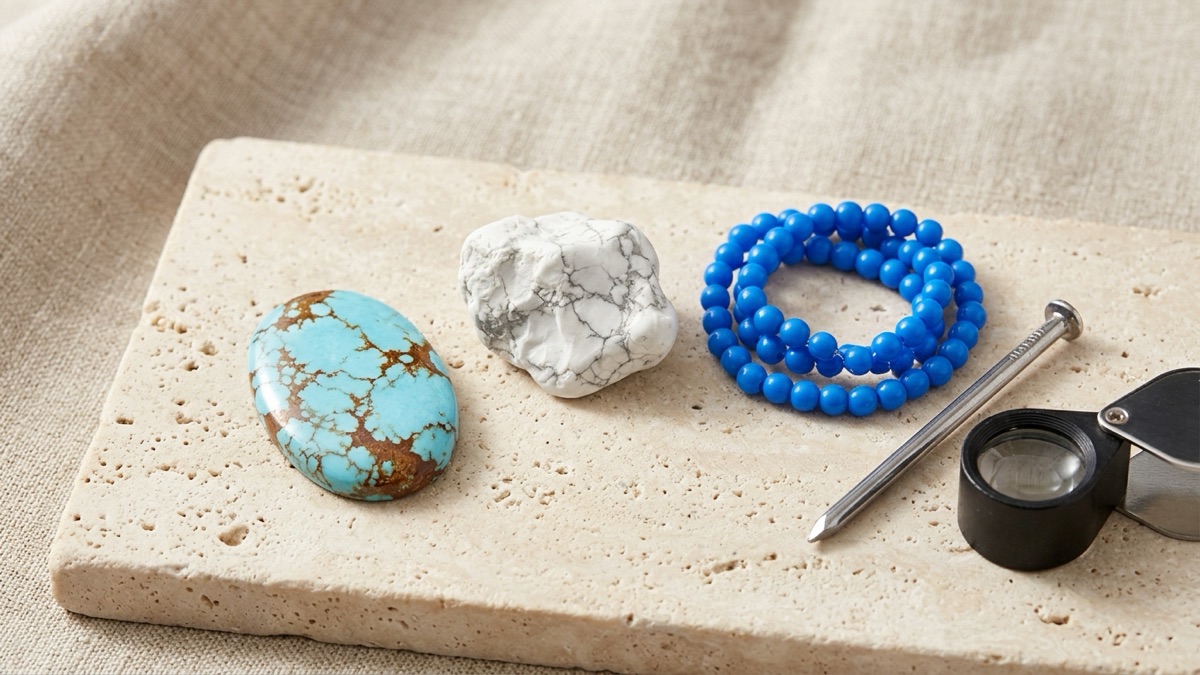
Real vs Fake Turquoise: 7 Tests You Can Do at Home
